


This site contains affiliate links. I may earn a commission if you purchase through these links. Thank you for being so supportive!
📊 QUICK ANSWER
Pour-over coffee ratio: 1:16 (1 gram coffee to 16 grams water)
Example: 20g coffee + 320g water = 11 oz coffee
Water temperature: 195-205°F (90-96°C)
Total time: 3-4 minutes
Grind size: Medium-fine (like sea salt)
Best for beginners: Kalita Wave
Ever buy expensive coffee beans, follow a complicated pour-over recipe, and end up with coffee that tastes… meh?
That Chemex gathering dust isn’t your fault. Most guides are full of coffee jargon and assume you already know what you’re doing.
I grew up in Peru, where pour-over is how we tested harvests. After reviewing 150+ NYC coffee shops, I know what actually works versus what just sounds impressive.
This guide gives you straightforward techniques for consistently great coffee. No pretentious language. No unnecessary equipment. Just the method that works.
By the end, you’ll make pour-over that tastes better than what cafés charge $6 for—and understand why it works so you can adjust it to your taste.
Let’s start.
What Is Pour-Over Coffee?
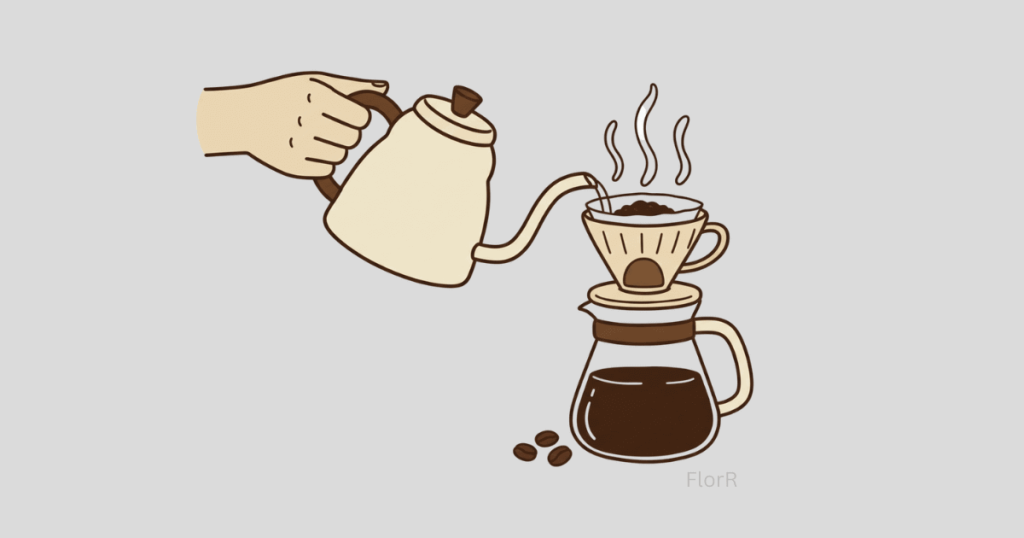
Pour-over coffee is exactly what it sounds like: you pour hot water over coffee grounds by hand. The water passes through the grounds, extracts flavors, and drips into your cup below.
No buttons. No automation. Just you, water, and coffee.
A German woman named Melitta Bentz invented it in 1908 using blotting paper from her son’s school notebook. She was tired of bitter coffee with grounds floating in her cup. Smart solution to an annoying problem.
Why your pour-over will taste different (better) than regular drip:
When you control the pour yourself, you control everything. Water temperature. Pour speed. Where the water goes. How long it touches the coffee.
This precision extracts the flavors that automatic machines miss, the florals in Ethiopian beans, the chocolate notes in Colombian beans, the bright fruit in Kenyan.
It’s the difference between painting by numbers and actually painting.
When pour-over makes sense for you:
- You want to taste everything good coffee offers
- You’re brewing 1-2 cups at a time
- You have 5 minutes to pay attention
- You’re using fresh, quality beans (within a month of roasting)
When it doesn’t make sense:
- You need coffee for 6+ people quickly (use a French press instead)
- You’re rushing out the door every morning (check out these 11+ brewing methods for faster options)
- You’re using old supermarket coffee (no method can fix stale beans)
In Perú, we’d use pour-over to evaluate coffee quality at harvest time. If coffee tasted flat or muddy as pour-over, no brewing method could save it. But great coffee? Pour-over lets you taste exactly what makes it special.
Now you know what it is. Let’s talk about what you actually need to make it happen.
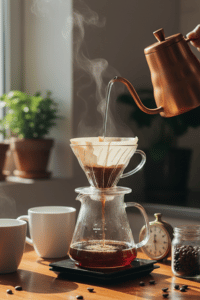
V60 Coffee Maker
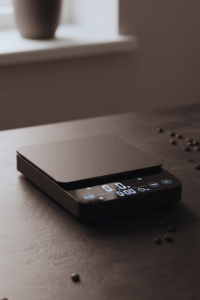
COFFEE SCALE
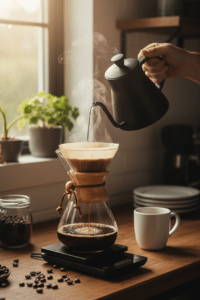
CHEMEX
Pour-Over Equipment: What You Actually Need
Good news: You don’t need expensive gear to make coffee that rivals what coffee shops charge $6 for.
Here’s what actually matters:
Essential Equipment
Pour-Over Dripper ($8-50)
This holds your filter and coffee. Three main types exist, and they each work differently. We’ll compare them in detail below, but you only need one.
Filters ($5-15/100 count)
Paper filters make the cleanest-tasting coffee. Metal filters let more oils through for fuller body. Cloth filters sit in between. Start with paper—it’s foolproof.
Gooseneck Kettle ($15-200)
The thin spout gives you control over where water goes and how fast. Regular kettles work, but make precision harder. If you’re making pour-over more than once a week, this upgrade is worth it.
Scale ($10-30)
This is the one tool that dramatically improves your results. Measuring by weight (grams) instead of volume (tablespoons) makes your coffee consistent. Buy the cheapest digital scale that measures in grams. Done.
Coffee Grinder ($30-300)
This matters more than everything else combined. Burr grinders crush beans between two surfaces for an even particle size.
Blade grinders chop randomly, making some grounds too fine and others too coarse. The result? Bitter and sour at the same time.
Get the best grinder you can afford. If you’re choosing between an expensive dripper and a good grinder, buy the cheap dripper and good grinder every time.
Want more details on home brewing equipment? Check out my complete guide on brewing exceptional coffee at home.
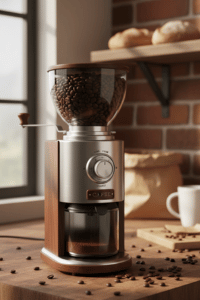
COFFEE GRINDER
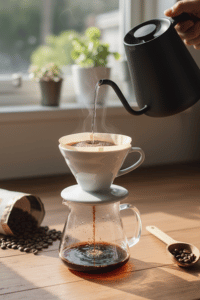
POUR OVER
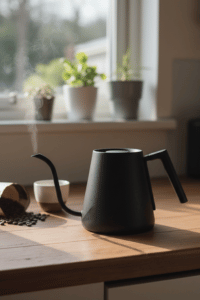
GOOSE NECK KETTLE
Comparing Pour-Over Drippers: Which One Should You Buy?
| Dripper | Difficulty | Best For | Brew Time | Grind Size | Price |
|---|---|---|---|---|---|
| Kalita Wave | Beginner | Consistency, forgiving technique | 3:00-3:30 | Medium | $30-40 |
| Hario V60 | Advanced | Single-origin clarity, maximum control | 2:30-3:00 | Medium-fine | $8-30 |
| Chemex | Medium | Multiple servings, clean taste | 3:30-4:30 | Medium-coarse | $40-50 |
My honest recommendation if you’re starting: Get a Kalita Wave.
The flat bottom and three drainage holes make even extraction almost automatic. You can mess up your pour technique and still get decent coffee. It’s forgiving.
The Hario V60 requires precise pouring; one wrong spiral and you’ve got channeling (water finding the path of least resistance, leaving some grounds dry).
It’s what I use for special single-origin coffees where I want maximum clarity, but I wouldn’t recommend it to someone just starting.
The Chemex is beautiful on your counter and great when you’re brewing for 2-4 people, but the thick proprietary filters slow everything down and cost more. Plus, that glass beaker breaks if you’re not careful.
After testing all three in my kitchen and watching them used across NYC coffee shops, I keep coming back to this: Kalita Wave for weekday mornings, V60 for weekend single-origin tastings, Chemex when friends visit.
If you already own one of these? Use what you have. The technique matters more than the specific brewer.
Now let’s talk about actually making the coffee.
Step-by-Step: How to Make Pour-Over Coffee
This is the method I use every morning. It works with any pour-over device with small adjustments for different brewers.
What You’ll Need
- 20g coffee beans (about 3 tablespoons)
- 320g water (about 11 oz)
- Pour-over dripper and filter
- Kettle with water heated to 200°F
- Scale and timer
- Your favorite mug
The Process
Step 1: Prep Your Filter (30 seconds)
Put the filter in your dripper. Pour hot water through the empty filter, enough to get it completely wet. Dump this water out.
Why? Paper filters taste like paper until you rinse them. This also warms up your brewer so it doesn’t steal heat from your coffee. Non-negotiable step that takes 15 seconds.
Step 2: Grind Your Coffee (1 minute)
Grind 20g of coffee to medium-fine consistency. It should feel slightly gritty between your fingers, like sea salt. Not powdery. Not like coarse sand. Right in between.
If you’re using pre-ground coffee, you’ll miss peak freshness but can still make good coffee. Just make sure you bought coffee ground specifically for pour-over, not espresso grinds (too fine) or French press grinds (too coarse).
Burr Coffee Grinder for Fresh, Consistent Home Brewing
This burr coffee grinder delivers consistent, even grounds for better-tasting coffee. Adjustable settings make it easy to grind for espresso, drip, pour-over, or French press. Freshly ground beans mean fuller flavor, smoother extraction, and a better cup every time.
Step 3: Add Coffee Grounds
Pour your ground coffee into the rinsed filter. Give your dripper a gentle shake side to side until the coffee bed is level.
Why level it? Water flows through low points first. An uneven bed means uneven extraction, some grounds over-extracted (bitter), some under-extracted (sour). Level bed = even extraction = better coffee.
Step 4: Bloom (45 seconds)
Start your timer. Pour 40g of hot water (double the coffee weight) evenly over all the grounds. Try to wet every bit of coffee.
You’ll see bubbles forming. That’s CO2 escaping from the coffee. Let this bloom sit for 30-45 seconds without adding more water.
Here’s why this matters: Fresh-roasted coffee traps CO2 during roasting. If you don’t let it escape first, it repels water during brewing, preventing proper extraction. The result? Sour, under-extracted coffee.
My Dad in Perú could tell by taste if I skipped the bloom. He’d take one sip and say, “¿No lo dejaste respirar?” (You didn’t let it breathe?) He was always right.
Step 5: First Pour (30 seconds)
At 0:45 on your timer, start pouring again. Begin at the center, pour in a slow spiral moving outward to the edges, then spiral back to center. Pour until your scale reads 160g total weight (that includes the 40g bloom water).
The goal: wet all the grounds evenly. Water should never just sit stagnant or run down the sides without touching coffee.
Don’t stress about making perfect spirals. Just make sure you’re hitting all the coffee, not drilling a hole in the middle.
Step 6: Second Pour (30 seconds)
When the water level drops and you can see the coffee bed again (around 1:30 on your timer), start your second pour. Use the same spiral technique. Pour until you hit 320g total weight on your scale.
Matte Black Gooseneck Kettle – Precision Pour for Pour-Over Coffee
This matte black gooseneck kettle is designed for smooth, controlled pouring and clean, consistent extractions. The narrow spout gives you full control over flow rate, making it ideal for pour-over methods like V60 and Chemex
Step 7: Let It Drain
Stop pouring when you hit 320g. Let gravity finish the job. Total brew time should land between 3:00 and 3:30.
Draining faster than 2:45? Your grind is too coarse. Grind finer next time.
Taking longer than 4:00? Your grind is too fine. Go coarser.
Step 8: Enjoy Your Coffee
Remove the dripper. Give your coffee a gentle swirl in the cup to mix it (the first drops and last drops taste different). Pour into your mug.
That’s it. You just made pour-over coffee.
Taste it. If it’s not perfect, don’t worry—the troubleshooting section below tells you exactly what to adjust based on how it tastes.
For more details on getting your coffee-to-water ratios perfect across different brewing methods, check out my complete ratio guide.
Pour-Over Coffee Ratios & Timing Chart
Want to brew more or less than one cup? Here’s how to scale this method:
| Coffee | Water | Bloom Water | Bloom Time | Pour 1 | Pour 2 | Total Time | Yield |
|---|---|---|---|---|---|---|---|
| 15g | 240g | 30g | 30-45 sec | 30g → 120g | 120g → 240g | 2:30-3:00 | 8 oz |
| 20g | 320g | 40g | 30-45 sec | 40g → 160g | 160g → 320g | 2:45-3:15 | 11 oz |
| 25g | 400g | 50g | 30-45 sec | 50g → 200g | 200g → 400g | 3:00-3:30 | 14 oz |
| 30g | 480g | 60g | 30-45 sec | 60g → 240g | 240g → 480g | 3:15-3:45 | 16 oz |
The 1:16 ratio (1 gram of coffee to 16 grams of water) is your starting point. But you’re not locked into it. Adjust to your taste:
- 1:15 for stronger, more intense coffee (I use this for Colombian and Brazilian beans with chocolate notes)
- 1:17 for lighter, more delicate coffee (better for bright Ethiopian or Kenyan beans where acidity might overwhelm)
The chart gives you the roadmap. Your taste buds tell you if you need to adjust.
Best Coffee for Pour-Over by Origin
Choosing the right coffee makes a difference because pour-over highlights everything about your beans—the good and the bad.
Different origins need different approaches. Here’s what works:
Ethiopian Coffee (Light Roast)
Your ratio: 1:16
Your water temp: 205°F
Your grind: Medium-fine
These coffees taste like blueberries and jasmine when you brew them right—complex, tea-like, bright. The delicate floral and berry notes need higher temperature for full extraction. Worth the extra attention.
Want to learn more about Ethiopian coffee origins? My complete guide covers how different regions affect flavor.
Colombian Coffee (Medium Roast)
Your ratio: 1:15
Your water temp: 200°F
Your grind: Medium
This is what I grew up drinking in Villa Rica. Balanced profile with chocolate, nuts, and caramel sweetness. The standard approach works perfectly. Forgiving if your technique isn’t dialed in yet. Great starting point if you’re new to pour-over.
Kenyan Coffee (Light-Medium Roast)
Your ratio: 1:16
Your water temp: 203°F
Your grind: Medium-fine
Bright acidity with blackcurrant and citrus notes. These beans have wine-like complexity. Higher temps bring out sweetness that balances the natural acidity.
Sumatran Coffee (Dark Roast)
Your ratio: 1:17
Your water temp: 195°F
Your grind: Medium-coarse
Earthy, full-bodied, low acidity. Lower temperature prevents over-extraction of bitter compounds from darker roasting. These beans want a gentler touch. The extra water (1:17) keeps them from overwhelming your palate.
Costa Rican Coffee (Medium Roast)
Your ratio: 1:16
Your water temp: 200°F
Your grind: Medium
Clean, bright, citrus notes with honey sweetness. Standard approach highlights what Costa Rican processing does well.
Freshness tip you need to know: Buy coffee 7-21 days after its roast date. Before 7 days, it’s releasing too much CO2 (your bloom will be volcanic). After 30 days, it’s losing the volatile aromatics that make coffee interesting.
The sweet spot for pour-over is 10-14 days post-roast. That’s when everything clicks.
Interested in roasting coffee at home? You can control freshness completely and dial in roast levels for pour-over.
V60 vs Chemex vs Kalita Wave: Which Dripper Is Right for You?
You’ve probably wondered which one you should actually buy. Here’s the honest comparison after using all three for years:
Hario V60
You’ll love it if: You want maximum control and don’t mind practicing technique
Difficulty level: Advanced
V60 Pour-Over Coffee Method for Clarity and Precision
The V60 method delivers a clean, vibrant cup with full control over flavor. Its cone shape and spiral ribs promote even extraction, highlighting delicate notes and natural sweetness. Ideal for light to medium roasts, this method rewards precision with a bright, balanced brew every time..
What works:
- Shows off subtle flavors and origin characteristics better than anything else
- Fast brew time (2:30-3:00) means your coffee stays hot
- Cheap ($8-30) so low commitment
- Available everywhere—every coffee shop has one
What’s frustrating:
- Small margin for error—one bad pour and you taste it
- Takes practice to nail the technique
- Single conical hole means channeling happens easily if your pour isn’t even
You should use this when: You’re brewing single-origin light roasts and want to taste everything they offer.
Chemex
You’ll love it if: You’re brewing for guests and want something that looks impressive
Difficulty level: Medium
Chemex Coffee Maker – Clean, Balanced Pour-Over Brewing
The Chemex coffee maker delivers a clean, smooth cup with exceptional clarity. Its iconic glass design and bonded paper filters remove bitterness while highlighting delicate flavors and aromas..
What works:
- Clean, tea-like cup with zero sediment
- Iconic hourglass design looks beautiful on your counter
- Brews enough for 2-4 people easily
- Thick filters remove all oils and fine particles
What’s frustrating:
- Costs more ($40-50) than other options
- Proprietary filters are pricey and you can’t just use any filter
- Slower brew time (3:30-4:30) means you’re standing there longer
- That glass beaker breaks if you knock it over (learned this the expensive way)
You should use this when: You have people over and want to impress with both taste and presentation.
Kalita Wave
You’ll love it if: You want great coffee without obsessing over technique
Difficulty level: Beginner-friendly
What works:
- Flat bottom promotes even extraction automatically
- Three holes prevent the channeling that plagues V60
- Very forgiving if your pour technique isn’t perfect
- Delivers consistent results day after day
What’s frustrating:
- Slightly less clarity than V60 (though most people won’t notice)
- Wave filters are proprietary and cost more than generic cone filters
- Moderate price ($30-40)
You should use this when: You want excellent coffee every morning without thinking hard about your technique.
My rotation at home: V60 for weekend single-origin tastings when I’m paying attention. Kalita Wave for weekday mornings when I’m half awake. Chemex when friends visit and I want the ritual to be part of the experience.
If you forced me to keep only one? Kalita Wave for reliability. It makes your life easier.
Already own one of these? Use it. The technique matters more than the specific brewer.
Comparing pour-over to other methods? Check out my guide to 11+ popular brewing methods to see how they stack up.
Troubleshooting: How to Fix Your Pour-Over Problems
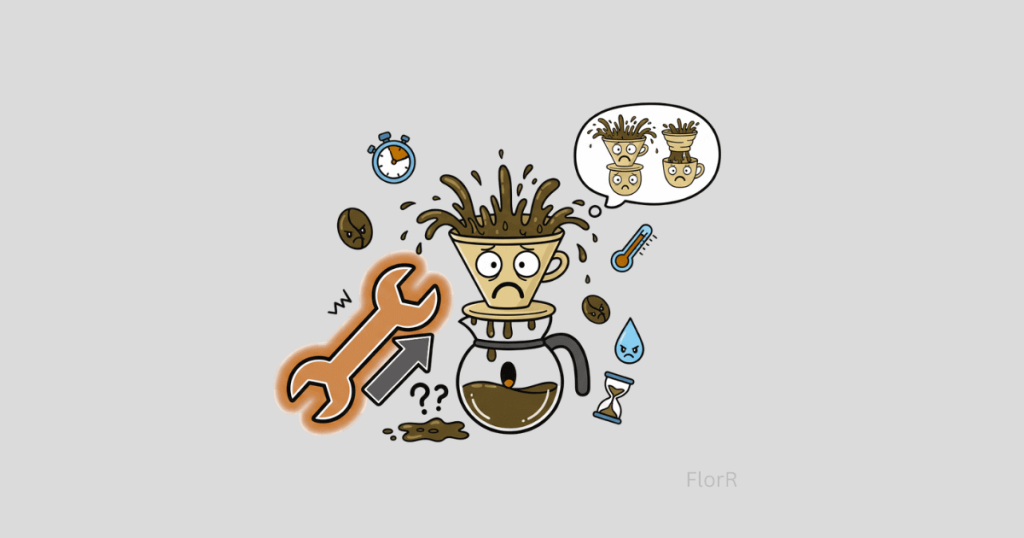
Your coffee didn’t turn out perfect? Here’s how to diagnose what went wrong and fix it for tomorrow:
Your Coffee Tastes…
TOO BITTER (Over-Extracted)
This means water pulled too much out of the coffee. Fix by:
- ✓ Grind coarser—bigger particles slow extraction
- ✓ Lower water temperature to 195°F
- ✓ Pour faster (less contact time with water)
- ✓ Use less coffee (try 1:17 ratio instead of 1:16)
TOO SOUR (Under-Extracted)
This means water didn’t pull enough out of the coffee. Fix by:
- ✓ Grind finer—smaller particles speed extraction
- ✓ Raise water temperature to 205°F
- ✓ Pour slower (more contact time)
- ✓ Use more coffee (try 1:15 ratio instead of 1:16)
WEAK AND WATERY
You’re not extracting enough flavor. Fix by:
- ✓ Use more coffee (20g instead of 15g)
- ✓ Grind finer to slow water flow
- ✓ Pour slower in smaller, tighter circles
- ✓ Check if your beans are fresh (bloom should bubble)
MUDDY AND FLAT
Your coffee has lost its complexity. Fix by:
- ✓ Use fresher coffee (within 30 days of roasting)
- ✓ Clean your grinder—old coffee oils go rancid and contaminate new batches
- ✓ Try a different coffee origin
- ✓ Check your water quality—bad water makes bad coffee always
UNEVEN OR ASTRINGENT
This harsh, dry feeling means uneven extraction. Fix by:
- ✓ Pour more evenly to hit all grounds
- ✓ Level your coffee bed before brewing
- ✓ Upgrade from blade grinder to burr grinder
- ✓ Make sure you rinsed your filter
Your Grind Size Guide
| Looks Like | Feels Like | Works Best For | Too Fine = | Too Coarse = |
|---|---|---|---|---|
| Sea salt | Slightly gritty | Hario V60 | Bitter, slow (4+ min) | Sour, fast (2 min) |
| Kosher salt | Coarse sugar | Chemex | Over-extracted, muddy | Weak, watery |
| Table salt | Sandy | Kalita Wave | Clogged, won’t drain | Under-extracted, sour |
Quick test you can do right now: Rub grounds between your fingers. Should feel gritty, not powdery. If it clumps into a ball, too fine. If it feels like beach sand, too coarse.
Still having problems after these adjustments? The issue is probably your grinder or stale beans, not your technique.
Common Mistakes Making Pour Over (And How You’ll Avoid Them)
After watching hundreds of people make pour-over coffee, these mistakes keep appearing. The good news? They’re all easy to fix once you know what to look for.
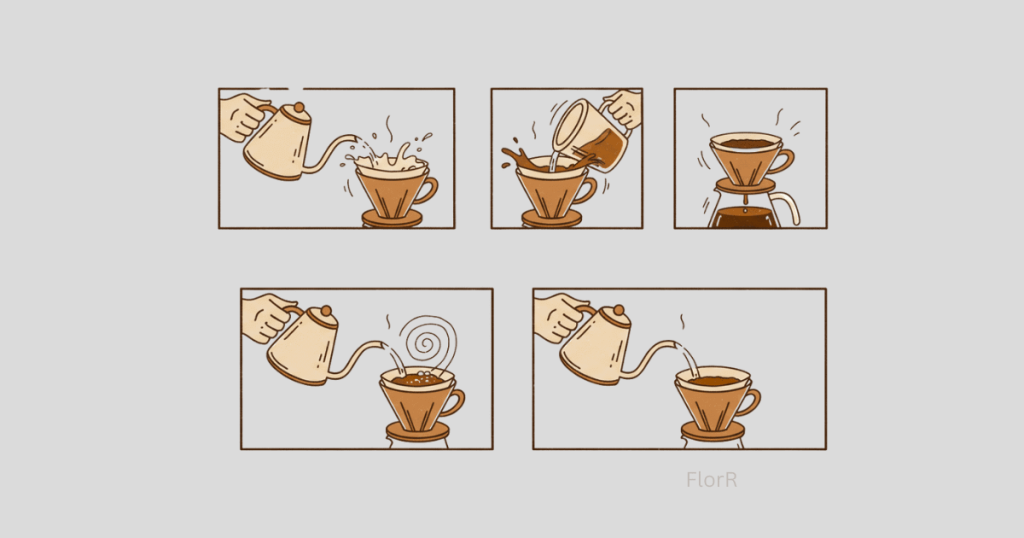
Mistake 1: Pouring Too Fast in the Center
What happens: You create a crater in the middle. Water channels straight through the center like a funnel, leaving dry grounds around the sides. Result: sour, weak coffee because half your grounds never got wet.
Your fix: Start in the center, then move outward in spirals. Every ground should get wet. The goal isn’t pretty spirals, it’s even coverage.
I watched a barista at Devoción in Brooklyn demonstrate this perfectly. She poured the same Colombian coffee two ways. Center-only pour? Sour and thin. Even spiral? Sweet and full-bodied. Same beans. Totally different cup.
Mistake 2: Using Boiling Water on Delicate Beans
What happens: Most people pour right when the kettle boils (212°F). This temperature over-extracts delicate light roasts, making them harsh and astringent instead of bright and floral.
Your fix: Let water cool for 30 seconds after boiling to hit 200-205°F. Even better, get a temperature-controlled kettle so you know exactly what you’re working with.
At Partners Coffee in Flatiron, their barista showed me the difference side-by-side. At 205°F, their Ethiopian tasted like blueberries and tea. At 212°F, the same beans tasted burnt and bitter. Seven degrees made or broke the cup.
Mistake 3: Skipping the Bloom
What happens: Fresh coffee is full of trapped CO2 from roasting. Without blooming, that CO2 repels water, preventing even extraction. You get sour notes and uneven flavors.
Your fix: Always bloom for 30-45 seconds with 2x the coffee weight in water. Every single time. No shortcuts.
This lesson came from my grandmother in Villa Rica. She could taste by the first sip if I rushed the bloom. “¿No lo dejaste respirar?” she’d ask. (You didn’t let it breathe?) She was right every time.
Mistake 4: Not Leveling Your Coffee Bed
What happens: Water flows through low points and avoids high points. Your coffee bed looks like a topographic map. Water takes the path of least resistance, leaving some grounds over-extracted and others under-extracted.
Your fix: After adding grounds, gently shake your dripper side to side until grounds are level. Takes 2 seconds. Makes a noticeable difference.
I ignored this advice for years until a Blue Bottle barista showed me side-by-side. Same coffee, same everything except one level bed and one uneven. The level one tasted noticeably sweeter and more balanced.
Mistake 5: Using Stale Coffee
What happens: Coffee older than 30 days has lost its volatile aromatics—those compounds that make coffee interesting. No brewing method can bring back what’s gone.
Your fix: Buy coffee with a roast date printed on the bag (not “best by” date). Use it within 30 days. Store in an airtight container away from light and heat.
This is the most common mistake I see. People invest in expensive grinders and perfect their technique, then use coffee from six months ago. Start with fresh beans. Everything else follows.
Want more guidance on choosing beans? Check out my coffee bean selection guide.
Equipment Recommendations: What I Actually Use
After testing dozens of brewers and grinders at home and across NYC shops, here’s what works at different budgets:
For Your First Setup ($70-100 total)
Kalita Wave 185 ($35) – Most forgiving dripper you can buy
Hario Mini Mill Hand Grinder ($35) – Budget option, decent consistency
Basic Gooseneck Kettle ($20) – Control matters more than brand
Simple Digital Scale ($16) – Cheap ones work fine for coffee
This setup makes consistently good coffee. You’ll outgrow the hand grinder first, but it’s a solid start.
For Daily Coffee Ritual ($300-400 total)
Hario V60 Size 02 ($15) – Maximum control over your brew
Baratza Encore Grinder ($170) – Best value for grind consistency
Fellow Stagg EKG Kettle ($195) – Temperature control to the exact degree
Basic Scale ($16) – Still don’t need an expensive scale
This is the sweet spot. The Encore transforms your coffee quality more than any other single upgrade. Everything else is refinement.
For Coffee Enthusiasts ($700+ total)
Origami Dripper ($45) – Best of both V60 and Kalita designs
Fellow Ode Grinder ($350) – Designed specifically for pour-over
Fellow Stagg EKG Kettle ($195) – Still the best kettle at any price
Acaia Pearl Scale ($130) – 0.1g precision, pairs with app for tracking
This is what I use daily. Worth it if coffee is your hobby and you’re brewing every morning. Not necessary if you just want great coffee without going deep.
What matters most in order:
Your grinder > Your water quality > Your coffee freshness > Everything else
Spend money in that priority. An expensive kettle with a blade grinder makes bad coffee. A cheap kettle with a good burr grinder makes excellent coffee.
For more complete equipment recommendations, check my home barista brewing guide.
Your Next Steps
You’ve got everything you need to make pour-over coffee that rivals what coffee shops charge $6 for.
The technique isn’t complicated. Good beans. Hot water. Proper grind size. Even pouring. That’s it.
Your starting point: 20g coffee, 320g water, 200°F temperature, medium-fine grind. Make this exact recipe ten times before changing anything. Then adjust based on how it tastes.
What I learned in Villa Rica works in any kitchen. Start with the fundamentals. Taste your results. Adjust one variable at a time. You’ll be making better coffee than most cafes within a week.
That unused Chemex or V60 collecting dust? Today’s the day to actually use it.
Ready to start? Boil your water.
From NYC’s West Village and Peru—happy brewing. ☕
Related Guides You’ll Find Helpful:
- Master French Press Coffee: Your Complete Guide
- Perfect Coffee-to-Water Ratios for Every Brewing Method
- How to Choose Coffee Beans: Beginner’s Guide
- Coffee Bean Origins: The Ultimate Guide
- 11+ Popular Brewing Methods Compared
Frequently Asked Questions About Pour-Over Coffee
How do you make pour-over coffee step by step?
Heat water to 200°F. Rinse your filter. Add 20g ground coffee (medium-fine grind). Bloom with 40g water for 30-45 seconds. Pour to 160g in a spiral motion.
Pour 320 320g total. Let it drain completely (3-4 minutes total). Your ratio is 1:16 coffee to water. Adjust to your taste from there.
What’s the best pour-over method for beginners?
Kalita Wave is the most forgiving pour-over brewer you can buy. Its flat bottom and three drainage holes make even extraction almost automatic.
The V60 requires precise technique. Start with Kalita Wave, upgrade to V60 once you’ve mastered the basics and want more control.
Do you need a gooseneck kettle for pour-over?
No, but it helps. A gooseneck kettle’s thin spout gives you control over pour speed and placement.
Regular kettles work, but make precision harder. If you’re making pour-over daily, a $20-30 gooseneck kettle is worth it. If you’re brewing occasionally, save your money.
How fine should I grind coffee for pour-over?
Grind to medium-fine, like sea salt. It should feel slightly gritty between fingers, not powdery. Too fine causes over-extraction (bitter taste, slow brew over 4 minutes).
Too coarse causes under-extraction (sour taste, fast brew under 2:30). Adjust based on how your coffee tastes.
Why does my pour-over taste bitter?
Bitter pour-over means over-extraction. Fix it by: grinding coarser, lowering water temperature to 195°F, pouring faster (reducing contact time), or using less coffee (try 1:17 ratio). Most often, the culprit is grind size that’s too fine.
Can I use regular coffee in a pour-over?
Yes, any coffee works in a pour-over. But pour-over highlights everything about your beans—both the good and bad. Stale or low-quality coffee tastes worse as pour-over than in French press or a drip machine.
For best results, use fresh-roasted, high-quality beans within 30 days of roasting.
What’s the difference between pour-over and drip coffee?
Pour-over gives you complete control over water temperature, pour speed, and contact time. Drip machines automate everything with less precision. Pour-over typically extracts more flavor complexity and clarity.
Drip is faster and more convenient. Same basic principle (water passing through grounds), different levels of control.
How much coffee do I use for one cup pour-over?
Use 15-20 grams of coffee for an 8-12 oz cup. The standard ratio is 1:16 (1 gram coffee to 16 grams water).
So 15g of coffee needs 240g (8 oz) of water. 20g of coffee needs 320g (11 oz) of water. Adjust stronger (1:15) or weaker (1:17) based on your preference. See my complete coffee-to-water ratio guide for other brewing methods.
Is pour-over coffee stronger than regular coffee?
Pour-over isn’t stronger in caffeine—that’s determined by your coffee-to-water ratio. But pour-over extracts more flavor compounds, making it taste more intense and complex.
If you brew both methods at 1:16 ratio, caffeine content is similar. Pour-over just highlights flavors drip machines miss.
What water temperature is best for pour-over?
Use 195-205°F (90-96°C) depending on roast level. Light roasts need 203-205°F for full extraction. Medium roasts work at 200°F. Dark roasts prefer 195-198°F to avoid over-extraction.
Most home brewers use water too hot; let the boiling water cool for 30 seconds before pouring.


