This site contains affiliate links. I may earn a commission if you purchase through these links. Thank you for being so supportive!
You launched a new seasonal drink three weeks ago. You’re pretty sure it’s doing okay. But you don’t actually know if it’s profitable, if customers love it, or if it’s stealing sales from your other drinks.
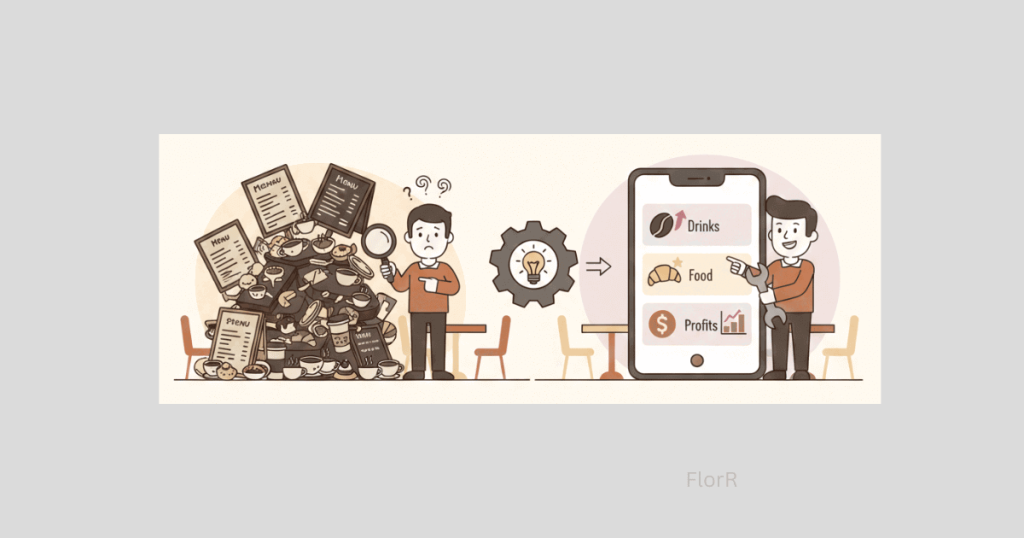
Most coffee shop owners set their menu once and forget it. They assume what’s working without checking the numbers. But here’s the truth: coffee shop menu optimization is the difference between leaving money on the table and maximizing profit.
I’ve worked with café owners who thought their pumpkin spice latte was a winner, until we ran the numbers and discovered it barely broke even. Meanwhile, their simple americano was quietly generating 40% margins.
That’s what coffee shop menu optimization does. It shows you which drinks make money, which need price adjustments, and which are draining profits.
Let me show you how to build an optimization system that works as hard as you do.
Explore the coffee directory
Want to see how real coffee shops turn these strategies into sales?
Why Coffee Shop Menu Optimization Actually Matters
Your menu isn’t static. Everything around it changes constantly.
Ingredient costs fluctuate. Your oat milk supplier raises prices by 15%. Your coffee roaster increases wholesale costs. Suddenly, your margins on five drinks just got thinner without you changing a thing.
Customer preferences evolve. What sold incredibly well last year might flop this year. Trends shift. New competitors influence what customers expect. Your vanilla latte might be getting crushed by a newer café’s brown sugar cinnamon version.
Seasons affect everything. Cold brew crushes in July but bombs in January. Your pumpkin spice latte prints money in October but sits untouched in March. If you’re not adjusting for seasonality, you’re missing massive opportunities.
Competition increases. Three new specialty coffee shops opened within two miles of you this year. They’re offering similar drinks at similar prices. If you’re not actively optimizing, you’re falling behind.
One Brooklyn café I worked with hadn’t changed their menu in three years. When we finally analyzed their data, we discovered that 8 of their 22 drinks accounted for 75% of revenue. The other 14 were just confusing customers and wasting ingredients.
After implementing quarterly coffee shop menu optimization, their profit increased 31% in four months. Same location. Same staff. Just smarter menu decisions.

cOFFEE HOODIES
COFFEE T-SHIRTS
EMBROIDERY
The 5 Metrics That Tell You Everything
You can’t optimize what you don’t measure. These five metrics tell you everything you need to know about menu performance.
Metric #1: Item Sales Volume
What it measures: How many of each drink you sell per day, week, or month.
Why it matters: This is your popularity baseline. High-volume items are customer favorites. Low-volume items might be dead weight taking up valuable menu space.
How to track it: Your POS system should have a sales report by item. Pull it monthly.
What to look for: Which 5 drinks consistently sell the most? Which drinks sell less than 10 times per month? Are any drinks steadily increasing or decreasing in popularity?
Metric #2: Contribution Margin
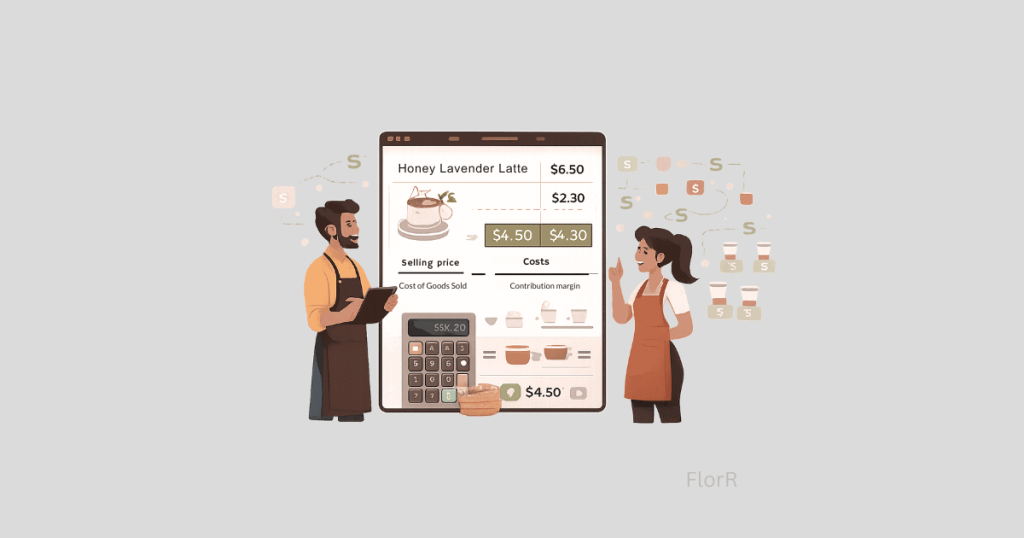
What it measures: How much money you actually make on each drink after ingredient costs.
Why it matters: A drink can be wildly popular but barely profitable. This metric shows your real money-makers.
How to calculate it: Contribution Margin = Selling Price – Cost of Goods Sold
Example: Honey Lavender Latte sells for $6.50, costs $2.20 to make = $4.30 profit per drink.
Do this calculation for every single drink on your menu.
Metric #3: Menu Mix Percentage
What it measures: What percentage of total sales each drink represents.
Why it matters: Shows which drinks dominate your sales and which are barely noticed.
How to calculate it: Menu Mix % = (Item Sales ÷ Total Sales) × 100
Example: You sold 1,000 drinks this month. Vanilla latte sold 180 times. Menu Mix = 18%.
V60 Coffee Maker
COFFEE SCALE
CHEMEX
Metric #4: Average Ticket Size
What it measures: Average amount customers spend per transaction.
Why it matters: Tells you if menu changes are increasing or decreasing how much customers actually spend.
How to track it: Most POS systems calculate this automatically. Check it weekly.
Metric #5: Food Cost Percentage
What it measures: What percentage of revenue goes to ingredient costs.
Why it matters: Industry standard is 25-30%. Higher means your margins are too thin.
How to calculate it: Food Cost % = (Total COGS ÷ Total Sales) × 100
The 8-Week Optimization Testing Cycle
Effective coffee shop menu optimization follows a consistent cycle. Here’s the exact system successful cafés use.
Phase 1: Baseline Analysis (Weeks 1-2)
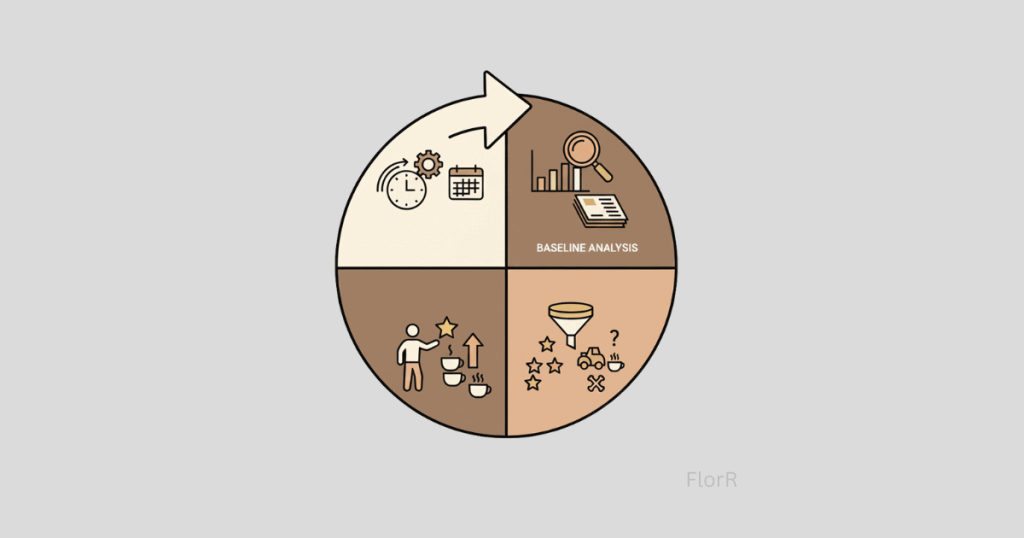
Before changing anything, understand where you are right now.
Pull 90 days of sales data from your POS system. Calculate contribution margin for every single drink. Identify your Stars, Plowhorses, Puzzles, and Dogs.
Here’s what those categories mean:
- Stars = High profit + High popularity (your best drinks—feature these)
- Plowhorses = Low profit + High popularity (need price increases)
- Puzzles = High profit + Low popularity (need better marketing/positioning)
- Dogs = Low profit + Low popularity (candidates for removal)
Note any customer complaints or repeated questions your baristas are hearing.
Phase 2: Form Your Hypothesis (Week 3)
Based on your analysis, form one testable hypothesis. Only one.
Example hypotheses:
- “If we increase vanilla latte price by $0.50, we’ll maintain 90% of sales but increase profit by $X monthly”
- “If we move cortado to the upper right corner of menu, sales will increase 25%”
- “If we remove the bottom 3 selling drinks, customers won’t notice and decision time decreases”
Write it down. Include your expected outcome.
Phase 3: Testing (Weeks 4-7)
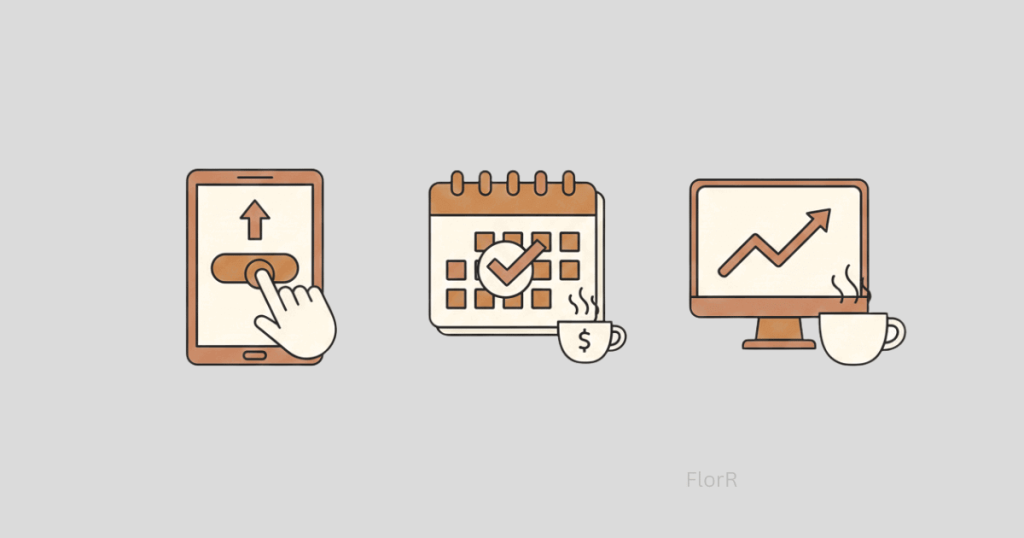
Implement your change and track results religiously.
For price changes: Adjust prices in your POS, update all menus, track sales volume and revenue daily, compare to the same period last year (not last month—coffee is seasonal).
For menu positioning: Redesign and print new menu, train staff on changes, track which drinks increase or decrease in sales.
For new items: Launch with clear promotion, track sales daily for 30 days, calculate actual contribution margin.
Phase 4: Analysis and Decision (Week 8)
After 4 weeks of testing, analyze results honestly.
Ask yourself: Did the change achieve what I expected? Were there unintended consequences? Is this worth keeping? What should we test next?
Decision options: Keep it permanently, revert to old way, modify and test again, or move to next hypothesis.
Phase 5: Iteration (Ongoing)
Repeat this cycle every quarter with new hypotheses. That’s how you build a consistently optimized menu over time.
5 Real-World Tests You Can Run This Month
Test #1: Strategic Price Increase
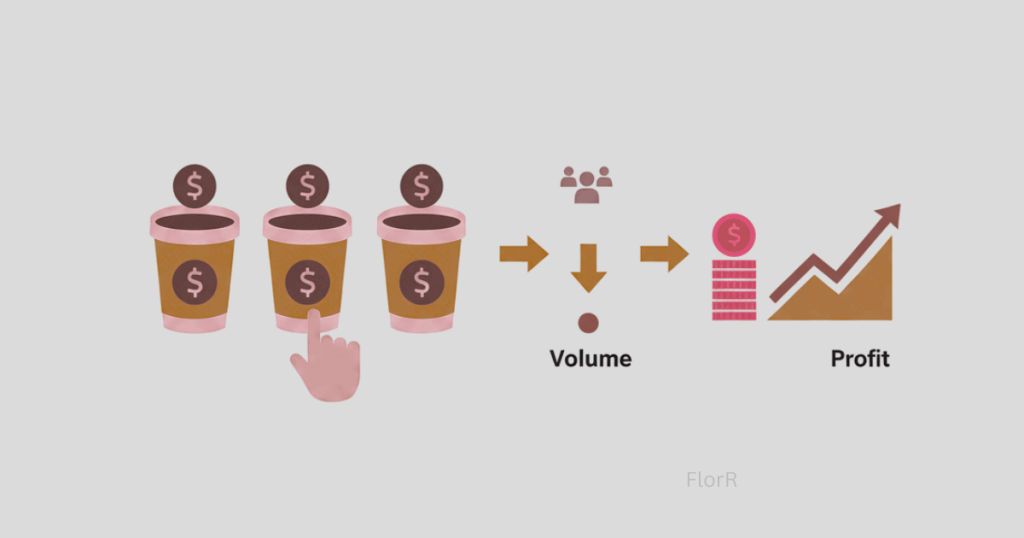
Increase prices on your top 3 high-volume, low-margin drinks by $0.50.
Most customers won’t notice small increases, especially if descriptions improve simultaneously.
Expected result: 5-10% volume decrease, but 15-25% profit increase.
Real example: A Portland café increased vanilla latte from $4.95 to $5.50. Sales dropped from 45 to 42 per day, but daily revenue increased from $222.75 to $231—an extra $2,928 annually.
Test #2: Menu Simplification
Remove your 3 lowest-selling drinks completely.
Reducing options decreases decision fatigue and speeds ordering. Customers make faster decisions and baristas work more efficiently.
Expected result: No significant decrease in total sales, faster ordering, less waste.
Test #3: Golden Triangle Positioning
Move one high-margin drink to the upper right corner of your menu. The Golden Triangle
Eyes naturally land here first when scanning menus. This is backed by eye-tracking research.
Expected result: 20-40% increase in sales of the repositioned drink.

Commercial Coffee Brewers

commercial Blenders
CHEMEX for your Café
Test #4: Visible Add-Ons
Make add-ons dramatically more visible and train staff to suggest them.
Add clear pricing under every drink: “+0.75 oat milk | +0.50 extra shot | +0.50 vanilla”
Create a simple script: “Would you like to add oat milk or an extra shot today?”
Expected result: 15-30% increase in add-on purchases.
Real example: One Seattle café added visible add-on pricing. Oat milk upgrades jumped from 12% to 27% of orders—an additional $3,600 monthly in pure profit.
Test #5: Seasonal Rotation
Replace seasonal drinks every 6-8 weeks instead of once per season.
Creates ongoing novelty and urgency. Customers feel like they need to try it before it’s gone.
Expected result: Sustained customer interest throughout the season instead of a big launch that fizzles.
How to Use Customer Feedback in Optimization
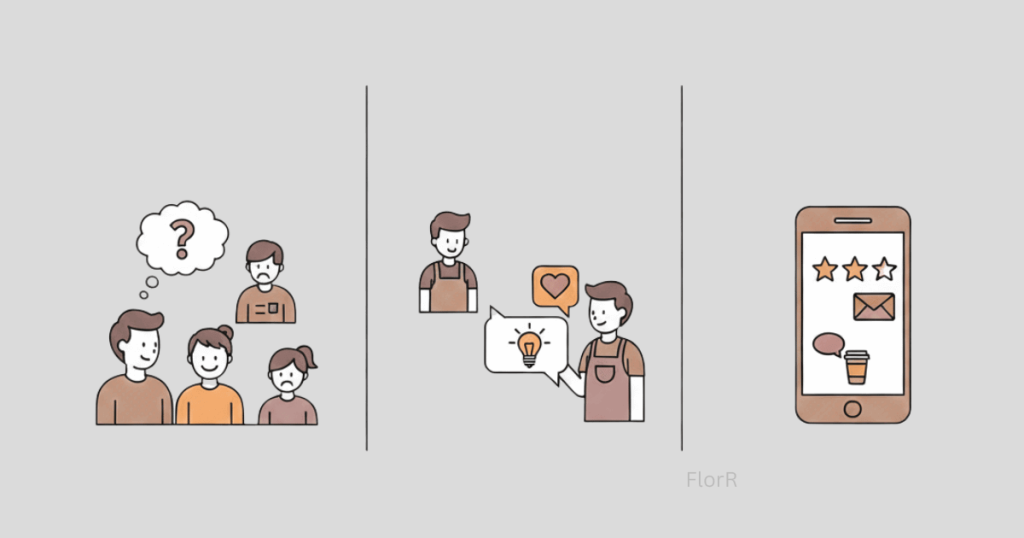
Numbers tell you what’s happening. Customer feedback tells you why.
Direct Observation
Pay attention to which drinks get the most questions, which customers struggle to pronounce, which get customized constantly, and which lead to visible satisfaction or disappointment.
Action items: Clarify confusing names. Make popular customizations the default. Remove drinks that consistently disappoint.
Staff Feedback
Your baristas interact with customers all day. Ask them weekly:
- Which drinks are customers requesting that we don’t have?
- Which drinks are annoying to make?
- Which drinks do customers genuinely love?
- What modifications do customers request repeatedly?
Digital Feedback
Check monthly: Google reviews mentioning specific drinks, Instagram comments on drink photos, direct messages, and online ordering notes.
Track which drinks get mentioned positively, what complaints appear repeatedly, and what people wish you offered.
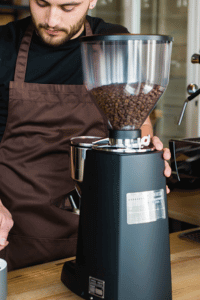
High-Output Commercial Coffee Grinder – Barista-Grade Consistency
Equip your café with a commercial grinder engineered for speed, consistency, and nonstop service. Designed for high-volume coffee shops that need precise grind size, powerful motors, and reliable performance every day. Explore top grinders trusted by professionals.
Common Menu Optimization Mistakes to Avoid
Mistake #1: Changing too much at once. You can’t tell which change caused which result. Test one thing at a time. Wait 4 weeks before testing the next.
Mistake #2: Not waiting long enough. Customer behavior takes 3-4 weeks to stabilize. Test all changes for minimum 4 weeks, ideally 6-8 weeks.
Mistake #3: Ignoring seasonality. Always compare this January to last January, not to last month. Coffee sales are naturally seasonal.
Mistake #4: Optimizing for revenue instead of profit. Always optimize for contribution margin, not total sales revenue.
Mistake #5: Keeping sentimental items. Let data guide decisions. If a drink doesn’t perform after 90 days, it goes—no matter how much you personally love it.
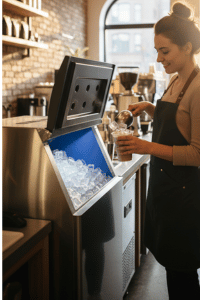
Commercial Ice Machine for Coffee Shops – High-Capacity Ice Production
Keep your café running smoothly with a commercial ice machine designed for high-demand beverage service. Fast production, dependable performance, and built for daily café operations. Explore top-rated models perfect for iced coffees, cold brews, and blended drinks.
Your Quarterly Optimization Checklist
Every Quarter:
- Pull 90 days of sales data
- Calculate contribution margin for all drinks
- Identify Stars, Plowhorses, Puzzles, Dogs
- Review ingredient costs and adjust if needed
- Check average ticket size trends
- Gather staff feedback
- Choose 1-2 items to test
- Update seasonal offerings
Monthly: Check sales reports for anomalies, review customer feedback, monitor food cost percentage.
Weekly: Check average ticket size, note customer questions.
Daily (during tests): Track sales of items being tested, note reactions, document insights.

Commercial Under-Counter Fridge – Built for Daily Coffee Shop Operations
Optimize your coffee shop with a commercial under-counter refrigerator designed for speed, efficiency, and tight spaces. Perfect for milk, syrups, and quick-access ingredients. Built for busy cafés that need reliable cooling all day. Explore top-rated models made for professional service.
Key Takeaways
- Coffee shop menu optimization is an ongoing quarterly process, not a one-time project
- Track five essential metrics: sales volume, contribution margin, menu mix %, average ticket, food cost %
- Test one significant change at a time using a structured 8-week cycle
- Always compare year-over-year data to account for seasonal variations
- Small price increases ($0.25-$0.50) rarely hurt sales but significantly boost profit
- Remove drinks selling less than 10 times per month to reduce decision fatigue
- Customer feedback explains why your data looks the way it does
Final Thoughts
Coffee shop menu optimization isn’t complicated; it’s just consistent.
Every quarter, you check the numbers. You identify one clear opportunity. You test it for 4-6 weeks. You keep what works and eliminate what doesn’t.
The cafés making the most money aren’t guessing about what works. They’re not assuming their menu is fine just because customers keep coming. They’re testing. They’re measuring. They’re improving based on real data.
Your menu works 24/7. It influences every single customer decision without you having to say a word. It’s one of your most powerful profit tools.
Make sure it’s actually making you money, not just taking up space on your wall.
Ready for the complete menu design system from start to finish?
👉 How to Design a Coffee Shop Menu That Maximizes Profit
Own a coffee shop? See how you compare.
Explore real coffee shops applying the strategies you just learned—then add your café to the directory to get discovered by customers searching by location.
FAQs About Coffee Shop Menu Optimization
How often should I optimize my coffee shop menu?
Conduct a full menu analysis every quarter (every 3 months). Run individual tests monthly. Review basic metrics like average ticket and top sellers weekly. This keeps your menu fresh without overwhelming you or confusing customers.
What’s the most important metric for menu optimization?
Contribution margin, the actual profit you make per drink after ingredient costs. A drink can be extremely popular but barely profitable. Always optimize for profit per drink, not just sales volume.
How long should I test menu changes before deciding?
Minimum 4 weeks, ideally 6-8 weeks. Customer behavior takes time to stabilize after any menu change. One-week tests are meaningless because you’re seeing knee-jerk reactions, not real patterns.
Should I test multiple menu changes at the same time?
No. Test one significant change at a time so you know exactly which change caused which result. The only exception is testing different price points on different drinks simultaneously.
What if customers complain about menu changes?
Some resistance is normal. If less than 5% of customers complain and your sales data looks good, proceed with confidence. If 10% or more complain or your sales tank, seriously reconsider the change.
Can I test menu changes without reprinting everything?
Absolutely. For positioning tests, use digital displays or temporary overlays. For price tests, update your POS and use stickers on printed menus. Only invest in full reprints after confirming changes work.
Should I remove drinks that customers love but aren’t profitable?
First, try increasing the price. If customers truly love it, they’ll pay more. If sales drop significantly after the increase, you’ve found their real willingness to pay. If it’s still unprofitable even at higher prices, remove it