This site contains affiliate links. I may earn a commission if you purchase through these links. Thank you for being so supportive!
Your coffee shop menu isn’t just a list of drinks and prices; it’s your silent salesperson working 24/7 to guide choices, increase ticket averages, and maximize profit margins.
Strategic menu design can boost revenue by 15-30% without serving a single extra customer.
Many coffee shop owners treat menu creation as an afterthought, yet when you design a coffee shop menu strategically, you transform confusion into clarity.
With 70% of customers spending less than 3 seconds scanning menus, proper engineering increases average tickets by $1.50-$3.00.
Here’s what profitable cafés understand: Your menu for your coffee shop is your most important marketing tool.
When you apply menu engineering principles and strategic pricing, you create a captivating coffee shop menu that drives profitability and enhances customer experience simultaneously.
Ready to transform your menu into a profit machine?
Learn how to design a coffee shop menu that maximizes profitability through strategic engineering, pricing, and design principles that guide customer choices and increase average ticket size.
What Is Menu Engineering and Why Does It Matter for Your Coffee Shop Menu?
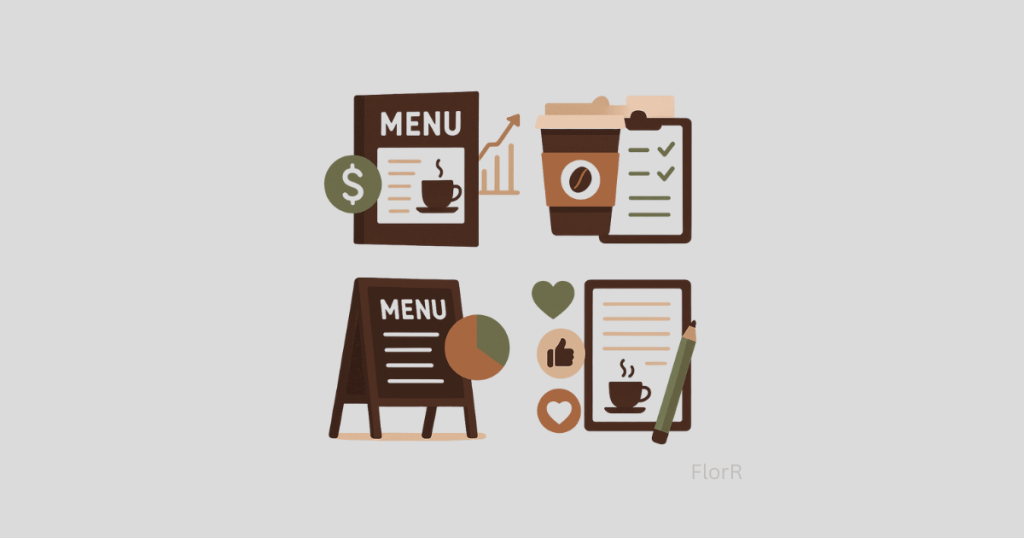
When you design a coffee shop menu, psychology matters more than your love for coffee. Menu engineering combines data with customer behavior science to maximize every sale.
The Science Behind Profitable Menu Design
70% of customers order from just 30% of your menu. Strategic placement, descriptions, and layout influence what people buy.
Crafting a captivating coffee shop menu that leverages proven psychological principles transforms browsers into buyers.
Coffee shops that apply menu engineering see 18-25% higher profit margins than those using random organization.
Your business coffee success depends on understanding these principles.
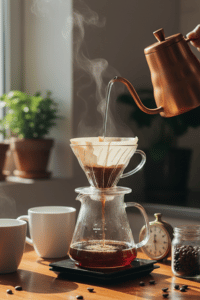
V60 Coffee Maker
COFFEE SCALE
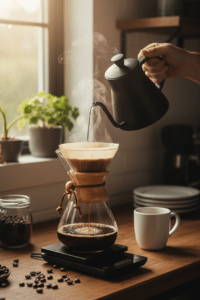
CHEMEX
Categorizing Menu Items for Profit
Every item falls into four categories:
- Stars – High profit, high popularity (promote these heavily)
- Plowhorses – Low profit, high popularity (raise prices or reduce costs)
- Puzzles – High profit, low popularity (market better to boost sales)
- Dogs – Low profit, low popularity (eliminate or reimagine completely)
As a coffee business marketing consultant, I helped one shop discover that their popular vanilla latte was a Plowhorse, costing them money.
A 50-cent price adjustment increased revenue by $800 per month without losing customers.
Using Engineering to Design a Coffee Shop Menu
Strategic Actions:
- Position Stars prominently when you design a coffee shop menu
- Increase Plowhorse prices or reduce ingredient costs
- Market Puzzles with better descriptions and placement
- Eliminate Dogs draining resources
Building an effective coffee shop menu requires identifying each category on your coffee shop’s menu, then optimizing strategically.
Menu engineering isn’t guessing; it’s using data to design a coffee shop menu that maximizes profit while serving what customers actually want.
Your passion for coffee deserves a profitable foundation.
How Do You Design a Menu for Your Coffee Shop That Customers Love?
When you design a coffee shop menu, psychology beats pretty every time.
Let’s break down how to create menus customers can scan, understand, and order from fast. If you are starting a coffee business, this guide will help you.
What Are the Menu Design Best Practices Every Coffee Shop Should Follow?
Eye-tracking research shows customers scan in Z or triangle patterns. Place high-profit items in the golden triangle (upper right for single page, center for tri-fold). Strategic placement increases specific item sales by 20-30%.
Keep It Simple
Many coffee shops fail with too many options; decision paralysis kills sales. Keep your menu to 15-30 items. The “rule of 7” says customers easily process seven or fewer options per category.
Coffee shops with focused menus (under 25 items) serve customers 40% faster and have 22% higher profit margins than extensive menus (40+ items).
Test your current menu, hand it to five people for three seconds, take it away, and ask what they remember. If they can’t recall high-profit items, your layout needs work.

Commercial Coffee Shop Espresso Machines – Precision, Power & Consistency
Power your café with a commercial espresso machine built for speed, consistency, and high-volume service. Designed for busy coffee shops that demand perfect shots, reliable steam power, and all-day durability. Explore top models trusted by professional baristas.
How Should You Organize Your Coffee Shop’s Menu Categories?
Logical Structure
- Start with espresso-based drinks
- Follow with brewed and filtered coffee
- Then alternative beverages
- Food items last (or separate menu)
Place high-profit items first in each section.
One client reduced their menu from 52 to 24 items, worried about losing sales. Revenue increased 12% because service speed doubled and baristas made drinks consistently.
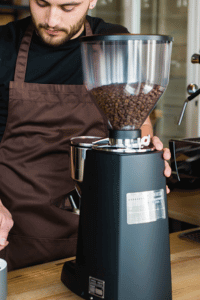
High-Output Commercial Coffee Grinder – Barista-Grade Consistency
Equip your café with a commercial grinder engineered for speed, consistency, and nonstop service. Designed for high-volume coffee shops that need precise grind size, powerful motors, and reliable performance every day. Explore top grinders trusted by professionals.
What Design Elements Create a Memorable Coffee Shop Menu?
Typography and Color
Use 10-12pt minimum for body text, 14-18pt for prices. Maximum 2-3 font families. Your coffee shop design should match the menu aesthetics for brand consistency.
Photography Reality
High-quality photos increase sales by 30%, but amateur shots hurt more than help.
As a coffee business marketing consultant, I advise: unless investing $500-$2K in professional photography, skip photos entirely. Design a coffee shop menu using clean typography instead.
How Do You Price Your Coffee Shop Menu for Maximum Profitability?
Pricing makes or breaks your coffee shop’s profitability.
Here’s how to design a coffee shop menu with strategic pricing that maximizes revenue.
What Pricing Strategies Work Best for Coffee Shop Menus?
Cost-Plus vs. Value-Based Pricing
Most successful shops use hybrid approaches. Calculate costs, multiply by 3-4x for baseline. Then adjust based on perceived value and positioning.
Your menu pricing should reflect whether you’re a specialty or traditional.
- Remove dollar signs (reduces price pain, increases tickets 8-12%)
- Avoid decimal alignment (prevents easy price comparison)
- Use charm pricing ($3.95 vs $4.00) strategically
- Anchor high: place premium items first
Price signature drinks for 70-75% gross margin as profit drivers. Price basic coffee competitively (60-65% margin) to bring customers in.
Let 20% of the menu be loss leaders if needed.
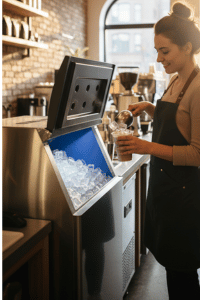
Commercial Ice Machine for Coffee Shops – High-Capacity Ice Production
Keep your café running smoothly with a commercial ice machine designed for high-demand beverage service. Fast production, dependable performance, and built for daily café operations. Explore top-rated models perfect for iced coffees, cold brews, and blended drinks.
How Do You Calculate Ideal Menu Pricing for Each Coffee Offering?
Understanding True Costs
Most coffee shop owners underestimate costs by 15-25%. Include direct costs (beans, milk, cups) plus waste, training time, and equipment wear when you design a coffee shop menu.
Margin Targets by Category
- Espresso drinks: 75-85% gross margin
- Brewed coffee: 85-90% (highest margin)
- Specialty drinks: 70-80%
- Food items: 60-70%
Create logical price ladders with $0.50-$0.75 increments between sizes. Make medium your most profitable size.

Commercial Under-Counter Fridge – Built for Daily Coffee Shop Operations
Optimize your coffee shop with a commercial under-counter refrigerator designed for speed, efficiency, and tight spaces. Perfect for milk, syrups, and quick-access ingredients. Built for busy cafés that need reliable cooling all day. Explore top-rated models made for professional service.
When and How Should You Adjust Coffee Shop Prices?
Strategic Timing
Annual price increases tied to coffee costs maintain healthy margins. Gradual increases (25-50 cents) every 12-18 months beat big jumps.
As a coffee business marketing consultant, I’ve seen shops wait too long, hurting profitability unnecessarily.
Coffee shop businesses that raise prices annually are 2x more likely to survive five years than those that never adjust.
Test prices on new items, monitor volume after changes, and track which items are price-sensitive versus price-insensitive when you design a coffee shop menu.
What Coffee Offerings Should You Include on Your Menu?
When you design a coffee shop menu, you need foundations before flair.
Let’s break down what belongs on your menu and what doesn’t.
What Are the Essential Coffee Menu Items Every Coffee Shop Needs?
The Non-Negotiable Foundation
- Espresso (single, double)
- Americano, latte, cappuccino
- These form the base that every coffee shop must have
High-Demand Additions
- Mocha (appeals to coffee newcomers)
- Iced coffee and cold brew (year-round necessities now)
- Flat white and macchiato for coffee enthusiasts
Menu Balance Formula: Aim for 60% traditional drinks, 25% specialty coffee that differentiates your shop, 15% non-coffee options.
This serves coffee lovers while welcoming everyone.

Commercial POS System for Cafés – Speed, Accuracy & Easy Management
Upgrade your café with a POS system designed for speed, accuracy, and daily coffee shop workflows. Take orders faster, track sales in real time, and manage your entire menu with ease. Perfect for high-volume cafés that want smoother service and higher revenue. Explore top-rated POS systems built for modern coffee shops.
How Do You Decide on Specialty Coffee and Seasonal Menu Items?
Creating Signature Drinks
Develop 1-3 truly unique offerings using local ingredients when possible. Ensure specialty drinks are teachable to baristas and hit 75%+ profit margins to make your menu stand out profitably.
Seasonal Strategy
Popular coffee shops introduce seasonal items quarterly, replacing 3-5 drinks by introducing seasonal offerings.
Test seasonals before making permanent. One shop added eight fall drinks, but baristas couldn’t remember recipes. Service slowed 40%, and complaints rose. They narrowed to three seasonals with laminated recipe cards, success.
What Non-Coffee Options Should Be on Your Coffee Shop’s Menu?
Essential Non-Coffee Beverages
- Hot chocolate, tea selection (3-5 varieties)
- Chai latte, matcha latte (high margins)
- Every coffee shop loses sales without non-coffee options
Food Considerations
Food increases the average ticket by 35-50% but adds complexity. Pastries, breakfast items, and lunch options each require careful consideration when you design a coffee shop menu.
Before adding any item, ask:
- (1) Does it use existing ingredients?
- (2) Can baristas make it under three minutes?
- (3) Does it fill a customer need?
- (4) Can we maintain quality at volume? If not “yes” to all four, don’t add it.
A profitable menu is often a smaller menu.
How Do You Create a Coffee Shop Menu Template and Design Layout?
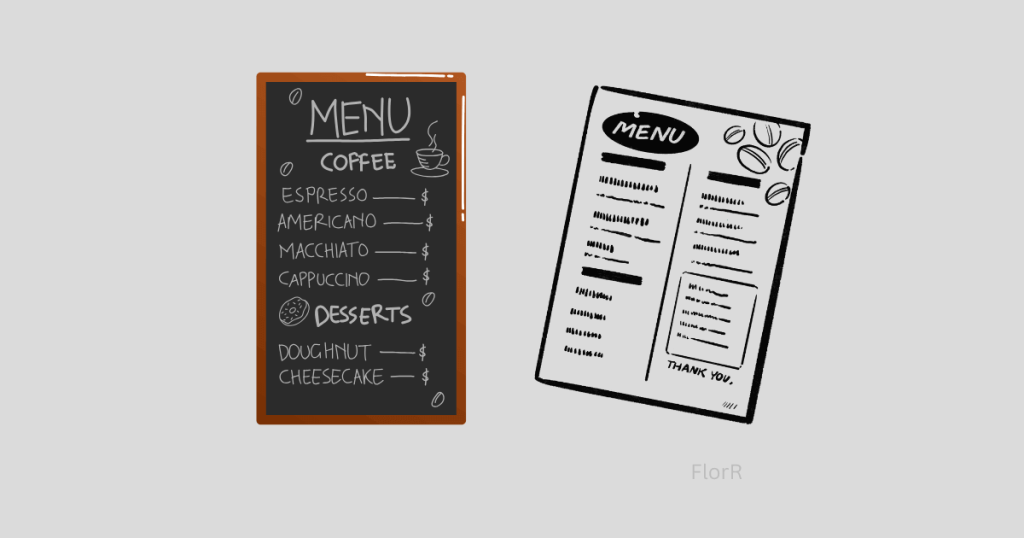
The design process for your menu matters just as much as what’s on it.
Here’s how to design a coffee shop menu that looks professional and drives sales.
What Coffee Shop Menu Design Software and Tools Should You Use?
Design Software Options
- Canva (easiest for non-designers, templates available, $13/month)
- Adobe InDesign (professional standard, $20/month)
- Template-based tools for restaurant menus
- Design software choice depends on your skill level
Budget-Friendly Resources
Many coffee shops start with Canva templates and customize. Etsy offers custom templates ($10-50). Google Docs works for simple text menus.
Professionally designed menus increase average ticket by 12-18% compared to amateur designs, paying for themselves in 2-4 weeks.
Starting? Use a Canva template and get your menu functional.
After six months, when you know what sells, invest in professional design. Perfect menus don’t matter if you can’t afford to open.
Artisanal Coffee Roaster Machines – Precision Craft for Perfect Beans
Discover Artisanal Coffee Roaster Machines designed for small-batch perfection. Roast beans with precision, enhance flavor, and enjoy café-quality coffee at home or in your shop. Built for freshness, crafted for coffee lovers.
What Are the Physical Menu Options for Your Coffee Shop Design?
Menu Board Options
- Digital menu boards (TV screens, $500-$3,000)
- Backlit boards ($1,000-$5,000)
- Chalkboard menus (charming but require artistic skill)
- Printed mounted boards ($200-$800)
Digital and Mobile Menus
QR code menus save printing costs and allow easy updates. Instagram menu posts and website integration expand reach.
Digital menus make price changes simple when coffee costs fluctuate, or your espresso machine needs upgrades.

Commercial Coffee Brewers

commercial Blenders
CHEMEX for your Café
How Do You Design a Coffee Shop Menu Layout That Drives Sales?
Layout Format Choices
- Single page: simple, scannable, best for focused menus
- Tri-fold: more space, but can feel overwhelming
- Menu board: visible from a distance, harder to update
Information Hierarchy
Drink name, largest, brief description (one sentence max), then size options and prices. Make the menu look organized to create visually appealing layouts.
Strategic Callouts
Box high-profit specialty coffee. Use “Popular” or “Staff Favorite” badges; they increase sales by 20%+.
When you design a coffee shop menu, limit callouts to 2-3 maximum. Your favorite coffee might deserve highlighting, but don’t overuse this tactic.
How Do You Write Menu Descriptions That Sell More Coffee?

When you design a coffee shop menu, words sell just as much as the coffee itself.
Let’s break down how to write descriptions that make customers order.
What Makes an Effective Coffee Menu Description?
Sensory Language Power
Use taste descriptors (smooth, rich, bold, creamy), invoke aroma (fragrant, aromatic), and texture words (velvety, silky). Sensory descriptions increase sales of described items by 27%. Create a coffee experience through words.
Keep It Concise
- 8-15 words maximum
- Focus on benefits, not ingredients
- Answer “Why would I want this?”
- Traditional drinks need minimal description
- Specialty items need more explanation
What to Avoid
Skip generic words (“delicious,” “amazing”). Don’t list obvious information (“made with espresso and steamed milk” for lattes). Avoid adjectives without meaning.
Example:
Good: “Smooth espresso meets velvety steamed milk and a whisper of vanilla.”
Bad: “Delicious vanilla latte made with espresso, milk, and vanilla syrup.”

cOFFEE HOODIES
COFFEE T-SHIRTS
EMBROIDERY
How Do You Highlight Your Best Coffee and Signature Drinks?
Visual Emphasis
- Use boxes or shading for signature items
- Slightly larger font for premium offerings
- Icons for popular drinks
- Make high-profit items impossible to miss
Naming Strategies
Proprietary names for signatures (“The [YourShop] Mocha”) drive curiosity. Location-based names create local pride.
When you design a coffee shop menu by introducing seasonal offerings or highlighting specific coffee blends, memorable names drive word-of-mouth for your thriving coffee shop.
Price Anchoring
List your most expensive item first. A $7 premium signature makes $5 specialty drinks seem reasonable, then $4 standards seem like great value. Without the $7 anchor, those $5 drinks seem expensive.
I’ve seen shops increase specialty drink sales by 35% just by reordering their menu and using colors to create visual emphasis.
Great descriptions transform browsers into buyers when you design a coffee shop menu strategically.
What Common Coffee Shop Menu Design Mistakes Should You Avoid?
40% of customer complaints in coffee shops stem from menu confusion.
Here’s how to avoid the mistakes that kill sales when you design a coffee shop menu.
The “Everything Menu” Trap
Many coffee shops fail by overextending their menu. A traditional coffee shop offering 40+ items creates slow service, high waste, and barista confusion.
A cluttered menu overwhelms customers and underperforms financially.
Keep your new coffee shop focused, 15-30 items maximum. Your coffee shop business plan should prioritize quality over quantity.
Poor Pricing Psychology
Common Pricing Mistakes:
- Dollar signs trigger price resistance
- Decimal-aligned prices make comparison too easy
- Pricing all items the same (no anchoring effect)
- Coffee shop prices should guide decisions, not just inform
Remove dollar signs and use charm pricing ($3.95 vs $4.00) strategically.
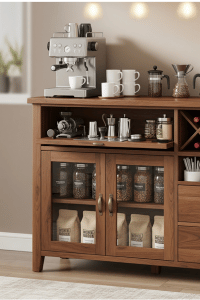
Modern Coffee Shop Furniture
Contemporary coffee shop furniture is designed for style and comfort. Create an inviting, elegant space where customers can relax, connect, and enjoy every cup in a modern atmosphere.
Design Mistakes That Kill Sales
Coffee shops lose 15-20% of potential sales due to poor menu readability. Avoid these errors:
Visual Problems:
- Tiny fonts (under 10pt)
- Low contrast makes text unreadable
- Too many fonts (looks amateur)
- Poor coffee shop layout, lighting
- Amateur photos that make fresh coffee look unappealing
One client insisted on a beautiful chalkboard menu for their coffee house, but the barista’s handwriting was illegible.
Customers couldn’t read it, kept asking questions, and service slowed. Switched to a printed board, problem solved.
Operational Disconnects
Critical Errors:
- Menu items baristas can’t execute consistently
- Ingredients not in stock
- Seasonal items still listed months later
- Prices not matching the POS system
33% of new menu items fail within three months due to a lack of testing. When you design a coffee shop menu, ensure your menu gets tested with your team before launch.
Avoid these mistakes to ensure your menu drives sales instead of confusion. Test everything, keep it simple, and make it readable; that’s how you design a coffee shop menu that actually works.
How Do You Test and Optimize Your Coffee Shop Menu Over Time?

Here’s the thing: when you design a coffee shop menu, you’re not done on opening day. Optimization is ongoing.
Let’s break down how to improve performance over time.
What Metrics Should You Track for Menu Performance?
Sales Data Analysis
- Track sales by item (daily, weekly, monthly)
- Calculate the contribution margin for each menu item
- Identify stars, plowhorses, puzzles, and dogs quarterly
- Data-driven decisions beat gut feelings every time
Customer Behavior
Monitor average ticket size, customization frequency, and peak hour bottlenecks. Ask customers about menu clarity. A profitable menu is also an efficient menu.
Run menu engineering analysis quarterly. Any item on your menu selling fewer than five units daily and below a 65% margin is a candidate for removal or repricing. No exceptions.

HIGH TABLE
With Stools

LONG TABLE
With Stools
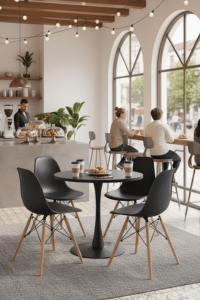
BLACK TABLE
With Chairs
How Often Should You Update Your Coffee Shop’s Menu?
Strategic Refresh Cycles
- Minor updates: Monthly (specials, limited items)
- Seasonal changes: Quarterly
- Major revision: Annually (full engineering review)
- Pricing adjustments: Every 12-18 months
Test Before Committing
Use the LTO (Limited Time Offer) strategy. Feature as “special” before menu addition. Get customer feedback and sales data.
Only successful tests earn permanent spots when opening a coffee shop or refining an existing one.
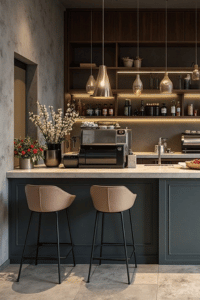
Modern Café Stools – Stylish Comfort for Coffee Shops & Homes
Upgrade your space with Modern Café Stools – sleek, durable, and designed for comfort. Perfect for coffee shops, kitchens, and bars. Blend style and function for the ultimate seating experience
How Do You Get Customer Feedback on Your Coffee Menu?
Collection Methods
- Brief surveys and comment cards
- Online reviews and social media polls
- Customer advisory panel (your regulars)
Observational Feedback
As a coffee business marketing consultant, I’ve learned: watch what customers order repeatedly, listen to barista conversations, note confusion. Real behavior beats stated preferences.
Customers will say they want 50 drink options. Sales data shows they order the same 12 drinks 90% of the time. Trust data over opinions when you design a coffee shop menu.
Ensure that your coffee shop evolves with customer needs through continuous optimization, not just annual overhauls.
How Do You Design a Coffee Shop Menu for Different Service Formats?

When you design a coffee shop menu, format matters just as much as content. A drive-through menu needs a completely different design from mobile ordering.
What Makes a Great Coffee Shop Drive-Through Menu?
Speed and Simplicity
Limit to 15-20 items maximum. The menu is simple enough to order in 30 seconds. Drive-through success requires ruthless focus on grab-and-go drinks.
Drive-through coffee shops that limit menus to under 20 items serve 30% more customers per hour than those with 30+ items.
Design for Distance
- Minimum 3-inch letters for drink names
- Strong color contrast (dark on light)
- Backlit boards perform best
- Organized by category with clear separation
Strategic Selection
Complex specialty coffee drinks and slow service. Every item should be makeable under two minutes. Focus on iced coffee, cold brew, and simple food items like pastries.
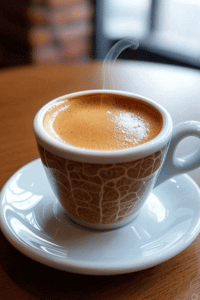
Adorable Espresso Shot Cups That Elevate Every Sip
Cute ceramic espresso shot cups with elegant designs, perfect for cozy cafés or home brews. Shop stylish espresso cups now!
How Do You Create an Effective Digital Menu for Mobile Ordering?
Mobile-First Principles
55% of coffee shop orders now involve digital interaction. Your digital menu IS your primary menu for many customers.
When you design a coffee shop menu digitally:
- Use vertical scrolling
- Large touch targets for selections
- Clear customization options
- Progressive disclosure (don’t overwhelm)
Photography Power
High-quality photos increase digital orders by 60%. Descriptions can be longer since customers read while waiting. Digital menu boards allow dynamic content and A/B testing.
What About Menu Design for Catering and Wholesale Coffee Business?
Catering Structure
- Package offerings, not individual drinks
- Bulk pricing tiers clearly displayed
- Professional PDF format
Wholesale Coffee Offerings
Focus on your coffee beans and blends. Include roast profiles, tasting notes, and minimum order quantities.
Different audience means a different menu entirely; this supports your coffee business beyond retail.
When you design a coffee shop menu for multiple formats, customize each version for its specific use case. One-size-fits-all menus fail everywhere.
How Has Coffee Shop Menu Design Evolved in the Modern Coffee Industry?

The coffee shop industry has undergone dramatic change. When you design a coffee shop menu today, you’re working with tools and trends that didn’t exist five years ago.
Technology Integration
Digital Revolution
QR codes became standard (COVID accelerated adoption). Digital menu adoption has increased 340% since 2020. Modern coffee shops blend physical and digital seamlessly.
Smart Menu Features:
- Dynamic pricing for different times of day
- AI-driven menu optimization based on sales patterns
- Integration with loyalty programs
- Real-time updates for sold-out items
Sustainability and Transparency Trends
Coffee shops with sustainability information on menus see 15% higher average tickets. Coffee connoisseurs who are willing to pay premium prices want transparency.
What Customers Expect:
- Origin information for coffee beans
- Ethical sourcing callouts
- Environmental impact notes
- Values-driven cafe menu design
As a coffee business marketing consultant, I’ve seen transparency become non-negotiable. Creating a menu without this information leaves money on the table.
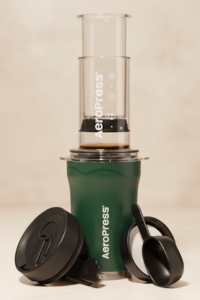
Best AeroPress Coffee Maker for Home & Travel
Brew barista-quality coffee anywhere with the AeroPress, the compact, all-in-one coffee maker loved by travelers and home baristas alike. In just 2 minutes, enjoy smooth, rich, low-acid coffee with zero bitterness. Easy to clean, durable, and perfect for espresso-style or cold brew.
Minimalism and Focus Movement
67% of specialty coffee shops have reduced their menu sizes over the past three years. The most memorable coffee shops often have the simplest menus, and a reaction against overwhelming choice proves profitable.
The Focus Trend:
- Specialty coffee shops leading simplified menu movement
- “Less is more” positioning drives premium pricing
- Quality over quantity resonates with customer preferences
- Rest of the menu benefits when you eliminate underperformers
When you design a coffee shop menu today, focused beats comprehensive. Coffee quality over variety drives success.
The future favors shops that embrace digital flexibility, communicate values transparently, and resist the temptation to offer everything.
Modern menu design means strategic simplicity powered by smart technology, not overwhelming choice on outdated boards.
Key Takeaways
- Simplify choices to guide customers toward high-margin items.
- Use menu layout to highlight best sellers and profitable drinks.
- Bundle items (coffee + pastry) to increase average ticket size.
- Price strategically with anchors that make premium drinks feel affordable.
- Track sales weekly and update your menu based on real performance.
Final Thoughts
Your coffee shop menu is your most important sales tool; design it strategically. Menu engineering, pricing psychology, and smart design drive profitability.
Test, measure, and optimize continuously based on data. Focus beats variety for most coffee shops. Great coffee deserves a great menu to showcase it.
The perfect coffee shop menu isn’t the prettiest or longest; it’s the one that makes customers happy, baristas efficient, and your business profitable.
Start with focus, test with data, and refine based on results. Your menu should work as hard as you do.
FAQs
How do you design a coffee shop menu?
Start with menu engineering to analyze profitability, select 15-25 core items, organize by category, remove dollar signs, and place high-profit items in the golden triangle.
Use Canva or hire a designer ($500-$2K). Make it scannable in 3 seconds with clean spacing.
What should be on a coffee shop menu?
Every menu needs espresso drinks (latte, cappuccino, americano), brewed coffee, cold brew, tea (3-5 varieties), hot chocolate, and 1-3 signature drinks.
Add pastries to boost tickets 35-50%. Keep total to 15-30 items; focused menus have 22% higher profit margins.
How much should I charge for coffee drinks?
Price for 75-85% gross margin on espresso drinks ($4-6 for lattes), 85-90% on brewed coffee. Calculate true costs, multiply by 3-4x.
Remove dollar signs (increases sales 8-12%), use charm pricing ($3.95 vs $4), and adjust annually to maintain healthy margins.
What are coffee shop menu design practices?
Limit your menu to under 25 items, organize logically by category, use 2-3 readable font families (minimum 10-12pt), and ensure each item has a brief sensory description while maintaining ample white space to prevent clutter.
Place the highest-profit drinks in the golden triangle (center, top right, top left), and test that the menu can be scanned for key choices in under 3 seconds.
How often should you change your coffee shop menu?
Update monthly for specials, quarterly for seasonal items (3-5 drinks), adjust prices every 12-18 months, and do major revisions annually.
Run profitability analysis quarterly and remove items selling under 5 units daily. Test new items as specials first before permanent additions.
Should I use photos on my coffee shop menu?
Only use professional photos ($500-$2K)—they increase sales 30% for photographed items. Amateur iPhone shots reduce perceived quality and hurt sales.
Most successful shops use text-only menus or limit photos to 1-3 signature items. Skip images if the budget doesn’t allow professional work.
What is menu engineering for coffee shops?
Menu engineering categorizes items by profitability and popularity: Stars (high profit, high sales),
Plowhorses (low profit, high sales), Puzzles (high profit, low sales), Dogs (low profit, low sales). This strategic approach increases margins 18-25% when properly applied.
How do I make my coffee menu stand out?
Create 1-3 proprietary signature drinks, use sensory descriptions, incorporate local ingredients, develop creative brand-aligned names, invest in professional design, highlight specialty coffee sourcing, and rotate seasonals.
Focus beats variety; memorable shops have focused menus (15-25 items).