This site contains affiliate links. I may earn a commission if you purchase through these links. Thank you for being so supportive!
You open late because someone forgot to unlock the door. You run out of ice during lunch rush because nobody checked the machine. You close at 8 PM but don’t leave until 10 PM because closing tasks take forever.
Sound familiar?
Running a coffee shop without a daily coffee shop operations checklist is like flying a plane without instruments. You might make it, but you’re relying on luck instead of systems.
The difference between cafés that run smoothly and ones where everything feels chaotic comes down to one thing: documented processes.
When everyone knows exactly what needs to happen, and when, your café operates efficiently even when you’re not there.
A proper daily coffee shop operations checklist prevents disasters, reduces stress, saves time, and protects your profit margins. It ensures consistent quality whether your best barista or newest hire is working.
Here’s the complete daily coffee shop operations checklist that successful cafés use, from opening procedures through closing tasks. Use this to create predictable, efficient operations starting tomorrow.
Explore the coffee directory
Want to see how real coffee shops turn these strategies into sales?
Why Every Coffee Shop Needs a Daily Operations Checklist
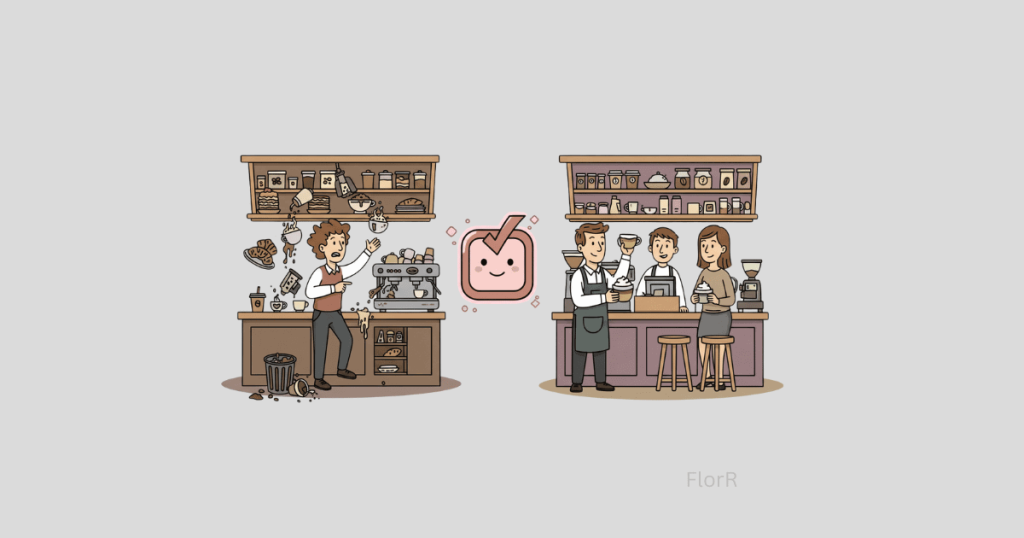
Your memory fails. People forget things. New employees don’t know your unwritten routines. Without documented procedures, quality suffers and costs increase.
The Real Cost of Operating Without Checklists
Cafés without daily operations checklists experience:
- Quality inconsistency: One shift does things differently than another
- Wasted time: Staff spend time figuring out what needs doing
- Missed tasks: Critical steps get skipped during busy periods
- Higher costs: Forgetting to turn off equipment, wasting product, making emergency orders
- Staff frustration: Nobody knows if they’re doing things “right”
One café owner calculated that forgotten closing tasks cost $200 monthly, including lights left on, equipment running overnight, and products not properly stored. Over a year, that’s $2,400 in avoidable waste.
V60 Coffee Maker

COFFEE SCALE
CHEMEX
What Good Checklists Actually Do
A solid daily coffee shop operations checklist:
- Creates consistency: Every shift follows the same procedures
- Trains faster: New hires learn systematic workflows
- Prevents problems: Catches issues before they become emergencies
- Saves time: No debating what needs doing—just follow the list
- Enables accountability: You know exactly what wasn’t completed and who was responsible
Checklists aren’t micromanagement. They’re protection for you, your staff, and your business.
Opening Checklist: Start Every Day Right (6:00-7:00 AM)
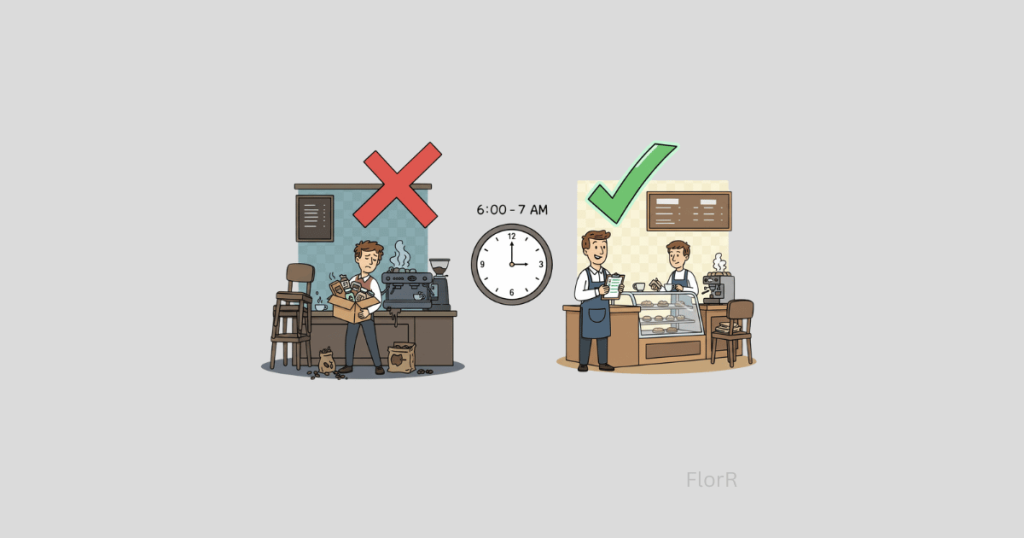
The opening shift sets the tone for the entire day. Rush through it, and you’ll deal with problems all day. Do it systematically, and everything flows smoothly.
First Priority: Security and Safety (15 minutes)
Before unlocking:
- Check for signs of break-in or damage
- Note anything unusual
- Verify alarm system is functioning
Upon entry:
- Disarm alarm system
- Turn on lights (front of house, then back of house)
- Unlock all interior doors
- Check thermostat and adjust to daytime settings
Quick safety scan:
- Check for water leaks or spills
- Verify all emergency exits are clear
- Test fire suppression system indicator lights
- Ensure first aid kit is accessible
One broken water line found during opening checks saved a café from thousands in damage. Five minutes of attention prevents disasters.

cOFFEE HOODIES

COFFEE T-SHIRTS
EMBROIDERY
Equipment Startup (20 minutes)
Coffee equipment:
- Turn on espresso machine (needs 15-20 minutes to heat)
- Start batch coffee brewers
- Turn on grinders
- Check water filtration system
Beverage station:
- Turn on blenders
- Fill ice bins
- Stock refrigerated drinks
- Check milk expiration dates
Kitchen equipment (if applicable):
- Turn on ovens or toasters
- Start dishwasher
- Check food holding temperatures
Quality check first shots:
- Pull test espresso shot
- Adjust grinder if needed
- Taste test before serving customers
- Steam milk to verify steam wand function
Never serve the first shot to a customer. It’s your quality control baseline.

Commercial Coffee Brewers

commercial Blenders
CHEMEX for your Café
Product and Supply Prep (15 minutes)
Coffee station setup:
- Grind coffee for drip brewers
- Stock cups, lids, sleeves in service area
- Refill syrup pumps
- Stock stir sticks, napkins, straws
- Fill sugar and sweetener dispensers
Pastry and food display:
- Stock display cases with dated products
- Arrange for visual appeal (customers buy with their eyes)
- Set out sampling items if applicable
- Verify pricing tags are visible
Register and counter:
- Count opening cash drawer (verify against closing report)
- Stock register tape and receipt paper
- Set up tip jar
- Place marketing materials or daily specials board
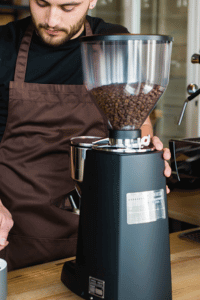
High-Output Commercial Coffee Grinder – Barista-Grade Consistency
Equip your café with a commercial grinder engineered for speed, consistency, and nonstop service. Designed for high-volume coffee shops that need precise grind size, powerful motors, and reliable performance every day. Explore top grinders trusted by professionals.
Final Opening Tasks (10 minutes)
Customer-facing areas:
- Clean tables and chairs
- Sweep or vacuum floors
- Clean windows and glass surfaces
- Check restroom supplies (soap, paper towels, toilet paper)
Before unlocking doors:
- Turn on music at appropriate volume
- Unlock front door
- Place outdoor signage or sandwich board
- Turn on “Open” sign
- Verify POS system is functioning
Communication:
- Check staff schedule for the day
- Review any notes from previous shift
- Confirm afternoon/closing shift arrival time
- Note any supply shortages for ordering
One café shaved 15 minutes off their opening routine by pre-positioning supplies the night before. Small efficiencies compound.
Mid-Shift Maintenance: Keep Standards High (Throughout Service)
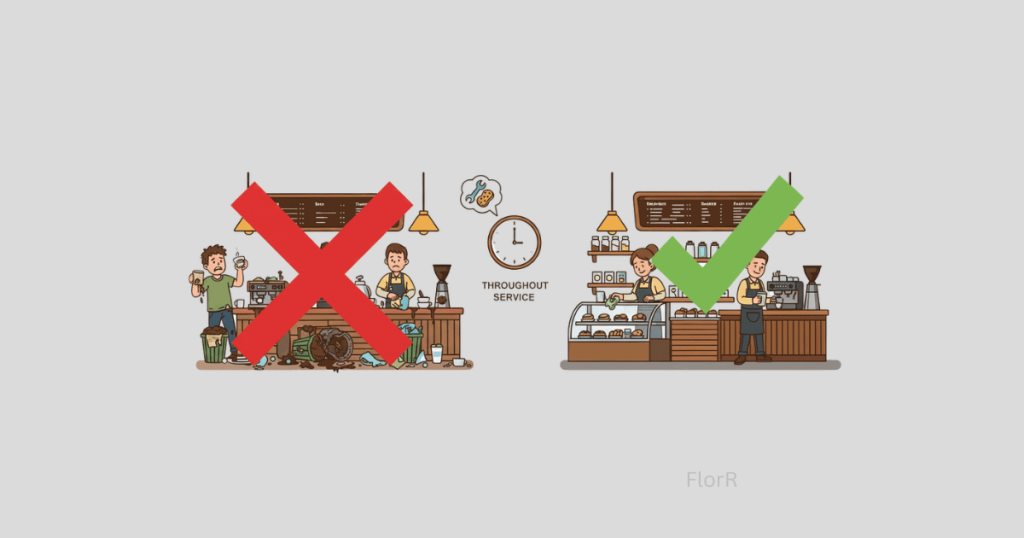
The daily coffee shop operations checklist doesn’t stop after opening. Maintenance tasks throughout the day prevent problems and maintain quality.
Every Hour During Service
Quality checks:
- Pull and taste test espresso shots
- Verify milk steaming temperature and texture
- Check coffee holding times (drip coffee older than 30 minutes gets dumped)
- Monitor customer wait times
Station maintenance:
- Wipe down counters and equipment
- Empty trash before it overflows
- Restock cups, lids, and supplies as needed
- Sweep high-traffic floor areas
Customer experience:
- Clean tables immediately after customers leave
- Check restroom cleanliness
- Maintain music and ambiance
- Monitor seating availability
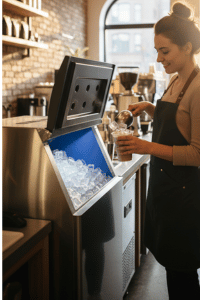
Commercial Ice Machine for Coffee Shops – High-Capacity Ice Production
Keep your café running smoothly with a commercial ice machine designed for high-demand beverage service. Fast production, dependable performance, and built for daily café operations. Explore top-rated models perfect for iced coffees, cold brews, and blended drinks.
Mid-Day Deep Tasks (During Slow Periods)
Equipment cleaning:
- Backflush espresso machine
- Clean drip coffee makers
- Sanitize blenders
- Wipe down all equipment exteriors
Inventory monitoring:
- Check milk levels (order if needed)
- Monitor fast-moving items
- Rotate stock using FIFO
- Note items running low for tomorrow’s opening
Prep for afternoon rush:
- Grind coffee in advance
- Prep additional syrups
- Refill ice machine
- Restock pastry display
Successful cafés treat slow periods as prep time, not break time. Stay ahead of rushes.
Closing Checklist: End the Day Properly (Last 30-60 Minutes)

Closing procedures determine how smoothly tomorrow’s opening goes. Rush closings create problems for the next shift.
Wind Down Service (Final 30 Minutes Before Closing)
Customer service:
- Announce closing time politely
- Offer to-go cups for remaining customers
- Clean tables as customers finish
- Thank departing customers
Equipment shutdown:
- Stop making drip coffee 30 minutes before close
- Clean and empty drip coffee makers
- Begin wiping down equipment
- Start breaking down stations

Commercial Under-Counter Fridge – Built for Daily Coffee Shop Operations
Optimize your coffee shop with a commercial under-counter refrigerator designed for speed, efficiency, and tight spaces. Perfect for milk, syrups, and quick-access ingredients. Built for busy cafés that need reliable cooling all day. Explore top-rated models made for professional service.
Equipment Cleaning and Shutdown (20 minutes)
Coffee equipment:
- Backflush espresso machine thoroughly
- Remove and clean portafilters
- Wipe down steam wands
- Clean grinders and empty hoppers (or leave minimal amount for morning)
- Turn off all coffee equipment
Beverage station:
- Clean and sanitize blenders
- Wipe down refrigerators
- Dispose of opened milk (or date and store if policy allows)
- Clean ice machine exterior
- Empty and clean drip trays
Dishwashing:
- Wash, dry, and put away all dishes
- Clean sinks thoroughly
- Empty trash and replace liners
- Wipe down dishwashing area
Kitchen (if applicable):
- Clean all cooking surfaces
- Store all food properly
- Take out trash
- Wipe down prep surfaces
Front of House Closing (15 minutes)
Customer areas:
- Wipe down all tables and chairs
- Sweep and mop floors
- Clean windows and glass
- Straighten chairs and furniture
- Remove and clean condiment station
Counter and register:
- Count cash drawer
- Complete cash out procedures
- Print end-of-day reports
- Clean register area
- Remove and secure tip jar
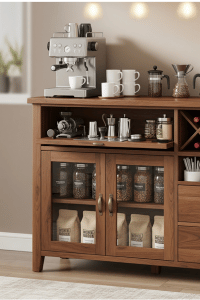
Modern Coffee Shop Furniture
Contemporary coffee shop furniture is designed for style and comfort. Create an inviting, elegant space where customers can relax, connect, and enjoy every cup in a modern atmosphere.
Final Security and Prep (15 minutes)
Tomorrow’s setup:
- Portion coffee for morning
- Set out necessary supplies
- Leave note for opening shift about any issues
- Prep anything that saves morning time
Inventory and ordering:
- Check critical supplies
- Note anything needed for tomorrow
- Complete inventory counts if scheduled
- Place emergency orders if necessary
Security procedures:
- Turn off all non-essential equipment
- Turn off music and lights
- Check that all doors and windows are locked
- Set alarm system
- Remove trash to exterior bins
- Lock exterior doors
Final walkthrough:
- Verify all equipment is off
- Check for water leaks
- Ensure nothing perishable was left out
- Confirm doors are locked
One café discovered its espresso machine running all night because the closing checklist wasn’t followed. The electricity waste and equipment wear cost hundreds in preventable expenses.
Creating Your Custom Daily Coffee Shop Operations Checklist

Every café is unique. Use this framework but customize for your specific needs.
How to Build Your Checklist
Document current practices:
- Watch your opening and closing procedures
- Write down every task you see
- Time how long each task takes
- Note who’s responsible
Organize by priority:
- Critical safety tasks first
- Equipment startup/shutdown second
- Customer-facing tasks third
- Nice-to-have tasks last
Make it visual:
- Use simple language (7th grade reading level)
- Number steps in order
- Add time estimates for each section
- Include photos for complex tasks
Test and refine:
- Have staff follow written checklist
- Note confusion or missing steps
- Time actual completion
- Adjust based on feedback

HIGH TABLE
With Stools

LONG TABLE
With Stools

BLACK TABLE
With Chairs
Implementation Tips
Laminate and post checklists:
- Opening checklist near equipment
- Closing checklist near register
- Cleaning schedules in back of house
Train thoroughly:
- Walk through checklist with each employee
- Explain why each task matters
- Demonstrate proper techniques
- Have them complete with supervision first
Create accountability:
- Staff initials each completed section
- Manager reviews at shift change
- Address incomplete tasks immediately
- Recognize consistent completion
Update regularly:
- Review checklists quarterly
- Add new equipment or procedures
- Remove outdated tasks
- Get staff input on improvements
Key Takeaways
- A daily coffee shop operations checklist creates consistency, trains staff faster, and prevents costly mistakes
- Opening takes 60 minutes: security check, equipment startup, product prep, and customer area preparation
- Mid-shift maintenance includes hourly quality checks and using slow periods for deep cleaning
- Closing takes 60 minutes: equipment cleaning, front of house tasks, inventory checks, and security procedures
- Customize checklists for your café but maintain core structure
- Laminate, post visibly, and train staff thoroughly on all procedures
Final Thoughts
The daily coffee shop operations checklist isn’t glamorous. It’s boring, systematic, and repetitive.
It’s also the difference between chaos and control.
Cafés that operate from memory and habit create inconsistent experiences. Cafés that operate from documented systems create predictable quality regardless of who’s working.
Your checklist protects your business when you’re not there. It ensures your best practices happen every single shift, not just when you’re watching.
Start this week. Document your current opening and closing procedures. Type them up. Laminate them. Post them. Train your staff to follow them.
Watch what happens. Tasks get completed consistently. Quality improves. Time waste decreases. Staff stress reduces. You can actually take a day off without worrying about what’s being forgotten.
A solid daily coffee shop operations checklist is the foundation of a well-run café. Build yours today.
Own a coffee shop? See how you compare.
Explore real coffee shops applying the strategies you just learned—then add your café to the directory to get discovered by customers searching by location.
FAQs
What should be on a daily coffee shop operations checklist?
A daily coffee shop operations checklist covers opening procedures like security checks, equipment startup, and product prep. Mid-shift tasks focus on hourly quality checks, cleaning, and restocking.
Closing procedures involve shutting down and cleaning equipment, checking inventory, and securing the café.
How long should coffee shop opening procedures take?
Coffee shop opening procedures typically take 60 minutes from arrival to unlocking the door for customers.
This includes security checks (15 minutes), equipment startup (20 minutes), product and supply preparation (15 minutes), and final customer-facing tasks (10 minutes). Efficient cafés can reduce this to 45 minutes with good systems.
What are the most important closing tasks for a coffee shop?
Key closing tasks include equipment cleaning and shutdown, counting and securing cash, checking inventory, and storing food properly to prevent waste.
Security steps like locking doors, setting alarms, and ensuring the café is essential. Skipping these tasks creates problems and increases costs.
How do I make sure staff follow the operations checklist?
Make staff follow checklists by posting them visibly, training on why tasks matter, and requiring initials on completed sections. Review checklists at shift changes and address incomplete tasks immediately.
Build them into job performance expectations from day one and recognize consistent completion.
Should opening and closing checklists be different?
Yes, opening and closing checklists should be different. Opening checklists focus on equipment startup, quality checks, and preparing for customers.
Closing checklists focus on equipment shutdown and cleaning, securing cash, inventory counts, and security procedures. Some tasks appear on both (checking bathrooms, cleaning stations), but most are shift-specific.
How often should I update my daily operations checklist?
Update your daily operations checklist quarterly or whenever you add new equipment, change procedures, or modify menu items.
Get staff feedback regularly; they’ll identify missing steps or inefficiencies. Seasonal changes (adding blended drinks in summer) may require temporary checklist modifications.
What happens if staff don’t complete the daily checklist?
When staff don’t complete checklists, address it immediately. First time: coach and retrain on the specific tasks. Repeat issues: document and include in performance reviews.
Consistent non-completion: may indicate inadequate training, unrealistic time expectations, or a need for disciplinary action. The key is accountability from day one.
How do I train new staff on operations checklists?
Train new staff on checklists by walking through each task during their first shifts and explaining why each one matters.
Have them complete the checklist with supervision multiple times and then time them to ensure they can finish within expectations. Make sure to properly train baristas on your standards before giving them independent shifts.