This site contains affiliate links. I may earn a commission if you purchase through these links. Thank you for being so supportive!
You know that feeling when you look at your menu and wonder, “Am I actually making money on this stuff?”
You’re not alone. Most coffee shop owners design menus based on gut feeling, competitor pricing, or what sounds good. But here’s the truth: menu engineering for coffee shops is the difference between surviving and thriving.
I’ve worked with coffee shop owners who thought they were doing great because customers loved their honey lavender latte, until we ran the numbers and discovered it was barely breaking even. Meanwhile, their plain cortado was quietly making them rich.
That’s what menu engineering does. It shows you exactly which drinks deserve prime real estate on your board, which ones need a price adjustment, and which ones are secretly draining your profits.
Let me show you how to engineer a menu that works as hard as you do.
Explore the coffee directory
Want to see how real coffee shops turn these strategies into sales?
What Is Menu Engineering for Coffee Shops?
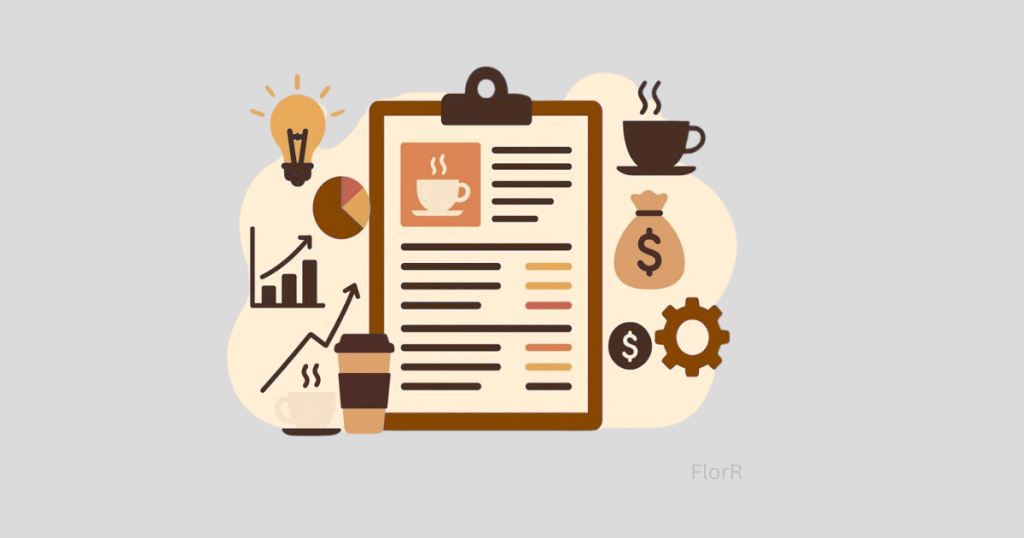
Menu engineering is a proven system that analyzes every item on your menu based on two critical factors:
- How profitable it is (how much money you make per drink)
- How popular it is (how often customers order it)
When you combine these two metrics, you get a clear picture of which drinks are helping your business and which ones are hurting it.
Think of it like this: you wouldn’t keep an employee who shows up every day but does terrible work.
You also wouldn’t keep someone who’s brilliant but never shows up. Your menu items work the same way; they need to be both profitable AND popular to earn their spot.

cOFFEE HOODIES
COFFEE T-SHIRTS
EMBROIDERY
Why Menu Engineering Matters (More Than You Think)
Here’s what most coffee shop owners don’t realize: 20% of your menu typically generates 80% of your profit.
That means most of your drinks are just taking up space. They’re not pulling their weight.
Menu engineering for coffee shops helps you:
- Identify your money-makers so you can promote them more
- Spot the losers that are wasting ingredients and confusing customers
- Fix underperformers with simple tweaks to pricing or positioning
- Make smarter decisions about what to add, remove, or redesign
- Increase profit without raising prices across the board
One small café I worked with had 32 drinks on its menu. After menu engineering, they cut it down to 18 and increased their overall profit by 34%. Same customers, same café, smarter menu.
The Four Categories Every Drink Falls Into
Menu engineering for coffee shops uses a simple framework called the Menu Engineering Matrix. Every drink you sell falls into one of four categories:
1. Stars ⭐ (High Profit + High Popularity)
What they are: Your best drinks. They’re profitable AND customers love them.
Examples:
- Your signature latte that costs $2.10 to make and sells for $6.50
- A seasonal drink that flies off the board every fall
- Your house blend cold brew with great margins
What to do with stars:
- Feature them prominently on your menu (upper right corner, remember the Golden Triangle?)
- Train your staff to recommend them
- Don’t mess with them: they’re working perfectly
- Protect their quality: never cut corners on ingredients
Stars are your money-makers. Treat them like gold.
2. Plowhorses 🐴 (Low Profit + High Popularity)
What they are: Drinks everyone orders, but they don’t make you much money.
Examples:
- Your basic drip coffee priced at $2.50
- A popular vanilla latte with tiny margins
- Espresso drinks priced too low to be profitable
What to do with plowhorses:
- Raise prices slightly (most customers won’t notice a 25-50 cent increase)
- Reduce portion sizes if appropriate
- Promote add-ons like extra shots, oat milk, or flavor pumps
- Reposition them with better descriptions to justify slightly higher prices
Plowhorses keep customers coming back, but you need to make them more profitable without losing their popularity.
V60 Coffee Maker

COFFEE SCALE
CHEMEX
3. Puzzles 🧩 (High Profit + Low Popularity)
What they are: Drinks with great margins that nobody’s ordering.
Examples:
- Your specialty pour-over that makes $4 profit but sells 3 times a week
- A unique drink with premium ingredients that customers don’t understand
- Seasonal drinks launched without proper promotion
What to do with puzzles:
- Improve visibility; move them to high-attention zones on your menu
- Rename them if the name is confusing or unappealing
- Add compelling descriptions that highlight unique ingredients
- Train staff to recommend them to the right customers
- Test different pricing; sometimes they’re priced too high
Puzzles have potential. They just need better marketing.

Commercial Coffee Brewers

commercial Blenders
CHEMEX for your Café
4. Dogs 🐕 (Low Profit + Low Popularity)
What they are: Drinks that don’t make money and don’t sell. Dead weight.
Examples:
- That matcha drink you added two years ago that never took off
- Complicated drinks with too many ingredients and low margins
- Items you keep “just in case” but rarely sell
What to do with dogs:
- Remove them immediately; they’re wasting menu space and confusing customers
- Or completely redesign them; new price, new recipe, new positioning
- Replace them with tested drinks that have star potential
Dogs are killing your menu. Cut them loose.
How to Do Menu Engineering for Your Coffee Shop (Step-by-Step)

Ready to analyze your menu like a pro? Here’s exactly how to do it.
Step 1: Gather Your Sales Data
Pull sales data for the last 60-90 days. You need:
- Total number sold for each drink
- Menu price for each drink
- Actual cost to make each drink (ingredients, milk, syrups, cups)
Most POS systems can generate this report in minutes.
Step 2: Calculate Contribution Margin
For each drink, calculate how much profit it actually makes:
Contribution Margin = Menu Price – Cost of Goods
Example:
- Vanilla Latte sells for $5.50
- Costs $1.80 to make (coffee, milk, vanilla, cup)
- Contribution Margin = $5.50 – $1.80 = $3.70 profit per drink
Do this for every single drink.
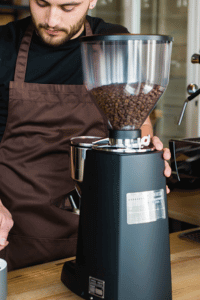
High-Output Commercial Coffee Grinder – Barista-Grade Consistency
Equip your café with a commercial grinder engineered for speed, consistency, and nonstop service. Designed for high-volume coffee shops that need precise grind size, powerful motors, and reliable performance every day. Explore top grinders trusted by professionals.
Step 3: Determine Popularity
Calculate what percentage of total sales each drink represents.
Example:
- You sold 1,000 total drinks last month
- Vanilla latte sold 180 times
- Popularity = 180 ÷ 1,000 = 18%
The average popularity across all items is your baseline. Anything above average is “high popularity,” anything below is “low popularity.”
Step 4: Plot Each Drink on the Matrix
Now you can categorize every drink:
- High profit + High popularity = Star ⭐
- Low profit + High popularity = Plowhorse 🐴
- High profit + Low popularity = Puzzle 🧩
- Low profit + Low popularity = Dog 🐕
Step 5: Take Action Based on Category
You can use the strategies I outlined above for each category. This is where menu engineering for coffee shops becomes powerful: you’re making data-driven decisions instead of guessing.
Real-World Example: Before and After Menu Engineering
Before:
- 28 drinks on the menu
- No idea which ones were profitable
- Prices based on competitor research
- Average profit per drink: $2.20
- Monthly revenue: $18,500
After Menu Engineering:
- 18 strategically selected drinks
- 5 stars featured prominently
- Plowhorses repriced (+$0.50 average)
- 3 puzzles repositioned with better descriptions
- 7 dogs removed completely
- Average profit per drink: $3.10
- Monthly revenue: $24,200
Result: 31% revenue increase without adding customers or working harder.
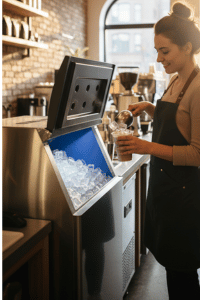
Commercial Ice Machine for Coffee Shops – High-Capacity Ice Production
Keep your café running smoothly with a commercial ice machine designed for high-demand beverage service. Fast production, dependable performance, and built for daily café operations. Explore top-rated models perfect for iced coffees, cold brews, and blended drinks.
Common Menu Engineering Mistakes to Avoid
Keeping too many drinks “just because” More options don’t equal more sales. They create decision fatigue.
Ignoring seasonal changes Re-run your menu engineering analysis every quarter. Popularity and costs change.
Pricing based on feelings Your favorite drink doesn’t deserve special pricing if the numbers don’t support it.
Not training staff on new positioning Your team needs to know which drinks to recommend and why.
Forgetting about costs Ingredient costs fluctuate. Update your cost calculations regularly.

Commercial Under-Counter Fridge – Built for Daily Coffee Shop Operations
Optimize your coffee shop with a commercial under-counter refrigerator designed for speed, efficiency, and tight spaces. Perfect for milk, syrups, and quick-access ingredients. Built for busy cafés that need reliable cooling all day. Explore top-rated models made for professional service.
Optimizing Your Menu for Maximum Profit
Menu engineering for coffee shops works best when combined with other menu strategies:
- Pricing psychology makes your prices feel natural and appealing
- The Golden Triangle layout guides customers to your stars
- Compelling descriptions increase perceived value
- Strategic add-ons boost your average ticket size
When all these elements work together, you create a menu that sells itself.
Want the complete system for designing a profitable coffee shop menu? Check out the full guide that covers everything from psychology to layout to optimization:
👉 How to Design a Coffee Shop Menu That Maximizes Profit
How Often Should You Do Menu Engineering?
Quarterly is ideal. Your costs change, customer preferences shift, and seasons affect popularity.
At minimum, analyze your menu:
- After launching new drinks (60 days post-launch)
- Before seasonal menu changes (spring, summer, fall, winter)
- When you notice sales declining on specific items
- After major price adjustments
Think of menu engineering as regular maintenance for your business, like changing the oil in your car. Do it consistently, and your menu keeps running smoothly.
Key Takeaways
- Menu engineering analyzes drinks based on profitability and popularity
- Four categories: Stars (keep and promote), Plowhorses (make more profitable), Puzzles (improve visibility), Dogs (remove)
- Calculate contribution margin: Menu Price – Cost of Goods
- Most coffee shops have 7-10 dogs wasting menu space
- Re-analyze your menu quarterly to stay profitable
- Menu engineering works best combined with pricing psychology and strategic layout
- Small changes (repositioning, repricing, removing) create big profit increases
- Your POS system has all the data you need to start today
- Stars deserve prime menu placement and staff training
- Removing underperformers often increases overall sales by reducing choice overload
Final Thoughts
Menu engineering for coffee shops isn’t complicated; it just requires you to view your menu through a profit lens rather than a “what sounds good” lens.
You already work hard perfecting your drinks, training your staff, and creating a great atmosphere. Menu engineering ensures all that effort translates into actual profit.
The data is there. Your POS system has everything you need. You just have to analyze it and act on what it tells you.
Start with one simple question: “Which of my drinks are actually making me money?”
The answer might surprise you.
Own a coffee shop? See how you compare.
Explore real coffee shops applying the strategies you just learned—then add your café to the directory to get discovered by customers searching by location.
FAQs
What is menu engineering for coffee shops?
Menu engineering is a data-driven method that analyzes each menu item based on profitability and popularity, helping you make smarter decisions about pricing, positioning, and which drinks to keep or remove.
How do I calculate contribution margin?
Subtract the cost to make a drink from its selling price. If a latte costs $1.80 to make and sells for $5.50, the contribution margin is $3.70.
What’s the difference between stars and plowhorses?
Stars are high-profit AND popular (your best drinks). Plowhorses are popular but low-profit (they need price increases or better margins).
Should I remove all my “dog” menu items?
Yes, unless they serve a specific strategic purpose (like attracting a niche customer). Dogs waste menu space and confuse customers.
How often should I update my menu engineering analysis?
Every quarter is ideal, or whenever you make significant menu changes, price adjustments, or notice shifting sales patterns.
Can I do menu engineering without a POS system?
It’s harder, but yes. Track sales manually for 30-60 days and calculate costs for each drink. The process is the same, just more time-consuming.
What if my most popular drink isn’t profitable?
That’s a plowhorse. Increase the price slightly, reduce portion size, or promote profitable add-ons. Small changes can make it profitable without losing customers.
Do I need to be good at math?
No. Basic addition, subtraction, and percentages are all you need. Most of the work is gathering data; the calculations are simple.