This site contains affiliate links. I may earn a commission if you purchase through these links. Thank you for being so supportive!
Opening a cafe with the best beans and a perfect location, but no solid coffee shop business plan? You’re brewing in the dark.
Too many passionate coffee lovers dump savings into starting a coffee shop, only to fail within a year because they skipped planning.
While 80% of successful coffee shop owners credit their detailed coffee shop business plan for navigating challenges, businesses without plans are 2.3x more likely to fail, even local coffee shops with loyal communities.
Here’s what thriving cafe owners understand: A coffee shop business plan isn’t just paperwork; it’s your strategic roadmap.
When you write a comprehensive plan covering finances, target market, and operations, you transform from a hopeful dreamer into a prepared entrepreneur ready to run a profitable business.
Ready to build your blueprint for success?
Learn how to write a coffee shop business plan that secures funding and guides your path to profitability, giving you the strategic foundation successful cafe owners use to thrive.
What Is a Coffee Shop Business Plan and Why Do You Need One?
A coffee shop business plan isn’t just paperwork banks want; it’s your strategic roadmap that dramatically increases your chances of survival when you open a coffee shop.
Understanding Your Coffee Shop Business Plan
A coffee shop business plan is a comprehensive document explaining what your business does, how you’ll make money, who your customers are, and why you’ll succeed where others might fail.
Essential business plan components:
- Executive summary: Your concept and funding needs in 1-2 pages
- Market analysis: Competition, customers, and opportunity proof
- Financial projections: Three-year revenue, expenses, and profit forecasts
- Operations plan: Daily workflow, suppliers, staffing details
- Marketing strategy: How you’ll attract and retain customers
This document becomes your blueprint for every major decision when you open a coffee shop.

HIGH TABLE
With Stools

LONG TABLE
With Stools

BLACK TABLE
With Chairs
Why Business Plans Are Critical for Success
As a coffee business marketing consultant, I worked with a coffee shop owner who discovered during business planning that her target location had five competitors within two blocks.
She pivoted to a different neighborhood and thrived; that research saved her business before she signed a bad lease.
Business plans serve dual purposes:
- Secure funding: Banks require detailed plans for funding for your coffee shop
- Guide decisions: Forces you to think through challenges before spending money
- Reduce risk: Identifies problems on paper instead of with real cash
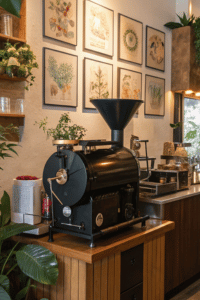
Artisanal Coffee Roaster Machines – Precision Craft for Perfect Beans
Discover Artisanal Coffee Roaster Machines designed for small-batch perfection. Roast beans with precision, enhance flavor, and enjoy café-quality coffee at home or in your shop. Built for freshness, crafted for coffee lovers.
The Success Statistics Don’t Lie
Business owners with formal plans grow 30% faster than those winging it, and secure funding for their coffee shop 2.1x more often than those without written plans.
Planning benefits proven by data:
- Better financial management through forecasted budgets
- Clear marketing direction from customer research
- Operational efficiency from workflow planning
Thinking and documented planning create coffee shop business plans that transform ideas into a profitable reality.
What Should You Include in Your Coffee Shop Business Plan Executive Summary?
Your executive summary is the most important section of your business plan; it determines whether readers continue or toss your plan aside.
Crafting Your Compelling Coffee Shop Vision
Your executive summary must capture your entire cafe business concept in 1-2 pages that make readers excited to learn more. This is your elevator pitch in written form.
Essential executive summary elements:
- Concept hook: What makes your coffee shop different in one powerful sentence
- Market opportunity: Why your area needs your specific cafe business
- Competitive advantage: What you offer that existing coffee shops don’t
- Team credentials: Why you’re the right person to execute this vision
Make readers understand your vision before diving into details when you start a coffee shop business.
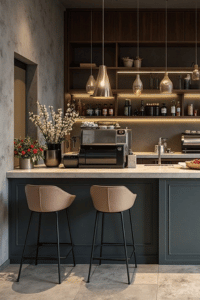
Modern Café Stools – Stylish Comfort for Coffee Shops & Homes
Upgrade your space with Modern Café Stools – sleek, durable, and designed for comfort. Perfect for coffee shops, kitchens, and bars. Blend style and function for the ultimate seating experience
Financial Highlights That Build Credibility
Investors see hundreds of business plans. Lead with clear numbers that prove you understand the financial reality to start a coffee shop business successfully.
Critical financial snapshot:
- Total startup costs: $150,000 (example specific to your situation)
- Funding needed: $100,000 loan request with $50,000 personal investment
- Revenue projections: Year 1: $280,000, Year 2: $420,000, Year 3: $510,000
- Profitability timeline: Break-even month 14, positive cash flow month 16
Specific numbers demonstrate serious planning versus wishful thinking.

cOFFEE BAGS
Eco Friendly

COFFEE CUPS
Eco Friendly

COLD BREW
No Mess Filters
Write Your Executive Summary Last
Your writing strategy: Even though the executive summary appears first in your coffee shop business plan, write it after completing all other sections.
Why write it last:
- You’ll understand your business deeply after writing the full plan
- Financial projections inform your funding requirements accurately
- Market research shapes your competitive advantage claims
- You can pull the strongest points from each section of your business plan
Compelling vision, credible financials, and strategic positioning create executive summaries that open doors and secure the funding you need to start a coffee shop business successfully.
How Do You Describe Your Coffee Shop Concept and Business Model in Your Plan?

Let’s talk about a crystal-clear concept definition that separates your coffee shop business plan from the pile of generic applications. Your concept section explains what your business idea is and why it deserves to exist.
Defining Your Coffee Shop Type and Positioning
“We’ll serve great coffee in a friendly atmosphere” isn’t a concept because many coffee shops say exactly that. Your positioning must specify what type of coffee shop or cafe you’re creating and why.
Clear concept positioning examples:
- Specialty focus: “Third-wave coffee bar educating customers on single-origin beans”
- Community hub: “Family-friendly neighborhood cafe with play area and co-working space”
- Convenience model: “Drive-thru focused on speed for morning commuters”
- Hybrid approach: “Daytime productivity cafe transforming into evening wine bar”
Specific positioning helps you run a coffee shop with a clear identity versus trying to be everything to everyone.
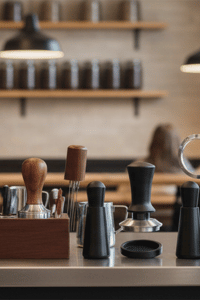
Espresso Wooden Accessories for Coffee Shops
Elevate your café’s identity with handcrafted wooden espresso accessories. From tampers to knock boxes, these barista tools blend function and design, giving your coffee shop a polished, professional look that customers remember.
Explaining Revenue Streams and Business Model
Coffee shops tend to fail when they depend on coffee sales alone. Your coffee shop business plan needs diversified revenue streams that create financial stability.
Strategic revenue stream breakdown:
- Coffee beverages: 50-60% of revenue (espresso drinks, brewed coffee, cold brew)
- Food sales: 25-35% of revenue (coffee and food products like pastries, sandwiches)
- Retail products: 5-10% of revenue (whole bean sales, merchandise, brewing equipment)
- Additional services: 5-10% (catering, private events, coffee subscriptions)
Demonstrate how each stream contributes to total revenue projections.
Articulating Your Unique Value Proposition
Your differentiation strategy, your competitive advantage can’t be “better coffee” because every coffee shop or cafe claims that.
Meaningful differentiation examples:
- Location advantage: “Only specialty coffee within a 3-mile radius of the office park”
- Experience focus: “Instagram-worthy interior designed by local artists”
- Convenience innovation: “Mobile ordering with curbside pickup in 2 minutes”
- Community commitment: “20% of profits fund local school arts programs”
Specific concept positioning, diversified revenue model, and authentic differentiation create coffee shop business plans that prove you understand exactly what you’re building and why it will succeed.
What Market Analysis Should Your Coffee Shop Business Plan Include?

Let’s talk about the market research that makes your coffee shop business plan credible to investors. The process of opening a coffee shop requires proving that demand exists before you invest a dollar.
Coffee Industry and Local Market Analysis
Your business plan to potential lenders must demonstrate you understand both national trends and your specific local market reality for the coffee shop you want to open.
Essential market analysis components:
- Industry trends: $45.4 billion U.S. coffee shop market growing 7% annually
- Specialty coffee growth: Premium segment expanding faster than commodity coffee
- Local market size: Population within a 3-mile radius and their coffee consumption patterns
- Market timing: Why now is the right time for the shop you want to open
Remember that the coffee shop can vary dramatically by location; urban vs. suburban vs. rural markets behave differently.
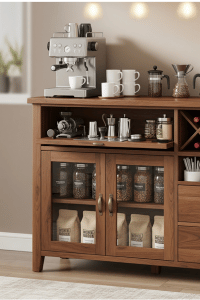
Modern Coffee Shop Furniture
Contemporary coffee shop furniture is designed for style and comfort. Create an inviting, elegant space where customers can relax, connect, and enjoy every cup in a modern atmosphere.
Defining Your Target Customer Precisely
“Coffee drinkers” isn’t a target market. Your business plan may fail if you can’t describe exactly who walks through your door and why.
Detailed customer persona elements:
- Demographics: Age range, income level, occupation, household composition
- Behaviors: Morning commuters vs. remote workers vs. social gatherings
- Preferences: Speed and convenience vs. quality and experience
- Spending capacity: $3 drip coffee buyers vs. $6 specialty latte customers
Create 2-3 specific personas representing your core customer segments.
Competitive Landscape Analysis
Your coffee shop business plan needs an honest assessment of who you’re competing against and why you can win customers.
Comprehensive competition analysis:
- Direct competitors: Coffee shops within a 1-mile radius with similar offerings
- Indirect competitors: Starbucks, Dunkin’, convenience stores, fast food
- Competitor strengths: What they do well that you must match or beat
- Market gaps: Unserved customer needs your coffee shop wants to address
Industry context, precise customer definition, and competitive intelligence prove to lenders that the process of opening a coffee shop in your location is based on research, not hope.
How Do You Create Financial Projections for Your Coffee Shop Business Plan?
Let’s talk about the financial section that makes or breaks your coffee shop business plan. Realistic projections prove you understand the cost to open a coffee shop and the path to profitability.
Comprehensive Startup Cost Breakdown
Your cafe business plan needs a detailed startup budget showing every dollar you’ll spend before opening day. Vague estimates destroy credibility with lenders evaluating your coffee shop’s business potential.
Complete startup cost categories:
- Equipment: Espresso machine ($8,000-$25,000), grinders ($3,000), brewers ($2,000)
- Buildout: Renovation, plumbing, electrical ($50,000-$150,000 varies by condition)
- Inventory: Initial coffee roaster beans, milk, syrups, pastries ($5,000-$8,000)
- Working capital: 6 months operating expenses before profitability ($30,000-$60,000)
- Professional fees: Permits, licenses, legal, accounting ($5,000-$10,000)
Total realistic range: $80,000-$250,000, depending on size and concept.
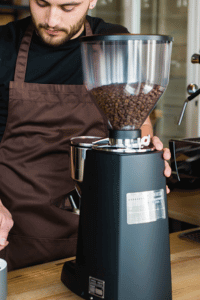
Grind Like a Pro: Elevate Your Coffee Business the Best-Selling Grinders
Grind like a pro with the top-rated coffee grinders, designed to boost flavor, consistency, and customer satisfaction at your café.
Three-Year Revenue and Expense Projections
Your coffee shop business plan must show monthly details for year one, then quarterly for years two and three. Use conservative assumptions that you can defend.
Financial projection framework:
- Revenue assumptions: Average ticket $6.50, 150 customers daily, growing to 250 by month 12
- Cost of goods sold: 25-30% of revenue for coffee market pricing
- Labor costs: 30-35% of revenue, including payroll taxes
- Occupancy: Rent + utilities should be 8-15% of revenue maximum
- Other expenses: Marketing, supplies, maintenance, insurance
Show profitability by month 12-18 for a realistic cafe business plan timeline.
Cash Flow and Break-Even Analysis
Cash flow projections show when you’ll run out of money, which is more critical than profit/loss statements for your coffee shop’s business survival.
Critical cash flow elements:
- Monthly burn rate: How much you lose before breaking even
- Cash runway: Months of operation your startup capital supports
- Break-even point: Customer count and revenue needed to cover all costs
Detailed startup costs, conservative revenue projections, and honest cash flow analysis create coffee shop business plans that secure funding and guide successful operations.
What Funding Strategy Should Your Coffee Shop Business Plan Outline?

Your successful coffee shop business plan needs a transparent capital strategy that builds confidence.
Total Funding Requirements and Use of Funds
Your coffee shop business plan must specify the exact funding needed with a detailed breakdown showing lenders where every dollar goes when you plan to offer your business to the market.
Detailed use of funds breakdown:
- Equipment purchases: $35,000 for espresso machines, grinders, refrigeration
- Leasehold improvements: $80,000 for buildout, plumbing, electrical, HVAC
- Initial inventory: $8,000 for food or coffee beans, milk, syrups, pastries
- Working capital: $40,000 for a 6-month operating expenses reserve
- Professional services: $7,000 for permits, legal, accounting, and insurance
Total funding request: $170,000 with specific allocation transparency.

Adorable Espresso Shot Cups That Elevate Every Sip
Cute ceramic espresso shot cups with elegant designs, perfect for cozy cafés or home brews. Shop stylish espresso cups now!
Your Funding Source Mix and Timeline
Your successful coffee shop business plan typically combines multiple funding sources rather than relying on a single source. Diversification reduces risk and increases approval chances.
Strategic funding mix example:
- Personal investment: $50,000 (30%) shows skin in the game
- SBA 7(a) loan: $100,000 (60%) at favorable terms to fund your coffee shop
- Equipment financing: $20,000 (10%) specifically for the espresso machine
Your plan should show a clear timeline, personal funds first, then loan applications, and equipment financing upon approval.
Repayment Plan and Return Projections
Lenders want to see exactly how they get paid back from your food or coffee sales revenue.
Loan repayment demonstration:
- Monthly payment: $1,847 for $100,000 at 7% over 7 years
- Cash flow coverage: Show profit sufficient to cover payments by month 14
- Debt service coverage ratio: Maintain 1.25x or higher for lender comfort
If seeking investors instead:
- Percentage equity offered for investment amount
- Expected return timeline (typically 5-7 years for coffee shops)
- Exit strategy through buyout or business sale
Transparent use of funds, realistic funding mix, and clear repayment path create coffee shop business plans that secure capital and launch successful businesses.
How Do You Write a Marketing Plan Section for Your Coffee Shop Business Plan?

Let’s talk about the marketing strategy that fills seats and drives the success of your coffee shop. Your coffee shop business plan needs concrete tactics proving you can attract customers, not just hope they’ll find you.
Pre-Opening Marketing That Builds Anticipation
Start marketing 90 days before you need to open a coffee shop, so customers are waiting on day one. This reduces the costs for a coffee shop struggling with empty seats during critical early months.
3-month pre-opening marketing timeline:
- 90 days out: Launch Instagram/Facebook, claim Google Business Profile listing
- 60 days out: Share buildout progress, menu teasers, announce opening date
- 30 days out: Partner with local businesses, invite influencers for soft opening
- 14 days out: Email list building through “opening specials” signup campaign
Build buzz for the kind of coffee shop you’re creating before opening day.

cOFFEE HOODIES

COFFEE T-SHIRTS
EMBROIDERY
Customer Acquisition Strategy and Launch Tactics
Your coffee shop business plan must explain exactly how you’ll drive initial traffic beyond hoping people walk by. The best coffee shop launches combine multiple acquisition channels.
Multi-channel acquisition tactics:
- Grand opening promotion: Free drip coffee day one, BOGO lattes week one
- Digital advertising: $500-$1,000 Facebook/Instagram ads targeting a 3-mile radius
- Local partnerships: Cross-promotion with nearby businesses and organizations
- Influencer outreach: Free tastings for local food and coffee bloggers and Instagram accounts
Customer Retention and Loyalty Strategy
Acquisition gets customers once, but retention creates the sustainable revenue that determines the success of your coffee shop.
Loyalty and retention programs:
- Digital loyalty: App-based rewards or digital punch cards (10th drink free)
- Email marketing: Monthly newsletter with specials, new offerings, and coffee education
- Community events: Weekly trivia, open mic nights, local artist showcases
- Subscription program: Monthly coffee delivery or unlimited drink memberships
Marketing budget allocation:
- Pre-opening: $2,000-$4,000
- Launch month: $3,000-$5,000
- Ongoing monthly: $500-$1,500
Anticipation-building pre-launch, aggressive acquisition tactics, and retention programs create marketing plans that grow your business beyond opening buzz into a sustainable customer base.
What Operations Plan Details Should Your Coffee Shop Business Plan Cover?
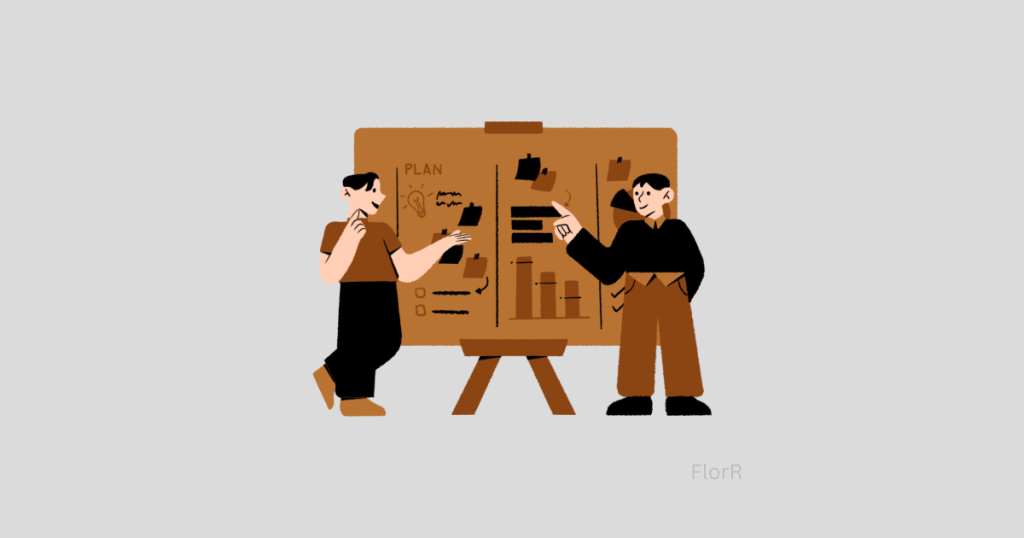
Your coffee shop business plan needs to demonstrate that you understand the mechanics of running a coffee house beyond just serving great drinks.
Location Strategy and Site Requirements
Your strong business plan must explain why your specific location works for your concept, not just that you found available space for your new coffee venture.
Location justification elements:
- Site selection rationale: Demographics, foot traffic counts, competitor proximity analysis
- Lease terms: Square footage, monthly rent ($3,000-$8,000 typical), length (5-10 years)
- Buildout requirements: Existing condition, renovation needs, and legal structure of your business permits
- Parking and accessibility: Customer convenience factors affecting coffee shop experience
Prove the location supports your projected customer counts and revenue.
Equipment and Supplier Relationships
Your coffee shop business plan should list every major equipment piece and key suppliers, proving you’ve researched the infrastructure for creating a business that operates smoothly.
Essential operational details:
- Core equipment: Espresso machine ($15,000), grinders ($3,000), brewers ($2,000)
- Coffee supplier: Primary roaster contact, backup options, delivery schedule
- Food vendors: Pastry supplier, milk delivery, syrup, and ingredient sources
- Support services: Equipment maintenance contracts, POS system provider
Demonstrate supply chain reliability for consistent coffee shop experience delivery.

Espresso Express Crop Tee, The Must-Have Shirt for Every Coffee Mood
Level up your brew style with this custom Champion Espresso Tee, bold, comfy, and made for true coffee lovers. Just say “coffee shirt.”
Staffing Plan and Team Structure
Your strong business plan needs a realistic staffing model showing you can deliver quality service within labor budget constraints.
Comprehensive staffing breakdown:
- Manager: 1 full-time at $45,000-$55,000 annually
- Shift leads: 2-3 experienced baristas at $16-$18/hour, 30-35 hours weekly
- Baristas: 4-6 part-time staff at $14-$16/hour plus tips
- Total labor cost: 30-35% of revenue, including payroll taxes
Training program outline:
- Week 1: Coffee fundamentals, equipment operation, and POS system
- Week 2: Customer service standards, handling complaints, upselling
- Ongoing: Monthly tastings, technique refinement, new product training
Strategic location justification, detailed supplier relationships, and realistic staffing plans prove your coffee shop business plan is built on operational reality for creating a business that functions efficiently beyond opening excitement.
How Do You Write a Coffee Shop Menu Section That Shows Profitability?

Let’s talk about the menu strategy that proves your coffee shop’s success is financially viable.
When creating a business plan, your menu section must demonstrate that you’ll make money, not just serve drinks.
Core Menu Aligned With Your Concept
Your menu in the coffee shop business plan must match your positioning and coffee shop location demographics while proving operational capacity when you start your coffee venture.
Strategic menu structure:
- Core espresso drinks: Espresso, cappuccino, latte, americano, mocha (8-10 drinks)
- Brewed coffee: Drip, cold brew, pour-over options (2-3 brewing methods)
- Coffee and tea: Include tea selection for non-coffee drinkers (4-6 varieties)
- Food items: Pastries, breakfast items, light lunch options, matching your capacity
- Retail products: Whole bean sales, merchandise, brewing equipment
Show how your menu helps plan to attract and retain customers when developing your business plan.

The Denim Jacket Every Coffee Lover Needs
The perfect denim jacket for coffee lovers, with bold coffee print, comfy fit, and street-ready style. Just say “coffee jacket.”
Pricing Strategy That Ensures Profitability
Your coffee shop business plan needs pricing that covers costs while remaining competitive. Generic pricing without cost analysis destroys credibility when you create a coffee shop business.
Menu pricing framework:
- Target food cost: 25-30% for beverages, 30-35% for food items
- Competitive analysis: Research coffee shops within a 2-mile radius of your coffee shop location
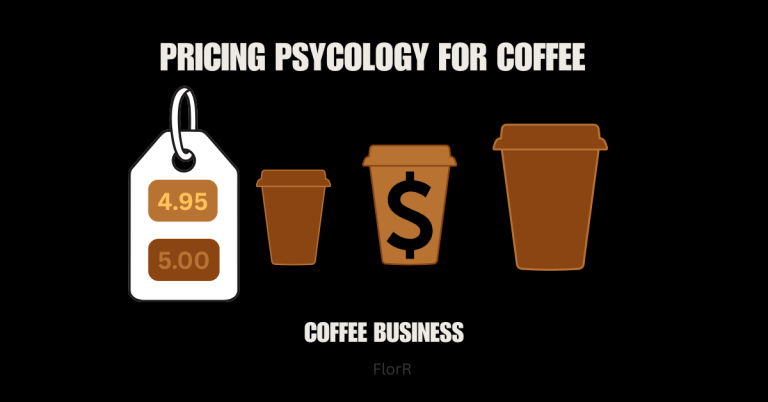
- Psychological pricing: $3.95 vs. $4.00, tiered sizing strategy
Sample pricing with margins:
- Drip coffee: $2.95 (cost $0.75 = 25% food cost)
- Latte: $4.75 (cost $1.20 = 25% food cost)
- Specialty drinks: $5.75 (cost $1.60 = 28% food cost)
Seasonal Evolution and Menu Development
Your coffee shop business plan should explain how offerings evolve to keep customers engaged in your new business long-term.
Menu evolution plans:
- Seasonal specials: Pumpkin spice fall, peppermint winter, refreshing summer drinks
- Limited-time offerings: Monthly featured roast, special collaborations with local vendors
- Customer feedback integration: Menu refinement based on sales data and requests
Focused core offerings, profitable pricing strategy, and planned evolution demonstrate that your menu drives the coffee shop’s success financially when creating a business plan that investors and lenders trust.
What Coffee Shop Business Plan Template or Format Should You Use?

Let’s break down the structure and format that make your coffee shop business plan professional and effective.
A business plan is essential for funding, and proper formatting increases your credibility when you open your coffee shop.
Standard Business Plan Section Order
Lenders and investors expect a specific structure in your step-by-step business plan. Deviating from the standard format makes your new coffee shop plan harder to evaluate and less professional.
Essential business plan sections in order:
- Executive Summary: Vision, concept, funding needs (write this last)
- Company Description: Mission, business plan that markets your unique concept
- Market Analysis: Industry trends, target customers, competition research
- Organization and Management: Team, legal structure, staffing plan
- Products and Services: Menu, coffee shop pricing, customer experience
- Marketing Strategy: Customer acquisition and retention tactics
- Financial Projections: Startup costs, revenue forecasts, cash flow
- Funding Request: Amount needed, use of funds, repayment terms
- Appendix: Supporting documents, permits, leases, resumes
Template vs. Starting From Scratch
Quality templates save hours of formatting work and ensure you don’t miss critical sections when opening your coffee shop planning.
Free template resources:
- SCORE.org: Free comprehensive business plan templates with coffee shop examples
- SBA.gov: Government resources with downloadable formats
- Bplans.com: Industry-specific templates, including coffee shop versions
- LivePlan: Paid option ($20/month) with guided step-by-step business plan process
Customize templates heavily – generic responses destroy credibility for your new coffee shop.
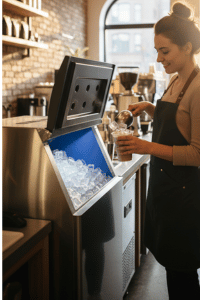
Best Ice Machine for Coffee Shops – Commercial Ice Maker
Keep your café stocked with crystal-clear ice all day. This high-output, energy-efficient ice maker is built for busy coffee shops serving iced lattes, cold brews, and frappés. Compact, durable, and easy to clean — perfect for cafés in New York, Los Angeles, or anywhere in the USA.
Length, Formatting, and Professional Presentation
Your coffee shop business plan should be thorough but scannable, typically 20-35 pages plus an appendix.
Formatting best practices:
- Length: 20-35 pages main document, unlimited appendix
- Typography: Professional fonts (Arial, Calibri), 11-12 point, 1-inch margins
- Visual elements: Charts for financials, photos of the location, logo, and branding
- Section breaks: Clear headers, page numbers, table of contents
Critical appendix documents:
- Permits and licenses copies
- Lease agreement or letter of intent
- Owner resume and team credentials
- Detailed market research data
- Equipment quotes and supplier agreements
Standard structure, customized template usage, and professional formatting create coffee shop business plans that communicate your vision clearly while meeting lender expectations when you open your coffee shop successfully.
How Do You Use Your Coffee Shop Business Plan After Writing It?
Let’s discuss how your coffee shop business plan can become a living tool, rather than a document that sits on a shelf.
After you write the executive summary and complete the rest of your business plan, the real work begins.
Presenting Your Plan to Secure Funding
Your coffee shop business plan opens doors to business loan meetings, but how you present it determines whether you get funded to set up your coffee shop.
Effective presentation strategy:
- Prepare 10-minute pitch: Hit key points from executive summary without reading slides
- Anticipate questions: Financial assumptions, competition, your experience, contingency plans
- Bring supporting materials: Photos of the location, sample menu, letters of intent from suppliers
- Know your numbers: Memorize key metrics – startup costs, break-even point, year-one revenue
Common lender focus areas:
- Your personal investment and commitment level
- Realistic financial projections with defensible assumptions
- Competition and differentiation strategy
- Collateral and ability to repay business loan
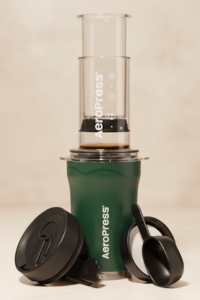
Best AeroPress Coffee Maker for Home & Travel
Brew barista-quality coffee anywhere with the AeroPress, the compact, all-in-one coffee maker loved by travelers and home baristas alike. In just 2 minutes, enjoy smooth, rich, low-acid coffee with zero bitterness. Easy to clean, durable, and perfect for espresso-style or cold brew.
Using Your Plan as an Operational Roadmap
Writing a business plan can seem like busy work, but it becomes your strategic guide when you set up your coffee shop and face daily decisions.
Implementation tracking approach:
- Monthly reviews: Compare actual revenue, expenses against projections
- Quarterly assessments: Evaluate marketing effectiveness, adjust tactics as needed
- Dashboard metrics: Track key indicators (daily customers, average ticket, labor %)
- Course corrections: Use the plan as a decision framework when pivoting becomes necessary
Your plan idea sets your business direction when confusion or challenges arise.
Updating Your Plan as You Learn
Your coffee shop business plan should evolve as you gain real-world experience operating your business.
Strategic revision schedule:
- Year one: Update quarterly as you learn what actually works
- Annual updates: Incorporate lessons learned, refine financial projections
- Growth planning: Revise plan when considering expansion, new locations, concept changes
- Refinancing: Update before seeking additional funding or loan renewals
Confident presentation, disciplined tracking, and adaptive revision transform your coffee shop business plan from a financing document into a strategic tool that guides your business through startup challenges and growth opportunities successfully.
Key Takeaways
- Essential for funding – Required by lenders and forces thorough thinking before investment
- Executive summary hooks – Write last, place first; cover concept, financials, funding in 1-2 pages
- Clear concept required – Define specific positioning beyond generic “great coffee” claims
- Market research proves demand – Analyze trends, target customers, competition to demonstrate opportunity
- Realistic financials critical – Detail $80,000-$250,000 startup costs, three-year projections, cash flow
- Transparent funding strategy – Specify amount needed, use of funds, repayment plan
- Concrete marketing plan – Pre-opening buzz, acquisition tactics, retention with budget allocation
- Operations show execution – Location, equipment, suppliers, staffing structure
- Menu drives profitability – Offerings aligned with concept, pricing, ensuring margins
- Use standard format – Follow lender-expected structure, customize quality templates
- Living document – Use for presentations, track projections, update quarterly
Final Thoughts
A comprehensive coffee shop business plan is your blueprint for success. It secures funding, guides decisions, and dramatically increases the chances your coffee shop will thrive rather than become another statistic.
Every hour invested in your business plan saves you from costly mistakes later.
Start with market research today, build realistic financial projections, and create the roadmap that transforms your coffee passion into a profitable reality.
FAQs
How long should a coffee shop business plan be?
Plan for 20-30 pages for a complete coffee shop business plan – detailed enough to show thorough planning but concise enough that busy lenders and investors will actually read it, plus an unlimited appendix for supporting documents.
Can you write a coffee shop business plan yourself, or should you hire someone?
You can absolutely write your business plan yourself using templates and guides – you know your cafe or coffee shop concept best. Consider hiring a consultant review ($500-1,500) rather than a full writing service ($3,000-10,000) for cost savings.
What’s the most important part of a coffee shop business plan?
Financial projections with realistic assumptions – this is what lenders scrutinize most when opening a cafe or coffee shop. But executive summary is most important for capturing interest initially and determining if they continue reading further.
How detailed should financial projections be in your business plan?
Include monthly projections for first year, quarterly for years 2-3, covering revenue, expenses, cash flow, and break-even analysis for your cafe or coffee shop. Support assumptions with market research and industry benchmarks for credibility.
Do you need a business plan if you’re not seeking funding?
Yes – even if you’re self-funding your cafe or coffee shop, writing a business plan forces you to think through challenges before investing money. The planning process clarifies your idea and sets your business direction, significantly increasing success chances.
How often should you update your coffee shop business plan?
Update quarterly during first year as you learn what works, then annually thereafter to incorporate lessons learned, refine projections, and plan for growth when a cafe or coffee shop business evolves beyond initial assumptions.
What mistakes do people make in coffee shop business plans?
Biggest mistakes include unrealistic financial projections, vague market research, unclear concept differentiation, and treating the plan as a one-time document rather than a living guide.
Your idea and the setting of your business foundation require honest, thorough planning throughout.