This site contains affiliate links. I may earn a commission if you purchase through these links. Thank you for being so supportive!
Opening a coffee shop? You can drop $100K on equipment or $30K, both could fail or succeed. The difference? Knowing exactly which coffee shop equipment you need versus what’s just shiny and expensive.
Many coffee shop owners overspend on unnecessary items or underbuy critical equipment. The right equipment list for coffee shop success prioritizes essentials, quality coffee machines, proper grinders, automatic drip coffee maker over flashy additions.
Here’s what successful specialty coffee shops understand: The best coffee shop equipment isn’t the most expensive; it’s what matches your concept and budget.
When you invest strategically in the right equipment that directly impacts your coffee’s taste, you avoid 60% of new shops that fail from cash flow issues.
Ready to equip smarter, not costlier?
Get a comprehensive equipment list for coffee shop success that prioritizes essential items, helps you avoid costly mistakes, and sets up your cafe for profitability without breaking the bank.
What Are the Essential Coffee Shop Equipment Categories You Need for Your Coffee Shop?

Building an equipment list for coffee shop startups overwhelms most new coffee shop owners. Here’s the thing: you need four core categories, not a hundred random items.
The Four Essential Equipment Categories
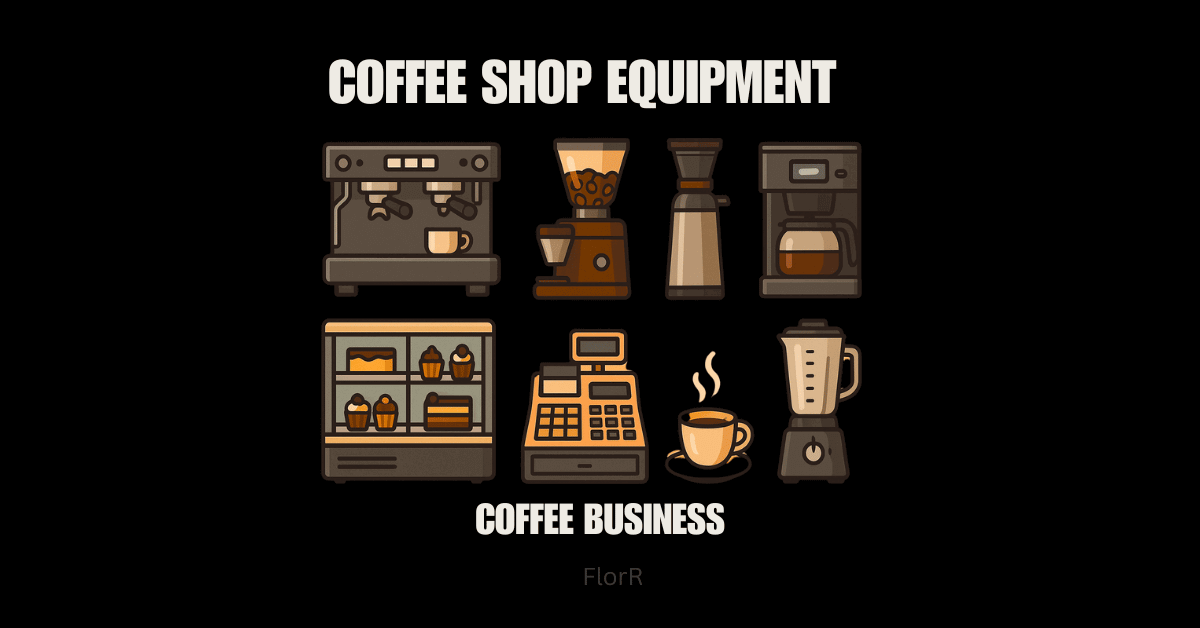
Your equipment list for coffee shop operations breaks into clear groups:
Coffee Brewing Equipment
- Espresso machines and grinders that make coffee your customers actually want
- Pour-over setups and batch brewers
- Water filtration systems
Beverage Equipment Beyond Coffee
- Blenders for smoothies and frozen drinks
- Ice machines and refrigeration for milk and coffee shop ingredients
- Tea brewers, if you’re expanding your menu
Food Service Equipment
- Display cases for pastries
- Toasters and microwaves if you’re serving food
- Food prep stations and warming equipment
Point of Sale and Business Equipment
- POS systems that track inventory
- WiFi routers and receipt printers
- Back-office computers for scheduling

Commercial Coffee Shop Espresso Machines – Precision, Power & Consistency
Power your café with a commercial espresso machine built for speed, consistency, and high-volume service. Designed for busy coffee shops that demand perfect shots, reliable steam power, and all-day durability. Explore top models trusted by professional baristas.
How to Prioritize Your Equipment Purchases
Your menu determines 70% of your equipment needs. A pour-over-focused café needs completely different gear than an espresso bar with blended drinks.
Build your equipment list for coffee shop purchases around your actual business plan, not what looks cool on Instagram.
Used Equipment vs. New: When Each Makes Sense
Smart money says buy used for:
- Refrigerators and freezers
- Display cases and furniture
- Some food prep equipment
But here’s where I draw the line as a coffee shop marketing consultant: anything that touches coffee gets purchased new.
Your grinder and espresso machine are your moneymakers; don’t gamble on used equipment that could break during morning rush.
I’ve consulted with two successful shops: one minimalist café spent $45K on equipment focused on pour-overs.
Another full-service shop invested $120K for espresso, blenders, and food equipment. Both are profitable, yet have wildly different equipment lists. Your concept drives your purchases.
What Essential Coffee Equipment Do You Need to Brew Coffee?

While your coffee shop business plan template mentions equipment, selecting the right brewing tools decides whether you serve memorable coffee or just a quick caffeine fix.
What Type of Coffee Brewer Should You Choose for Your Coffee Shop?
Match your brewer to your concept. Specialty shops need espresso machines ($5K-$25K) that produce 150-400 cups daily.
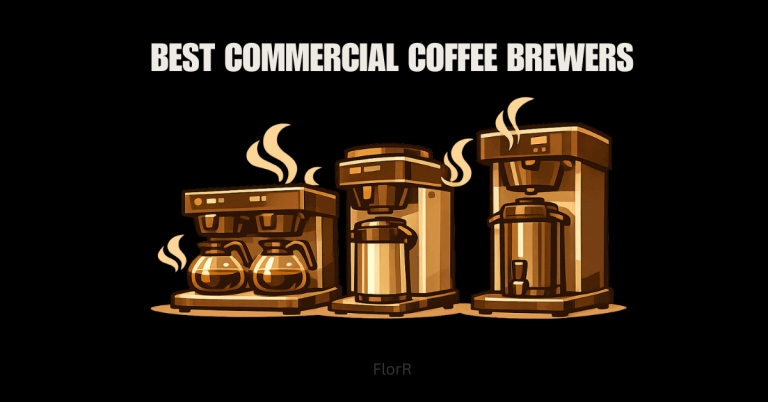
Community cafés thrive with commercial drip coffee makers ($500-$3K). Most coffee shops require both.
Decision Framework: If 60%+ of your menu items are espresso-based, prioritize the espresso machine. If drip coffee dominates your business plan, invest in automatic drip equipment first.
Consider these specs:
- Volume capacity for your peak hours
- Boiler size and recovery time
- How your brewing equipment fits within your coffee shop workflow
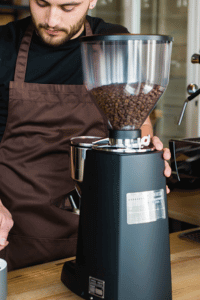
High-Output Commercial Coffee Grinder – Barista-Grade Consistency
Equip your café with a commercial grinder engineered for speed, consistency, and nonstop service. Designed for high-volume coffee shops that need precise grind size, powerful motors, and reliable performance every day. Explore top grinders trusted by professionals.
Why Is Your Commercial Coffee Grinder the Most Important Coffee Shop Equipment You Need?
Ground coffee loses 60% of its aromatics within 15 minutes. Your grinder matters more than your espresso machine.
What You Need:
- Burr grinders only (never blade)
- Budget $600-$3K for commercial grade
- Multiple grinders if you’re serving espresso and drip coffee
I consulted with a café that upgraded only their grinder, and customer feedback improved immediately. Grind consistency creates the quality of your coffee that customers taste.
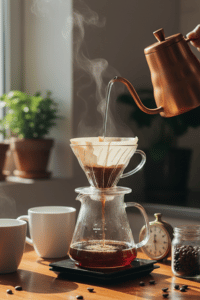
V60 Coffee Maker
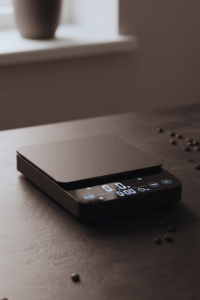
COFFEE SCALE
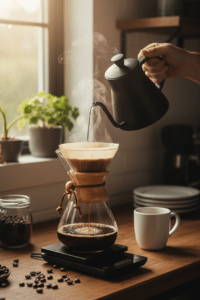
CHEMEX
What Other Coffee Brewing Equipment Do You Need for Your Coffee Shop?
Alternative Brew Methods
- Cold brew systems
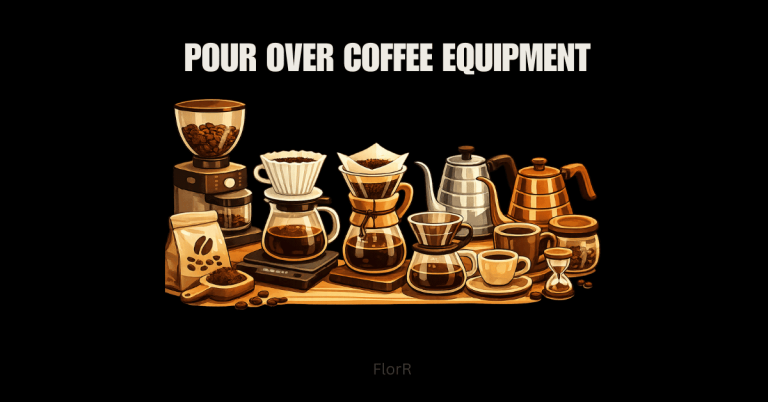
- Pour-over stations
- French press options
Coffee shops require variety; offering multiple brew methods increases ticket averages by 25%.
Essential Accessories
- Quality coffee filters
- Tampers and portafilters
- Milk frothing pitchers
- Thermometers for consistent extraction
Budget Reality Check: Your complete coffee brewing setup (grinder + machine + accessories) should work as a system. Plan $8K-$30K for equipment that keeps your shop running smoothly during rush hours.
Although many coffee shops obsess over espresso machines, your grinder determines whether you serve great coffee or just hot caffeine.
What Essential Coffee Shop Equipment List Items Support Your Coffee Operations?

Your coffee bar needs more than brewers and grinders. The right support equipment for your coffee shop keeps operations running smoothly and revenue flowing.
What Refrigeration and Storage Equipment Do You Need for Your Coffee Shop?
Cold Storage Essentials
- Commercial refrigerators sized to your menu (undercounter for small spaces, walk-in for full food programs)
- Proper storage for freshly ground coffee beans (airtight, cool, dark containers)
- Display cases for pastries—customer visibility drives 35% sales increase
Ice and Freezer Needs
- Calculate 1.5 lbs of ice per cold coffee drink served
- Ice machines sized for blended drinks during peak hours
- Freezer space for backup ingredients and ice reserves
Budget $3K-$15K depending on your food program scope.
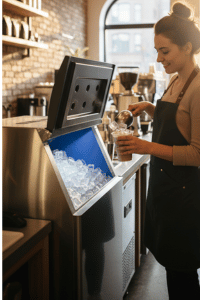
Commercial Ice Machine for Coffee Shops – High-Capacity Ice Production
Keep your café running smoothly with a commercial ice machine designed for high-demand beverage service. Fast production, dependable performance, and built for daily café operations. Explore top-rated models perfect for iced coffees, cold brews, and blended drinks.
What Beverage Equipment Beyond Coffee Does Your Cafe Need?
Tea and Alternative Beverages
- Hot water towers for tea service
- Although many coffee shops focus only on coffee, tea represents 15-20% revenue
- Proper tea storage and display systems
Blended Drink Stations
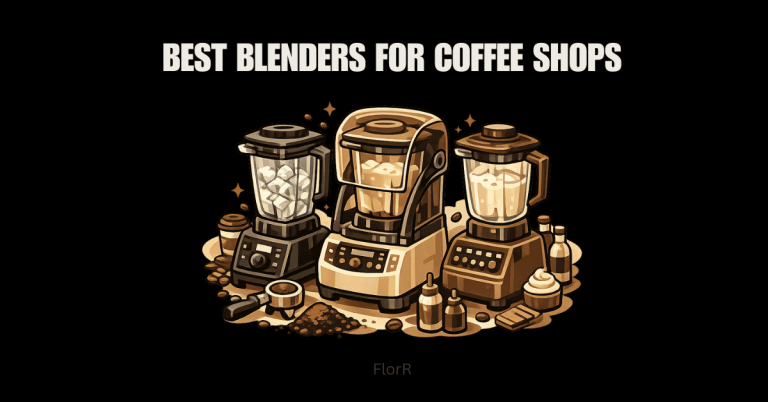
- Commercial blenders (Vitamix-grade) for consistent quality
- Blended coffee drinks command $2-3 premium per cup
- Sound dampening for customer comfort
Alternative Milk Storage
- Dedicated refrigeration for oat, almond, and soy milk
- 40% of customers now request dairy alternatives
- Rotation systems that minimize waste
Quick Shot: Make your menu work harder; every beverage equipment addition should increase average ticket by $1.50 to justify costs.

Commercial Under-Counter Fridge – Built for Daily Coffee Shop Operations
Optimize your coffee shop with a commercial under-counter refrigerator designed for speed, efficiency, and tight spaces. Perfect for milk, syrups, and quick-access ingredients. Built for busy cafés that need reliable cooling all day. Explore top-rated models made for professional service.
What Cooking Equipment Does Your Coffee Shop Need?
Coffee shops and cafes with food programs see 60% higher revenue. Start with:
Basic Food Equipment
- Toaster ovens or panini presses for quick service
- Warming displays for pastries
- Microwaves for heating convenience items
Food Safety Requirements
- Three-compartment sinks for equipment cleaning
- Hand washing stations (non-negotiable)
- Equipment meeting local health department codes
Budget $0-$25K for cooking equipment, depending on your food program. Start minimal with equipment for your coffee shop basics, then expand as demand proves itself.
Your coffee drinks are the priority; food enhances, not replaces, your coffee bar focus.
What Is the Ultimate Coffee Shop Equipment Checklist for Your Point of Sale System?

Your coffee shop pos system is the workhorse of your coffee shop operations. Choose wrong, and you’ll lose money during every rush hour.
How Do You Choose the Right Coffee Shop POS System?
Core Features You Must Have
- Inventory tracking for coffee beans and ingredients
- Employee time tracking and scheduling
- Sales reporting by hour, day, and product
- Integration with accounting software
Coffee-Specific Requirements
- Customization for espresso drinks and modifiers (milk types, shot counts, sizes)
- Loyalty program integration to make your coffee shop regulars feel valued
- Mobile ordering compatibility for grab-and-go customers
Cost Analysis
- Hardware: $1K-$3K upfront
- Software: $50-$200 monthly
- ROI: Modern systems reduce inventory waste by 23% compared to manual tracking
Coffee shop owners using proper POS systems save 10-15% on costs through inventory control alone, which is money you can invest in better equipment to make your coffee perfect.
Test your system during soft opening. If baristas can’t navigate it during rush hour, it’s the wrong system.

Commercial POS System for Cafés – Speed, Accuracy & Easy Management
Upgrade your café with a POS system designed for speed, accuracy, and daily coffee shop workflows. Take orders faster, track sales in real time, and manage your entire menu with ease. Perfect for high-volume cafés that want smoother service and higher revenue. Explore top-rated POS systems built for modern coffee shops.
What Other Business Equipment Do You Need to Keep Your Shop Running?
Back-of-House Infrastructure
- Computer for scheduling, ordering, and bookkeeping
- WiFi infrastructure (customers expect reliable internet)
- Security cameras for safety and loss prevention
- Sound system for atmosphere
Communication Tools
- Headset systems if you have drive-through service
- Kitchen display systems to coordinate food orders (since many coffee shops serve pastries)
- Staff communication tools for shift coordination
Cleaning and Maintenance
- Specialized cleaning supplies for coffee equipment
- Three-compartment sink or commercial dishwasher
- Daily maintenance tools to ensure that your coffee shop runs smoothly
Budget $5K-$10K for complete business infrastructure.
Your POS system and business equipment aren’t glamorous, but they’re what make your coffee shop profitable.
Invest wisely here, because equipment that helps you make the perfect cup of coffee means nothing if you can’t track sales or manage inventory efficiently.
How Do You Create Your Detailed Coffee Shop Equipment Budget and Shopping List?

Knowing what equipment you need is step one. Actually, budgeting and buying it? That’s where most coffee shop owners get stuck.
What Should Your Coffee Shop Equipment Checklist Cost by Category?
Complete Cost Breakdown
- Essential coffee equipment: $8K-$30K (grinder, espresso machine, brewers)
- Beverage equipment: $3K-$10K (blenders, refrigeration for cold brew coffee)
- Cooking equipment: $0-$25K (depending on food program)
- POS and business: $5K-$10K
- Total range: $25K-$100K+ depending on concept
Budget Smart, Scale Later
Start with MVP (Minimum Viable Product) equipment. One café I consulted started with $20K in gear, an espresso machine, a grinder, basic items like refrigerators, and POS. They added $40K more over 18 months as revenue-supported growth.
Financing Your Equipment
- Equipment leasing for flexibility
- Small business loans for major purchases
- Used equipment from closed coffee shops
- Vendor financing through coffee roasters

Commercial Coffee Brewers

commercial Blenders
CHEMEX for your Café
Where Should You Buy Your Essential Coffee Shop Equipment?
Best Equipment Sources
- Commercial restaurant supply stores
- Coffee equipment specialists and roasters
- Many coffee shops use multiple vendors to optimize pricing
Used vs. New Strategy
- Buy used: refrigeration, furniture, display cases
- Always buy new: grinder, espresso machine, items like milk frothers that touch coffee throughout the day
Get three quotes for every piece over $1K. You’ll save 15-30% just by shopping around.
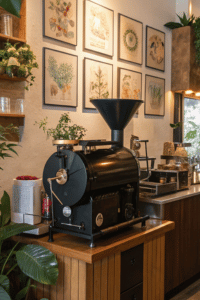
Artisanal Coffee Roaster Machines – Precision Craft for Perfect Beans
Discover Artisanal Coffee Roaster Machines designed for small-batch perfection. Roast beans with precision, enhance flavor, and enjoy café-quality coffee at home or in your shop. Built for freshness, crafted for coffee lovers.
How Do You Plan Your Coffee Shop Equipment Layout?
Workflow Efficiency
Set up your coffee shop around the golden triangle: coffee station, POS, pickup area. Your equipment layout affects the speed of service and labor costs directly.
Infrastructure Requirements
- Commercial espresso machines need dedicated circuits
- Water filtration systems protect equipment investment
- Plumbing for three-compartment sinks
- Infrastructure costs often equal equipment costs
Before buying equipment, sketch your floor plan, marking electrical outlets, water lines, and gas lines. This prevents $5K+ renovation surprises.
Part of your coffee shop’s success depends on smart equipment planning. Budget realistically, buy strategically, and lay out thoughtfully; that’s how you build a profitable operation.
What Are Common Mistakes When Buying Coffee Shop Equipment?

40% of equipment purchases by new coffee shop owners are regretted within six months.
Let’s break down how to avoid joining that statistic.
Don’t Over-Buy Before Proving Demand
Start Lean, Scale Smart
- Many coffee shops fail from equipment debt, not a lack of equipment
- Buy the right coffee shop equipment for actual volume, not wishful thinking
- Start a coffee shop with essentials, then expand as revenue supports it
I consulted with a client who bought a $15K super-automatic espresso machine before opening. They served 30 drinks daily for months, but that machine sat idle 90% of the time while loan payments crushed cash flow.
Don’t Under-Invest in Core Equipment
False Economy Zones
- Cheap coffee grinder ruins expensive beans instantly
- Commercial coffee equipment pays for itself through reliability
- Residential equipment in commercial settings fails fast
Based on real-world experience: One owner bought residential equipment to save money when building a coffee shop. Within eight months, everything failed. Replacement cost? Double the original commercial equipment price.

cOFFEE HOODIES
COFFEE T-SHIRTS
EMBROIDERY
Don’t Ignore Total Cost of Ownership
Calculate the Real Cost
- Purchase price + maintenance + energy costs over three years
- Some “cheap” equipment costs more long-term
- Energy-efficient equipment saves $2K-$5K annually
Smart Planning Saves Money
Proper equipment planning reduces startup costs by 20-30%. Create your equipment list for coffee shop operations based on realistic projections, not best-case scenarios.
Consider Your Menu
- A variety of coffee drinks requires different equipment than a simple espresso-focused menu
- Match equipment capacity to your actual service model
- Don’t buy blenders if you’re not serving blended drinks
The right coffee shop equipment isn’t about buying everything; it’s about buying strategically.
Start with quality core equipment, prove your concept, then expand your equipment list for coffee shop growth as demand justifies investment. That’s how profitable coffee shops are built.
How Do You Maintain Your Coffee Shop Equipment to Ensure Quality and Longevity?

Five minutes of daily maintenance prevents $500 repairs. Your equipment investment only pays off when you protect it properly.
What Daily Equipment Cleaning and Maintenance Tasks Keep Your Coffee Shop Running?
Daily Coffee Equipment Checklist
- Backflush espresso machines after closing
- Clean and calibrate coffee grinders
- Wipe down steam wands and group heads
- Equipment cleaning directly impacts the taste of your coffee
Beverage Equipment Care
- Sanitize milk frothers (bacterial growth happens fast)
- Deep clean blenders between shifts
- Check ice machine water levels and cleanliness
- Proper cleaning extends equipment life 3-5 years
Make It Easy for Staff
Create laminated checklists and post them next to each piece of equipment. Include photos showing what “clean” actually looks like. Integrate cleaning into closing procedures so nothing gets skipped.
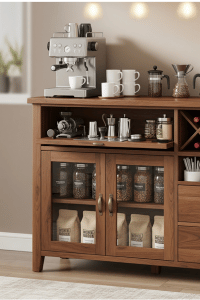
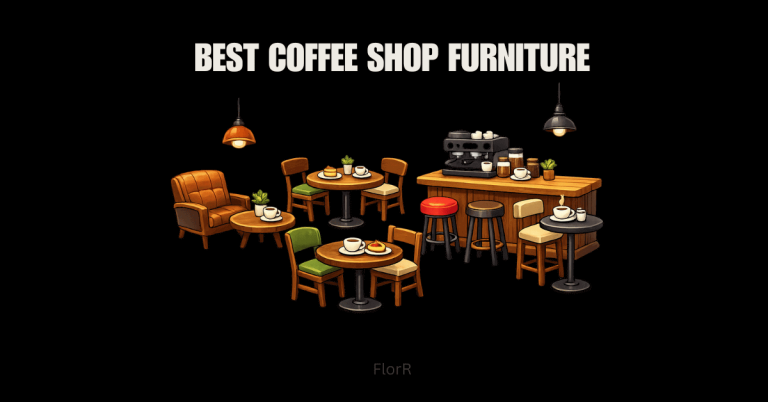
Modern Coffee Shop Furniture
Contemporary coffee shop furniture is designed for style and comfort. Create an inviting, elegant space where customers can relax, connect, and enjoy every cup in a modern atmosphere.
What Preventive Maintenance Protects Your Coffee Shop Equipment Investment?
Scheduled Professional Service
- Espresso machine servicing quarterly minimum
- Deep cleaning all beverage equipment monthly
- Refrigeration coil cleaning prevents breakdowns
- Water filtration system changes (schedule varies by usage)
DIY vs. Professional Maintenance
You can handle daily cleaning and basic troubleshooting. But espresso machine internals, refrigeration repairs, and electrical work? Call professionals. Trying DIY voids warranties and creates safety hazards.
Budget for Longevity
Set aside 5-10% of equipment value annually for maintenance and repairs. Plan $3K-$5K yearly for professional service; it’s 10x cheaper than emergency replacements.
Expected Equipment Lifespan
- Espresso machines: 7-10 years with proper care
- Grinders: 5-7 years
- Refrigeration: 10-15 years
- Blenders: 3-5 years
Building relationships with equipment service companies before you need emergency repairs saves money and downtime.
Planning your coffee shop’s equipment refresh cycle prevents crisis purchases at the worst possible time. Your equipment investment deserves protection, daily care, and professional maintenance to deliver optimal performance.
What Should You Know About Coffee Shop Equipment Before You Open Your Coffee Shop?

Buying equipment is one thing. Being ready to open with it? That requires testing, backup plans, and proper protection.
Test Everything Before Opening Day
Run Mock Service
- Set up your coffee shop and simulate rush hour
- Train staff on all equipment before real customers arrive
- Ensure that your coffee meets your standards consistently across all baristas
Run a friends-and-family soft opening. If your team struggles with equipment during low-pressure practice, imagine the chaos during actual rush hour.

HIGH TABLE
With Stools

LONG TABLE
With Stools
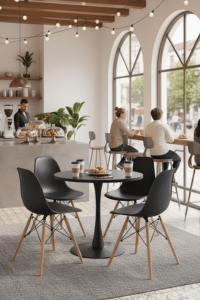
BLACK TABLE
With Chairs
Have Backup Plans for Critical Equipment
Your Safety Net
- Backup coffee grinder (your most critical piece, a broken grinder closes your shop)
- Vendor relationships for emergency equipment rental
- Keep your shop running when equipment fails unexpectedly
One café lost its espresso machine in week two, catastrophic timing. But they’d built a relationship with their equipment vendor, who loaned them a machine within hours.
Their backup plan meant staying open, not scrambling to close and disappoint customers.
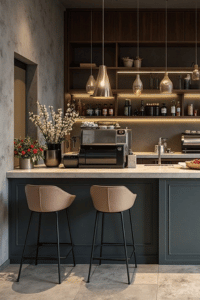
Modern Café Stools – Stylish Comfort for Coffee Shops & Homes
Upgrade your space with Modern Café Stools – sleek, durable, and designed for comfort. Perfect for coffee shops, kitchens, and bars. Blend style and function for the ultimate seating experience
Protect Your Investment with Insurance
Coverage You Need
- Commercial equipment insurance (separate from general liability)
- Service contracts for espresso machines and major equipment
- Document all equipment purchases with receipts and serial numbers
Service Contracts vs. Self-Insurance
Service contracts make sense for equipment costing $5K+. Calculate the math: $500 annual contract versus potential $2K repair bill. For high-use equipment like espresso machines, contracts pay for themselves.
Critical Documentation
- Photograph all equipment when installed
- Keep purchase receipts and warranty info in one place
- Update insurance coverage as you add equipment
Before you open your coffee shop, test relentlessly, plan for equipment failures, and protect your investment with proper insurance.
Opening week isn’t when you want to discover your espresso machine needs a dedicated circuit or your grinder can’t keep up with demand.
Preparation prevents panic and keeps your doors open when equipment inevitably needs attention.
Key Takeaways
- A clear equipment list for coffee helps you launch smoothly and avoid costly mistakes.
- Prioritize essentials first: espresso machine, grinder, brewer, refrigeration, and POS.
- Choose commercial-grade tools to maintain consistency, speed, and drink quality.
- Plan your workflow early — good layout reduces wait times and boosts efficiency.
- Invest in scalable equipment so your café can grow without major upgrades.
Final Thoughts
Start with your business plan and menu to determine equipment needs. Prioritize coffee quality equipment over nice-to-have items. Budget for the complete ecosystem, purchase, maintenance, and operation costs together.
The right coffee shop equipment is your foundation, but remember, the best equipment won’t save a bad business plan, and modest equipment won’t hold back a great one. Make smart choices that let your coffee and service shine.
FAQs
1. What is the most important equipment for a coffee shop?
Your commercial coffee grinder is the single most critical piece of equipment; it impacts the taste of your coffee more than your brewing method.
The quality of your equipment starts here: invest in a commercial burr grinder ($600-$3K) before splurging on an espresso machine.
2. How much does coffee shop equipment cost?
Essential coffee shop equipment ranges from $25K-$100K+, depending on your concept.
A minimal setup (drip coffee focus) starts at $25K, while a full espresso bar with food program can reach $150K. Most successful coffee shop owners spend $50K-$75K on their initial coffee shop equipment list.
3. Can you start a coffee shop with used equipment?
Yes, but strategically. Buy used refrigeration, furniture, and cooking equipment to save 40-60%. Always buy new for coffee grinders and espresso machines – used equipment here often costs more in repairs and lost quality.
Many coffee shops successfully mix new coffee equipment with used support equipment.
4. What equipment do you need to open a small coffee shop?
Your essential coffee shop equipment list needs:
commercial coffee grinder ($600-$2K), coffee brewer or espresso machine ($2K-$15K), commercial refrigerator ($2K-$5K), coffee shop pos system ($1K-$3K), and basic smallwares ($2K-$5K). Start minimal: $15K-$30K can equip a small coffee shop.
5. How long does coffee shop equipment last?
With proper maintenance, commercial espresso machines last 10-15 years, commercial coffee grinders 5-10 years, refrigeration equipment 10-15 years, and small appliances 3-5 years.
Equipment cleaning and preventive maintenance extend equipment life significantly – plan 5-10% of equipment value annually for maintenance.
6. What equipment do coffee shops use to make espresso drinks?
Coffee and espresso drinks require: a commercial espresso machine with multiple group heads ($5K-$25K), a dedicated espresso grinder ($800-$3K), milk frothing equipment (usually built into espresso machine), knock box, tampers, and frothing pitchers.
Many coffee shops also need a separate grinder for drip coffee.
7. Do I need commercial equipment for a coffee shop?
Yes – health departments require commercial-grade equipment for any public food service business.
Commercial coffee shop equipment is built for high volume, has proper NSF ratings, and meets code requirements. Residential equipment voids insurance, violates health codes, and breaks quickly under commercial use.
8. What’s the difference between a coffee shop equipment list and a cafe equipment list?
The terms are often used interchangeably, but traditionally, cafes serve more food items, requiring expanded cooking equipment, while coffee shops focus primarily on beverage equipment.
Your business plan determines which equipment you need – many modern coffee shops and cafes overlap completely.