This site contains affiliate links. I may earn a commission if you purchase through these links. Thank you for being so supportive!
When customers look at a menu, their eyes don’t wander randomly. They follow predictable patterns shaped by psychology and design.
One of the most influential patterns in menu layout strategy is the Golden Triangle, a visual flow that guides customers to what they’re most likely to order.
If you want a menu that increases sales without raising prices or adding new items, the Golden Triangle is your quiet game-changer.
I’ve seen coffee shops increase their premium drink sales by 30% simply by repositioning items according to this principle.
Let me show you exactly how it works.
Explore the coffee directory
Want to see how real coffee shops turn these strategies into sales?
What Is the Golden Triangle in Menu Design?
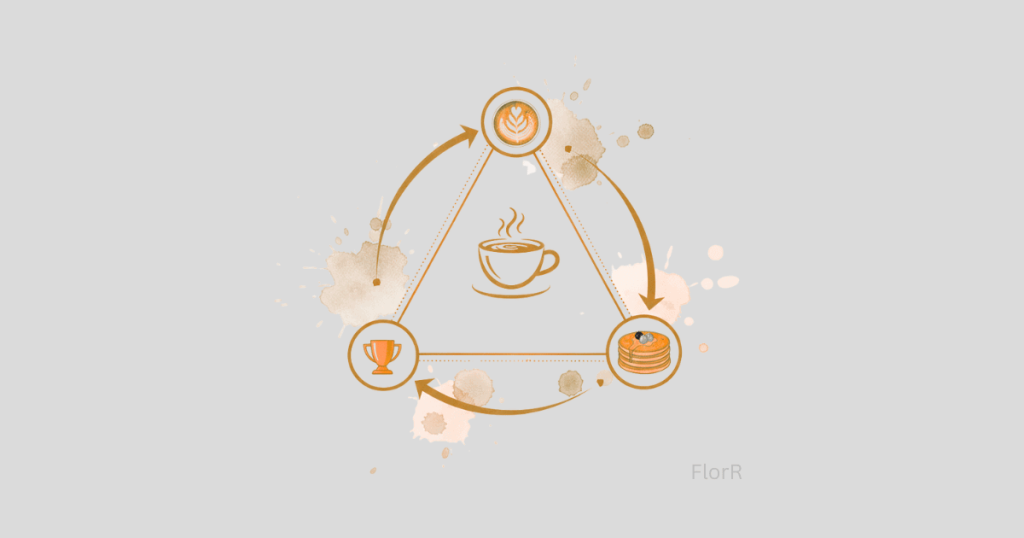
The Golden Triangle is a visual scanning pattern customers follow when they first look at a menu. Eye-tracking research shows that their gaze naturally lands on three key zones in this specific order:
- Upper right (highest attention zone)
- Center of the menu
- Upper left
These points create a triangle of attention where your high-impact items should live.
This isn’t opinion, it’s based on hundreds of studies tracking how people process visual information when making purchasing decisions.
Understanding this pattern is the foundation of effective menu layout strategy.

cOFFEE HOODIES
COFFEE T-SHIRTS
EMBROIDERY
Why the Golden Triangle Works
The Brain Seeks Quick, Effortless Decisions
When faced with multiple choices, customers rely on visual cues to make quick decisions. The average customer spends only 109 seconds looking at a menu before deciding.
That’s less than two minutes to capture attention, communicate value, and guide them toward profitable choices.
The Golden Triangle helps because it:
- Reduces decision fatigue by highlighting key options
- Makes items feel recommended without explicit labels
- Increases perceived value of strategically placed drinks
- Speeds up ordering which improves customer flow
- Enhances the customer experience by making choices feel natural
The Psychological Effect
Items placed in the Golden Triangle feel more “recommended,” even without badges or callouts. It’s a subconscious endorsement created purely through positioning.
This is why menu layout strategy matters as much as what you’re selling. You could have the best specialty latte in town, but if it’s buried in the lower left corner, most customers will never see it.
How to Apply the Golden Triangle to Your Coffee Shop Menu
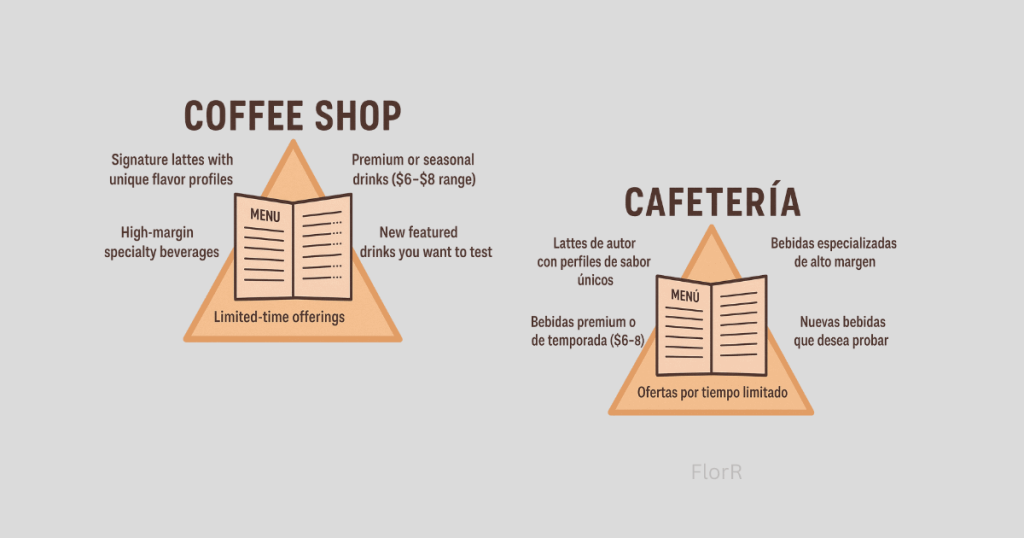
1. Place High-Margin Drinks in the Upper Right (Your Power Zone)
This is where customers look first and longest. It’s prime real estate on your menu; use it wisely.
Best items for this zone:
- Signature lattes with unique flavor profiles
- Premium or seasonal drinks ($6-$8 range)
- High-margin specialty beverages
- New featured drinks you want to test
- Limited-time offerings
Real-world example:
A Seattle café moved its Cardamom Rose Latte from the middle of its menu to the upper right. Sales of that drink increased 40% in the first month, same price, same recipe, different position.
This placement dramatically increases the likelihood of customers choosing your most profitable items.
V60 Coffee Maker
COFFEE SCALE

CHEMEX
2. Use the Center for Trust-Building, Best-Selling Drinks
Customers often scan the center for options they feel safe ordering. This is your “comfort zone” where familiarity meets reliability.
Ideal items for this zone:
- Customer favorites and proven sellers
- Drinks with broad appeal (vanilla latte, caramel macchiato)
- Medium-margin items with consistent sales
- Drinks that create brand identity (your house latte)
- Accessible entry points for new customers
The center is where you build trust. When customers see their “usual” here, they feel confident exploring other options nearby.

Commercial Coffee Brewers

commercial Blenders
CHEMEX for your Café
3. Place Simple or Traditional Drinks in the Upper Left
This zone gets attention after the upper right and center. It’s where customers expect to find the basics.
Perfect for:
- Espresso
- Americano
- Cortado
- Drip coffee
- Cappuccino
- Straightforward, no-frills drinks
These items don’t need a hard sell; customers actively seek them out. They’re familiar, expected, and often ordered by coffee purists who know exactly what they want.
Designing a Menu That Guides the Eye Naturally
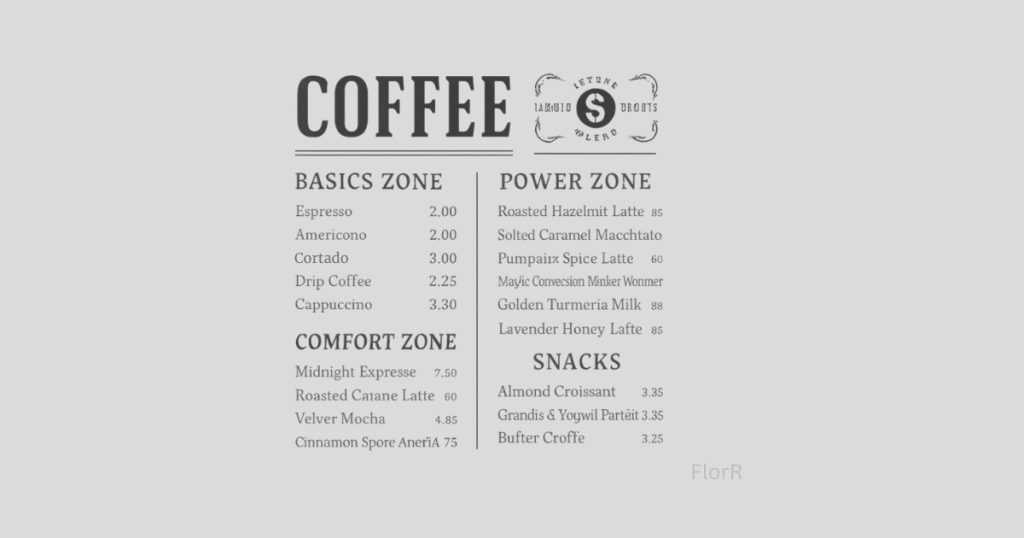
Knowing the Golden Triangle is only half the battle. Your menu layout strategy must support the pattern through intentional design choices.
1. Use Clear Visual Hierarchy
Your menu should communicate structure at a glance, not after 30 seconds of squinting.
Essential hierarchy elements:
- Bold category headers that organize the menu logically
- Clean spacing between sections to prevent visual overwhelm
- Slight misalignment of items to avoid a rigid, boring grid
- Prices at the end of descriptions in smaller, softer text
- Consistent but not identical spacing that feels natural
Hierarchy isn’t about making things complicated; it’s about making the right things stand out effortlessly.
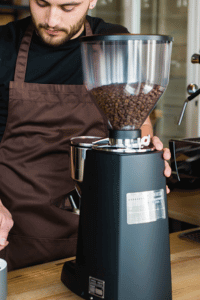
High-Output Commercial Coffee Grinder – Barista-Grade Consistency
Equip your café with a commercial grinder engineered for speed, consistency, and nonstop service. Designed for high-volume coffee shops that need precise grind size, powerful motors, and reliable performance every day. Explore top grinders trusted by professionals.
2. Highlight Drinks Strategically
Use subtle design elements to draw attention without screaming “BUY THIS!”
Effective highlighting techniques:
- A soft-colored box around featured items
- An icon (⭐ Recommended, 🔥 Popular)
- Slightly bolder text (not ALL CAPS)
- A faint background tone that sets items apart
- Strategic white space that creates natural focus
Remember: tiny visual cues create major impact on sales. Subtlety is your friend here.
3. Write Descriptions That Match the Triangle’s Flow
High-visibility zones deserve high-impact descriptions. Your words should do as much work as your layout.
Great descriptions are:
- Short (under 12 words)
- Sensory (sight, smell, taste, texture)
- Focused on flavor or experience
- Highlighting a unique ingredient or technique
Example:
❌ Vanilla Bourbon Latte — A latte with vanilla and bourbon flavoring
✅ Vanilla Bourbon Latte — Creamy, aromatic, infused with real Madagascar bourbon vanilla
The second version paints a picture. It gives customers a reason to choose it.
Common Mistakes in Menu Layout Strategy
Even knowing the Golden Triangle, many cafés undermine their own success with these errors:
1. Placing low-margin items in high-attention zones Your $4 drip coffee doesn’t need the upper right spot—your $7.50 signature drink does.
2. Overloading the menu with too many choices More than 15-20 drinks creates decision paralysis. Customers freeze, default to the cheapest option, or order what they always order.
3. Aligning prices perfectly in one column This creates a “price scanner” down the right side where customers only look at numbers—not drinks.
4. Mixing categories randomly Hot drinks, iced drinks, and seasonal items should be clearly separated. Chaos kills conversions.
5. Using inconsistent fonts or layout styles Your menu should feel cohesive. Random design choices make it look unprofessional.
These mistakes confuse customers and completely neutralize the Golden Triangle’s effectiveness.
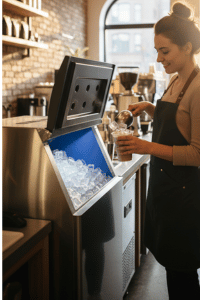
Commercial Ice Machine for Coffee Shops – High-Capacity Ice Production
Keep your café running smoothly with a commercial ice machine designed for high-demand beverage service. Fast production, dependable performance, and built for daily café operations. Explore top-rated models perfect for iced coffees, cold brews, and blended drinks.
Example: The Golden Triangle in Action
Before:
- Prices lined up vertically on the right
- Categories blended together
- No visual hierarchy or emphasis
- Descriptions missing or generic
- Best-sellers buried in the middle
After:
- Premium drinks placed upper right with rich descriptions
- Best-sellers positioned in center with subtle highlighting
- Simple coffees organized in upper left
- Clear, sensory descriptions throughout
- Prices placed subtly at description end
- Strategic white space and soft visual cues
Result: Customers chose higher-quality drinks 35% more often and decided 20% faster. Average ticket increased by $1.80 without a single price change.
That’s the power of menu layout strategy done right.

Commercial Under-Counter Fridge – Built for Daily Coffee Shop Operations
Optimize your coffee shop with a commercial under-counter refrigerator designed for speed, efficiency, and tight spaces. Perfect for milk, syrups, and quick-access ingredients. Built for busy cafés that need reliable cooling all day. Explore top-rated models made for professional service.
Implementing the Golden Triangle: Step-by-Step
Step 1: Audit your current menu layout and identify which items currently occupy your Golden Triangle zones.
Step 2: Calculate profit margins for each drink to determine which deserve prime positioning.
Step 3: Redesign your layout with premium items upper right, best-sellers center, classics upper left.
Step 4: Create compelling descriptions for items in high-visibility zones.
Step 5: Test the new layout for 2-4 weeks and track sales data.
Step 6: Refine based on results—this is an iterative process.
Key Takeaways
- Customers follow a predictable visual path on menus: upper right → center → upper left
- Upper right = highest sales potential and premium drink placement
- Center = trust zone for customer favorites and best-sellers
- Upper left = classic drink placement for straightforward options
- Clear visual hierarchy enhances the Golden Triangle’s effectiveness
- Strategic placement boosts sales without changing recipes or raising prices
- Subtle design cues (boxes, icons, spacing) guide attention naturally
- Avoid common mistakes: price columns, overcrowding, poor hierarchy
- Menu layout strategy is as important as what you’re selling
- Test and refine—small positioning changes can increase sales 30-40%
- Descriptions in high-visibility zones need to be compelling and sensory
- The Golden Triangle works for both physical and digital menus
Final Thoughts
The Golden Triangle isn’t just a design trick; it’s a strategic framework that blends psychology with menu layout. When you place items intentionally, customers feel more confident, spend more, and enjoy the experience more.
A well-organized menu becomes your silent salesperson, guiding customers toward drinks that highlight your brand and boost your profits.
A menu layout strategy is about respecting how the human brain actually works and designing around that reality. It’s not manipulation; it’s clarity.
Want the complete menu design system? Check out the full guide covering pricing psychology, menu engineering, templates, and optimization strategies:
👉 How to Design a Coffee Shop Menu That Maximizes Profit
Own a coffee shop? See how you compare.
Explore real coffee shops applying the strategies you just learned—then add your café to the directory to get discovered by customers searching by location.
FAQs
What is the Golden Triangle in menu design?
A visual pattern showing where customers look first: upper right → center → upper left. It’s based on eye-tracking research and forms the foundation of effective menu layout strategy.
Where should premium drinks go on a menu?
Upper right—the strongest visual position where customers look first and longest.
Which drinks belong in the center of a menu?
Your best-sellers, customer favorites, and recommended items that build trust.
What belongs in the upper left of a menu?
Simple, classic coffees customers already expect: espresso, americano, drip coffee, cortado.
Does the Golden Triangle work for digital menus?
Yes—as long as the menu uses strong visual hierarchy. The principle applies to tablets, apps, and digital boards.
How long should I test a new menu layout?
At least 2-4 weeks to gather meaningful sales data across different days and times.
Can I use the Golden Triangle for food items too?
Absolutely. The visual pattern applies to any menu—coffee, food, cocktails, or retail items.
Should I change my menu layout seasonally?
You can rotate which specific items occupy the Golden Triangle zones, but the overall framework should remain consistent.