This site contains affiliate links. I may earn a commission if you purchase through these links. Thank you for being so supportive!
Your latte tastes amazing. Your cold brew is perfectly smooth. Your seasonal special is Instagram-worthy.
But if your menu just says “Latte – Espresso with steamed milk,” you’re losing sales every single day.
How to write coffee menu descriptions isn’t about flowery language or fancy words. It’s about using the right combination of sensory details, strategic positioning, and psychological triggers to make customers want what you’re selling.
I’ve seen coffee shops increase sales of specific drinks by 40% just by rewriting descriptions. No price changes. No recipe adjustments. Just better words.
The difference between “Caramel Latte” and “Velvety espresso swirled with house-made salted caramel” is about $15,000 per year in revenue for an average café. That’s the power of description.
Let me show you exactly how to write coffee menu descriptions that make customers order (and pay more) without hesitation.
Explore the coffee directory
Want to see how real coffee shops turn these strategies into sales?
Why Coffee Menu Descriptions Matter More Than You Think
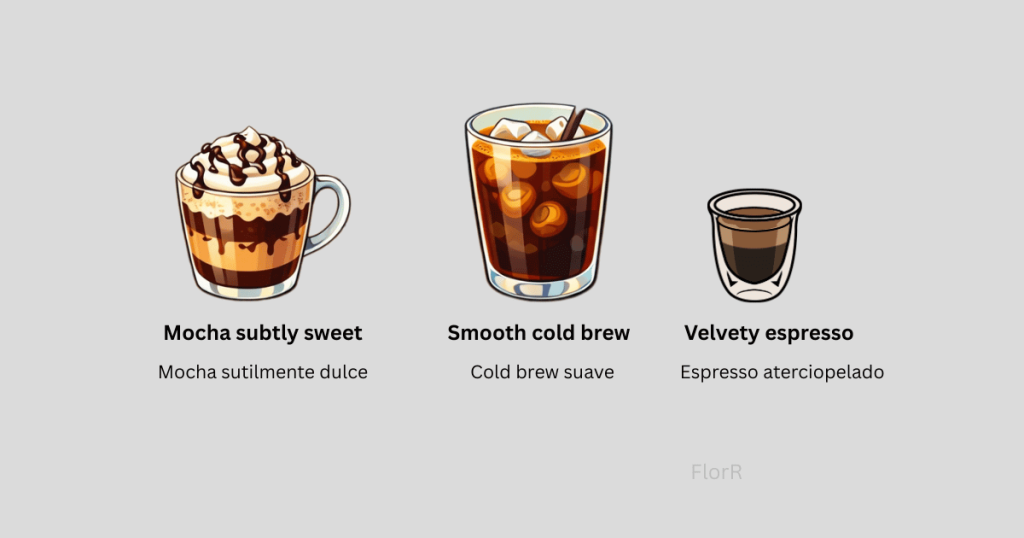
Here’s what happens when customers read your menu:
Without good descriptions:
- They scan prices first
- They default to what they know
- They choose the cheapest option
- They ask questions that slow your line
With strategic descriptions:
- They imagine the taste and experience
- They’re curious about new drinks
- They choose based on desire, not just price
- They order confidently and quickly
Good descriptions do three critical things:
- Justify your prices (customers understand why it costs $6.50)
- Create desire (they want it before they taste it)
- Differentiate your drinks (your latte isn’t like everyone else’s)

cOFFEE HOODIES
COFFEE T-SHIRTS
EMBROIDERY
The 5-Part Formula for Perfect Coffee Menu Descriptions
After analyzing hundreds of successful café menus, I’ve found that the best descriptions follow a simple formula. You don’t need all five elements every time, but using 3-4 consistently works best.
Part 1: The Hook (Texture or Temperature)
Start with a sensory word that creates immediate mental imagery.
Great hook words:
- Velvety
- Smooth
- Rich
- Bold
- Creamy
- Silky
- Warming
- Refreshing
- Chilled
- Frothy
Examples:
- “Velvety espresso…”
- “Smooth cold brew…”
- “Rich chocolate…”
- “Refreshing mint…”
This single word sets the tone and makes the drink feel real before they taste it.
Part 2: The Base (What It Actually Is)
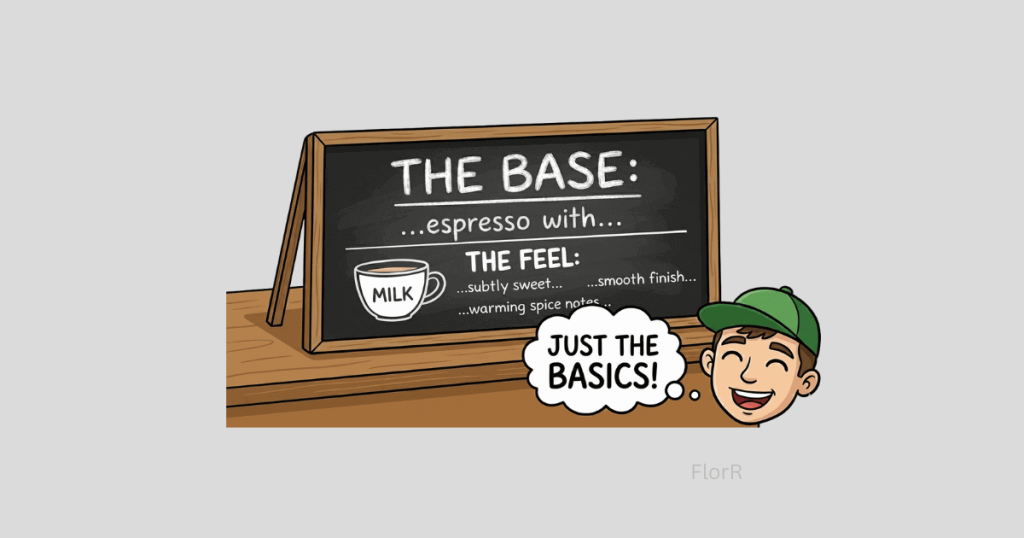
Clearly state what the drink is. Don’t be cryptic or cute here—customers need to understand the basics.
Examples:
- “…espresso with…”
- “…double shot of…”
- “…cold brew infused with…”
- “…steamed milk and…”
Keep this simple and clear. Save creativity for other parts.
Part 3: The Star Ingredient (What Makes It Special)
This is where you differentiate your drink from competitors. Highlight premium, unique, or house-made ingredients.
Instead of: vanilla Say: Madagascar bourbon vanilla
Instead of: chocolate Say: Belgian dark chocolate
Instead of: caramel Say: house-made salted caramel
Instead of: coffee Say: single-origin Ethiopian beans
Specificity creates perceived value.
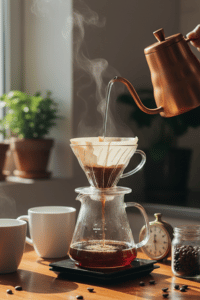
V60 Coffee Maker
COFFEE SCALE
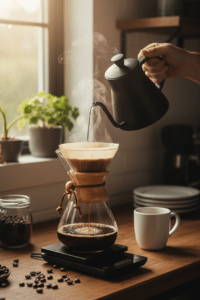
CHEMEX
Part 4: The Experience (What It Feels Like)
Optional but powerful. Add one short phrase about how it tastes or feels.
Examples:
- “…perfectly balanced”
- “…smooth finish”
- “…warming spice notes.”
- “…subtly sweet”
- “…aromatic and complex”
This helps customers imagine drinking it.
Part 5: The Kicker (Optional Add-On or Serving Style)
If relevant, mention how it’s served or a popular modification.
Examples:
- “…served over ice”
- “…topped with cinnamon”
- “…finished with foam art”
- “…available hot or iced”
Use this sparingly, only when it adds value.
Real Examples: Before and After
Let me show you how the formula transforms boring descriptions into sales drivers.
Example 1: Basic Latte
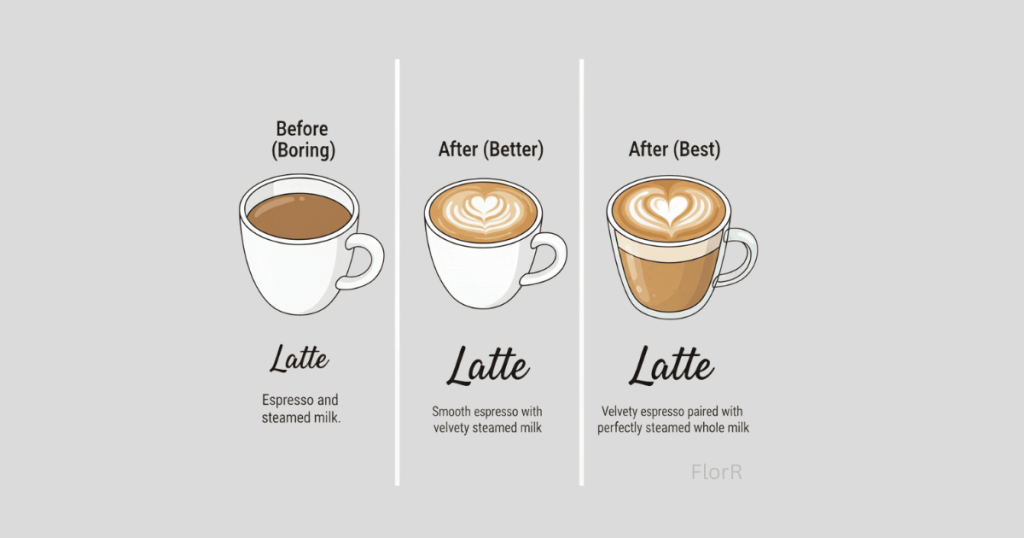
- Before (Boring): Latte — Espresso and steamed milk
- After (Better): Latte — Smooth espresso with velvety steamed milk
- After (Best): Latte — Velvety espresso paired with perfectly steamed whole milk
What changed: Added texture words, made the preparation feel intentional, and specified the milk type.
Example 2: Specialty Drink
- Before (Generic): Honey Lavender Latte — Latte with honey and lavender
- After (Better): Honey Lavender Latte — Espresso with local honey and lavender syrup
- After (Best): Honey Lavender Latte — Rich espresso sweetened with local wildflower honey and aromatic culinary lavender
What changed: Specified where ingredients come from, added sensory words, made it feel premium.

Commercial Coffee Brewers

commercial Blenders
CHEMEX for your Café
Example 3: Seasonal Special
- Before (Flat): Pumpkin Spice Latte — Coffee with pumpkin flavor
- After (Better): Pumpkin Spice Latte — Espresso with pumpkin and fall spices
- After (Best): Pumpkin Spice Latte — Smooth espresso blended with real pumpkin purée, warming cinnamon, and nutmeg
What changed: Emphasized real ingredients, added sensory details, created a fall feeling.
Example 4: Cold Brew
- Before (Basic): Cold Brew — Cold brewed coffee
- After (Better): Cold Brew — Smooth, slow-steeped coffee served over ice
- After (Best): Cold Brew — Exceptionally smooth coffee, cold-steeped for 16 hours, naturally sweet and bold
What changed: Added the preparation method, time investment, and taste profile.
Power Words That Increase Sales
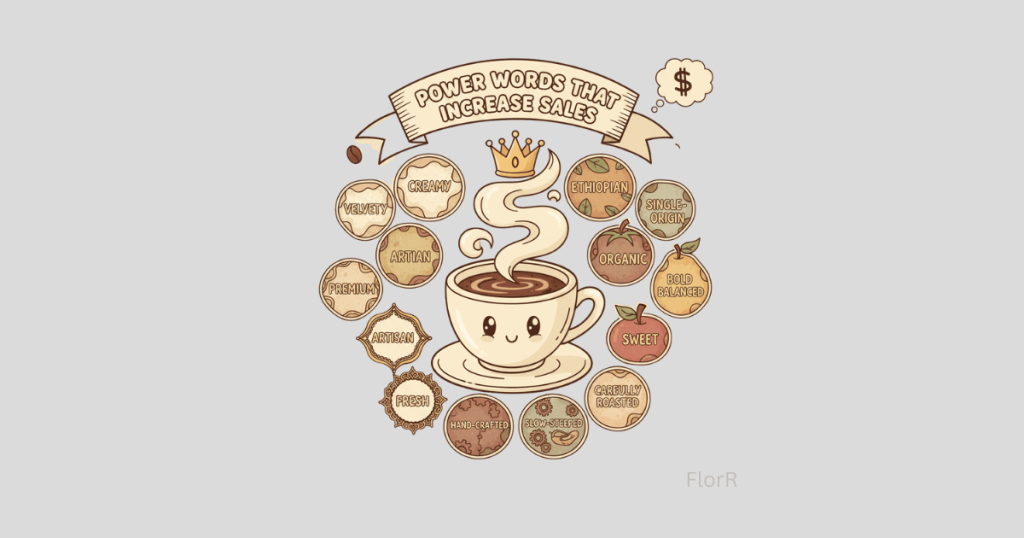
Certain words trigger psychological responses that make drinks more appealing. Here are the most effective ones for coffee menus:
Texture Words
- Velvety
- Creamy
- Silky
- Smooth
- Rich
- Frothy
Quality Words
- Premium
- House-made
- Artisan
- Craft
- Fresh
- Local
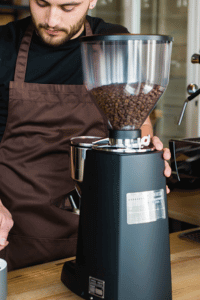
High-Output Commercial Coffee Grinder – Barista-Grade Consistency
Equip your café with a commercial grinder engineered for speed, consistency, and nonstop service. Designed for high-volume coffee shops that need precise grind size, powerful motors, and reliable performance every day. Explore top grinders trusted by professionals.
Origin Words
- Madagascar
- Ethiopian
- Single-origin
- Fair-trade
- Organic
- Locally-sourced
Taste Words
- Bold
- Balanced
- Complex
- Aromatic
- Sweet
- Subtle
Process Words
- Hand-crafted
- Slow-steeped
- Carefully roasted
- Freshly ground
- Perfectly steamed
Use 2-3 power words per description. More than that feels forced.
How to Write Coffee Menu Descriptions: Step-by-Step Process
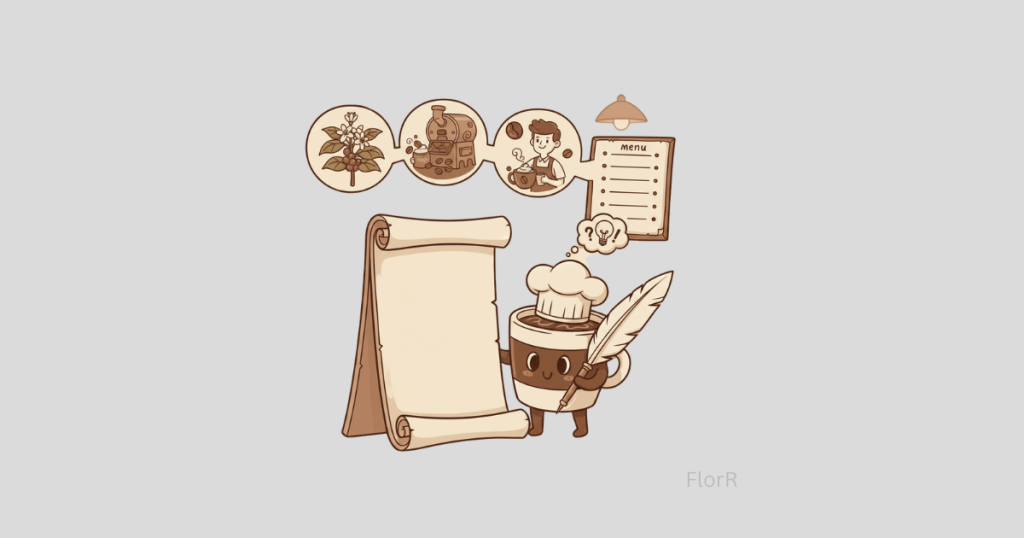
Ready to rewrite your menu? Here’s the exact process:
Step 1: List Your Ingredients
For each drink, write down:
- Base (espresso, cold brew, drip coffee)
- Milk type (whole, oat, almond)
- Flavors/syrups
- Toppings or garnishes
- Unique preparation methods
Step 2: Identify What’s Special
Ask yourself:
- What ingredient is premium or unique?
- How is this different from competitors?
- What’s the most interesting part of preparation?
- Why would someone pay our price for this?
Step 3: Apply the Formula
Use the 5-part structure:
- Texture/temperature word
- Base ingredient
- Star ingredient with specificity
- Experience phrase
- Optional kicker
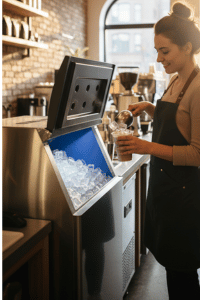
Commercial Ice Machine for Coffee Shops – High-Capacity Ice Production
Keep your café running smoothly with a commercial ice machine designed for high-demand beverage service. Fast production, dependable performance, and built for daily café operations. Explore top-rated models perfect for iced coffees, cold brews, and blended drinks.
Step 4: Cut Ruthlessly
Good descriptions are 8-15 words maximum. Every word must earn its place.
Too long: “Our signature vanilla latte is made with freshly pulled espresso shots, perfectly steamed milk, and premium vanilla syrup, creating a smooth and delicious drink that you’ll love.”
Just right: “Rich espresso with Madagascar vanilla and perfectly steamed milk”
See the difference?
Step 5: Test and Refine
Try new descriptions for 2-3 weeks. Track:
- Which drinks sell more
- What questions customers ask
- Which descriptions baristas like recommending
Adjust based on results.
Common Mistakes When Writing Coffee Menu Descriptions
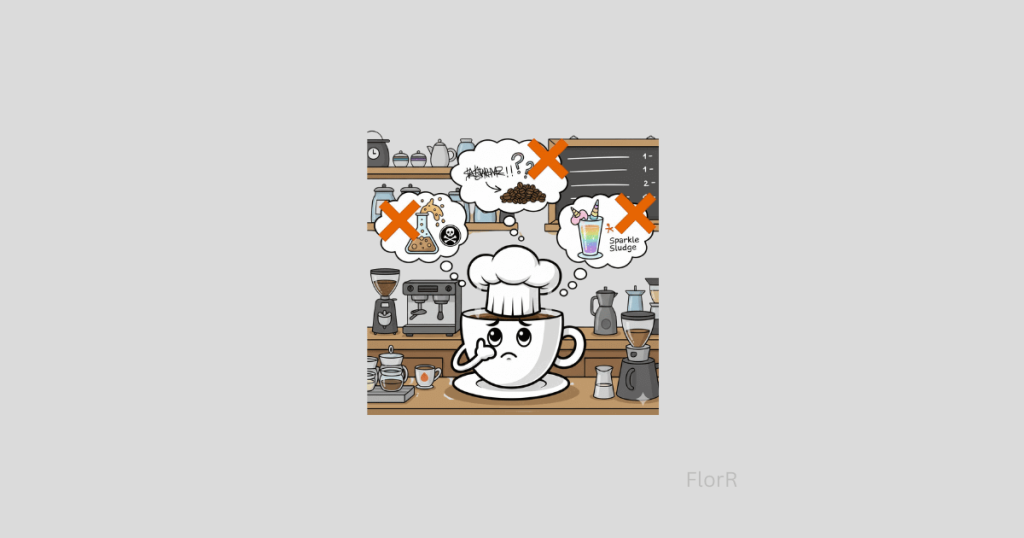
Mistake #1: Being Too Vague
❌ “Delicious espresso drink”
✅ “Bold espresso with house-made caramel”
Vague descriptions don’t create desire.
Mistake #2: Using Too Many Adjectives
❌ “Amazing, incredible, delicious, wonderful vanilla latte”
✅ “Smooth espresso with Madagascar vanilla”
Quality over quantity.
Mistake #3: Focusing on Process Over Experience
❌ “Espresso extracted at 9 bars of pressure with milk steamed to 150°F”
✅ “Perfectly balanced espresso with velvety microfoam”
Customers care about taste, not technical specs.

Commercial Under-Counter Fridge – Built for Daily Coffee Shop Operations
Optimize your coffee shop with a commercial under-counter refrigerator designed for speed, efficiency, and tight spaces. Perfect for milk, syrups, and quick-access ingredients. Built for busy cafés that need reliable cooling all day. Explore top-rated models made for professional service.
Mistake #4: Making Everything Sound the Same
If every drink is “smooth and delicious,” nothing stands out. Vary your descriptions.
Mistake #5: Forgetting Price Justification
Your $7.50 drink needs a description that explains why it’s worth $7.50.
❌ “Lavender Latte — Latte with lavender”
✅ “Lavender Latte — Rich espresso with aromatic culinary lavender and local honey.”
The second version justifies premium pricing.
Advanced Techniques for Maximum Impact
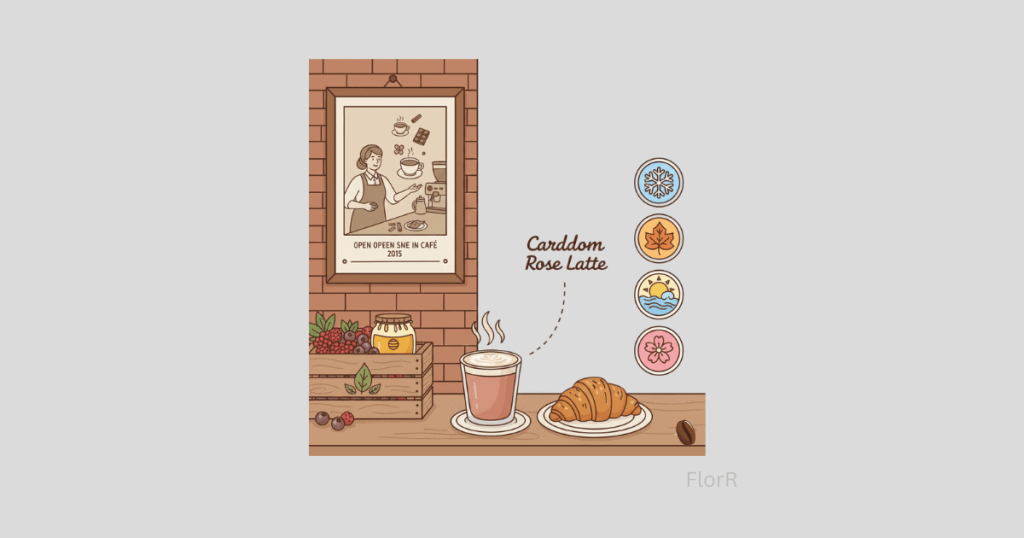
Technique #1: The Origin Story (For Signature Drinks)
Add a tiny bit of backstory to your signature drinks.
Example: “Founder’s Mocha — Our original recipe from 2015: dark chocolate, espresso, hint of cinnamon”
This creates emotional connection and perceived value.
Technique #2: The Local Connection
Mention local ingredients when possible.
Examples:
- “…with honey from Riverside Farms”
- “…featuring beans roasted locally in Brooklyn”
- “…sweetened with Vermont maple syrup”
Local = fresh, special, community-focused.
Technique #3: The Pairing Suggestion
For premium drinks, suggest what to pair them with.
Example: “Cardamom Rose Latte, Floral espresso with cardamom spice (pairs perfectly with our almond croissant)”
This increases average ticket size.

Commercial POS System for Cafés – Speed, Accuracy & Easy Management
Upgrade your café with a POS system designed for speed, accuracy, and daily coffee shop workflows. Take orders faster, track sales in real time, and manage your entire menu with ease. Perfect for high-volume cafés that want smoother service and higher revenue. Explore top-rated POS systems built for modern coffee shops.
Technique #4: The Seasonal Language
For seasonal drinks, use words that evoke the season.
- Fall: warming, spiced, cozy, autumn, harvest
- Winter: rich, indulgent, comforting, festive, smooth
- Spring: fresh, floral, bright, light, aromatic
- Summer: refreshing, chilled, crisp, fruity, iced
This makes drinks feel timely and special.
Descriptions for Different Types of Drinks
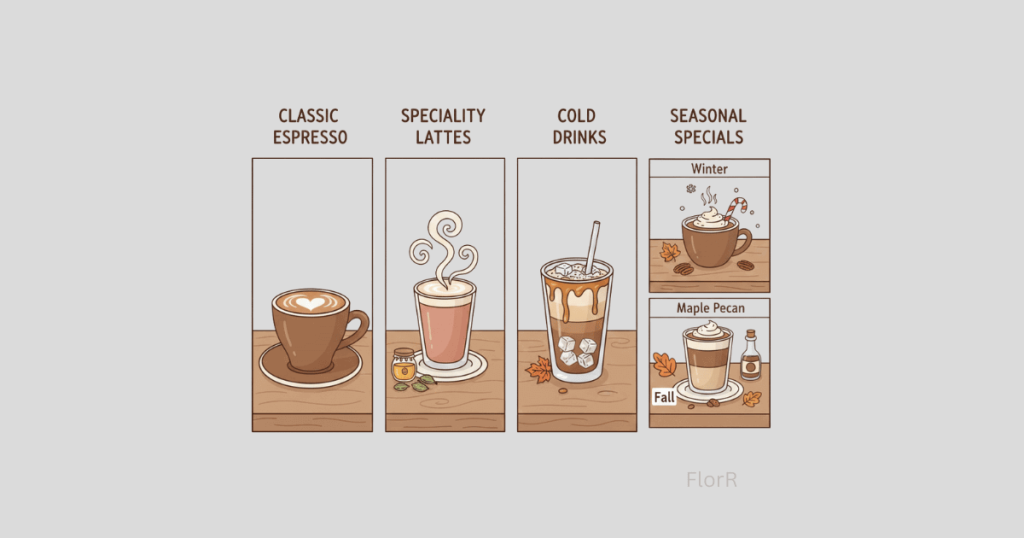
Classic Espresso Drinks
Keep these simple and focused on quality:
- “Cappuccino — Bold espresso with thick microfoam”
- “Americano — Rich espresso lengthened with hot water”
- “Cortado — Equal parts espresso and steamed milk”
Specialty Lattes
This is where you get creative:
- “Honey Cardamom Latte — Aromatic espresso with local honey and warming cardamom”
- “Brown Sugar Oat Milk Latte — Smooth espresso with toasted brown sugar and creamy oat milk”
Cold Drinks
Emphasize refreshment and smoothness:
- “Vanilla Sweet Cream Cold Brew — Smooth 16-hour cold brew topped with house-made vanilla cream”
- “Iced Caramel Macchiato — Bold espresso poured over ice with vanilla and caramel drizzle.”
Seasonal Specials
Create urgency and atmosphere:
- “Peppermint Mocha — Rich chocolate espresso with cool peppermint (December only)”
- “Maple Pecan Latte — Fall spices, toasted pecan, real maple syrup”
Modern Coffee Shop Furniture
Contemporary coffee shop furniture is designed for style and comfort. Create an inviting, elegant space where customers can relax, connect, and enjoy every cup in a modern atmosphere.
The ROI of Better Descriptions
Let’s do the math on what better descriptions actually mean for your bottom line:
Scenario: You have a specialty latte priced at $6.50.
- Before: Generic description, sells 15 per day
- After: Strategic description using the formula, sells 21 per day
Daily increase: 6 drinks × $6.50 = $39 Monthly increase: $39 × 30 days = $1,170 Annual increase: $1,170 × 12 = $14,040
And that’s just ONE drink getting better descriptions.
If you improve descriptions for 5 specialty drinks, you’re looking at $70,000+ in additional revenue per year.
All from better words.

HIGH TABLE
With Stools

LONG TABLE
With Stools
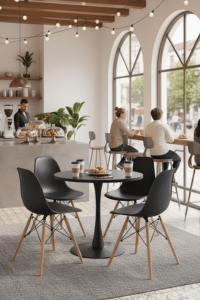
BLACK TABLE
With Chairs
Key Takeaways
- Coffee menu descriptions can increase sales of specific drinks by 30-40%
- The 5-part formula: Hook + Base + Star Ingredient + Experience + Kicker
- Keep descriptions between 8-15 words maximum
- Use 2-3 power words per description (velvety, house-made, aromatic)
- Specificity creates value: “Madagascar vanilla” beats “vanilla”
- Texture words (velvety, smooth, rich) trigger psychological desire
- Better descriptions for 5 drinks can add $70K+ annual revenue
- Avoid vague words like “delicious” or “amazing”
- Focus on experience and ingredients, not technical specifications
- Justify premium pricing through ingredient quality and preparation
- Seasonal language creates urgency and atmosphere
- Local ingredients build community connection and perceived freshness
- Test descriptions for 2-3 weeks before finalizing
- Every word must earn its place—cut ruthlessly
- Descriptions work 24/7 to sell your drinks—make them count
Putting It All Together
How to write coffee menu descriptions comes down to this:
Start with sensory words that create immediate imagery Be specific about ingredients to justify pricing Keep it short (8-15 words maximum) Focus on experience not just ingredients Make every word count by cutting ruthlessly
Your menu descriptions are working 24/7 to sell your drinks. Make sure they’re actually doing their job.
Want the complete menu design system that combines descriptions with pricing psychology, layout strategy, and menu engineering?
Check out the full guide:
👉 How to Design a Coffee Shop Menu That Maximizes Profit
Own a coffee shop? See how you compare.
Explore real coffee shops applying the strategies you just learned—then add your café to the directory to get discovered by customers searching by location.
FAQs About How to Write Coffee Menu Descriptions
How long should coffee menu descriptions be?
8-15 words is ideal. Short enough to read quickly, long enough to create desire and justify price. Anything longer slows ordering and reduces impact.
What words sell coffee best?
Sensory words like “velvety,” “smooth,” “rich,” and “aromatic” combined with specific ingredients like “Madagascar vanilla” or “house-made caramel” create the strongest desire.
Should I describe every drink on my menu?
Yes for specialty drinks and anything priced above basic coffee. Classic drinks (espresso, americano) can have shorter, simpler descriptions.
How do I write descriptions for expensive drinks?
Emphasize premium ingredients, preparation methods, and origin. A $7.50 drink needs descriptions that explain why: “Single-origin Ethiopian espresso with hand-whipped honey cream.”
Can descriptions really increase sales?
Absolutely. Strategic descriptions can increase sales of specific drinks by 30-40%. They justify prices, create desire, and differentiate your offerings.
What if my drinks don’t have fancy ingredients?
Focus on preparation quality: “perfectly steamed,” “carefully crafted,” “expertly balanced.” Quality execution is an ingredient too.
Should descriptions be different for different seasons?
Yes. Seasonal language (“warming,” “refreshing,” “cozy”) makes drinks feel timely and creates urgency for limited-time offerings.
How often should I update menu descriptions?
Review quarterly when you change seasonal menus. Update anytime you change ingredients or notice specific drinks underperforming.
Do I need different descriptions for online vs physical menus?
They should be similar, but online menus can be slightly longer (up to 20 words) since customers aren’t standing in line waiting to order.
What’s the biggest mistake in menu descriptions?
Being too vague. “Delicious latte” tells customers nothing. “Velvety espresso with Madagascar vanilla” creates a specific desire and justifies pricing