This site contains affiliate links. I may earn a commission if you purchase through these links. Thank you for being so supportive!
Pouring amazing espresso with perfect latte art, but here’s the brutal truth: if you’re not pricing coffee correctly, you’re losing thousands monthly without realizing it.
Talented baristas open beautiful cafes only to close within a year because they are priced based on gut feeling instead of numbers.
Coffee shop owners struggle to find the sweet spot between competitive pricing and profitability, yet while most operate on 10-15% margins, strategic pricing can reach 20-25% without losing customers.
Here’s what profitable cafés understand: Knowing how to price coffee isn’t guesswork, it’s strategic math. When you calculate true costs and apply proven pricing strategies, you maximize profitability while keeping customers returning for their daily brew.
Ready to price for profit, not just survival?
Learn how to price coffee strategically using proven methods that calculate true costs, maximize profitability, and keep customers loyal without leaving money on the table.
What Goes Into Coffee Pricing and Why Does Your Pricing Strategy Matter?
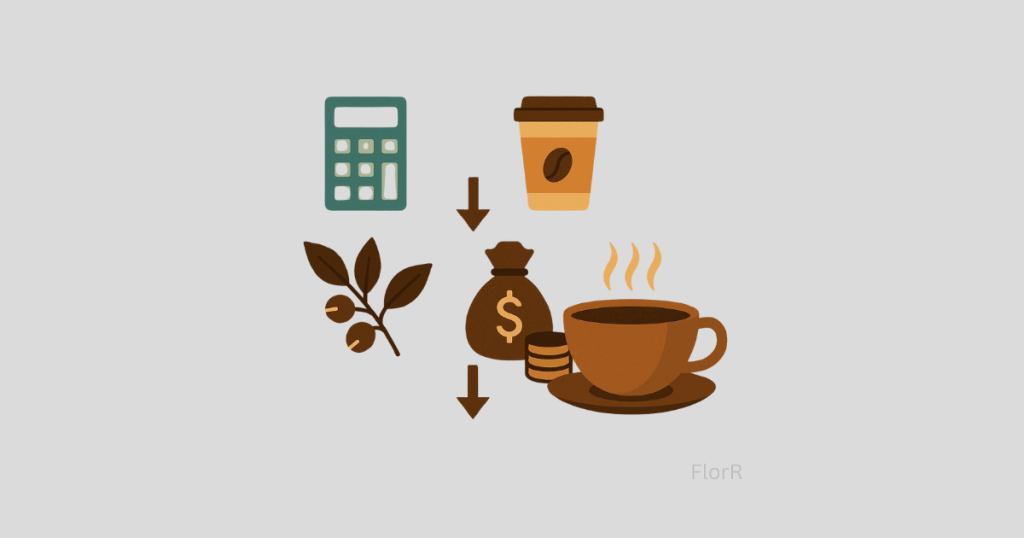
How to price coffee isn’t just about covering your costs and calling it a day. As a coffee business marketing consultant who’s helped dozens of cafés transform their profitability, I’ve seen firsthand how strategic pricing becomes your secret weapon for success.
Coffee Shop Pricing: More Than Just Math
Two coffee shops on the same street. Same quality beans. Same foot traffic. Yet one struggles while the other thrives. The difference? Your pricing strategy should reflect three critical elements:
- Brand positioning (are you the cozy neighborhood spot or a premium experience?)
- Customer perception (value isn’t just about being cheap)
- Profitability goals (every price point tells a story)

HIGH TABLE
With Stools

LONG TABLE
With Stools
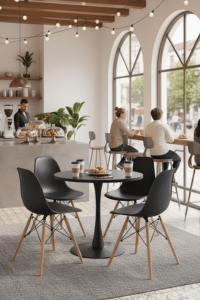
BLACK TABLE
With Chairs
Why Does Coffee Pricing Strategy Matter for Profit?
Small pricing adjustments create a massive impact when multiplied across thousands of monthly transactions.
I worked with a café owner who increased profits by 40% just by raising prices by 50 cents per drink. No fancy marketing. No new equipment. Just smarter pricing.
A 10% price increase typically sees only a 3-7% customer drop, but delivers a 30-50% profit boost.
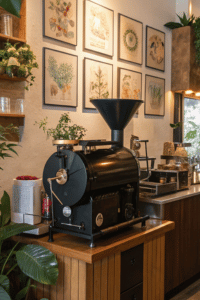
Artisanal Coffee Roaster Machines – Precision Craft for Perfect Beans
Discover Artisanal Coffee Roaster Machines designed for small-batch perfection. Roast beans with precision, enhance flavor, and enjoy café-quality coffee at home or in your shop. Built for freshness, crafted for coffee lovers.
Common Pricing Mistakes That Kill Your Margins
Deciding what to charge for coffee starts with avoiding these profit-destroyers:
- Underpricing specialty drinks – Your oat milk cortado isn’t the same as regular coffee
- Inconsistent markups – Your pricing strategy should reflect consistent value across your menu
- Ignoring hidden costs – Labor, utilities, and spillage add up fast
Rethink your pricing strategy with data-driven decisions that actually boost your bottom line.
How Do You Calculate the True Cost of Each Coffee Drink Before You Price Your Coffee?

Calculating your true coffee costs isn’t rocket science, but most café owners miss crucial expenses that eat their profits.
After helping dozens of shops fix their product pricing, I created a reliable strategy you can count on.
Breaking Down Your Cost of Goods Sold (COGS)
Pricing coffee products for profit starts with knowing every penny that goes into each cup. Here’s your quick guide on what to track:
- Direct ingredients: Coffee beans, milk, alternative milks, syrups
- Packaging materials: Cups, lids, sleeves, stirrers, napkins
- Hidden consumables: Water, cleaning supplies for equipment between drinks
Industry benchmark? Your COGS should hit 15-20% of retail price for healthy gross profit margin pricing.
How Do You Calculate Coffee Cost Per Cup Including Labor?
Double the wholesale cost used to work, but modern pricing needs deeper math:
- Barista time: 3-minute latte = $0.75 labor at $15/hour
- Overhead allocation: Rent, utilities, equipment depreciation per drink
- Support costs: Manager time, training hours, scheduling software
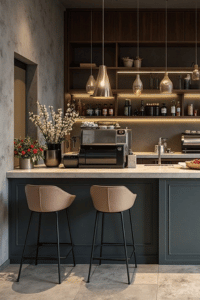
Modern Café Stools – Stylish Comfort for Coffee Shops & Homes
Upgrade your space with Modern Café Stools – sleek, durable, and designed for comfort. Perfect for coffee shops, kitchens, and bars. Blend style and function for the ultimate seating experience
The Hidden Costs That Destroy Your Margins
You think your latte costs $1.50 to make. But you’re missing:
- Waste and spillage (adds 5-8% to costs)
- Credit card fees (2.5-3% per transaction)
- Seasonal fluctuations (summer slump impacts per-drink overhead)
- Training costs (new baristas waste product learning)
Track these costs for one week using a simple spreadsheet. Your true cost per drink? Probably 30-40% higher than you think.
Refresh your pricing approach strategy with real numbers that protect your profits.
What Pricing Strategies Should Coffee Shops Use to Price Coffee Products?
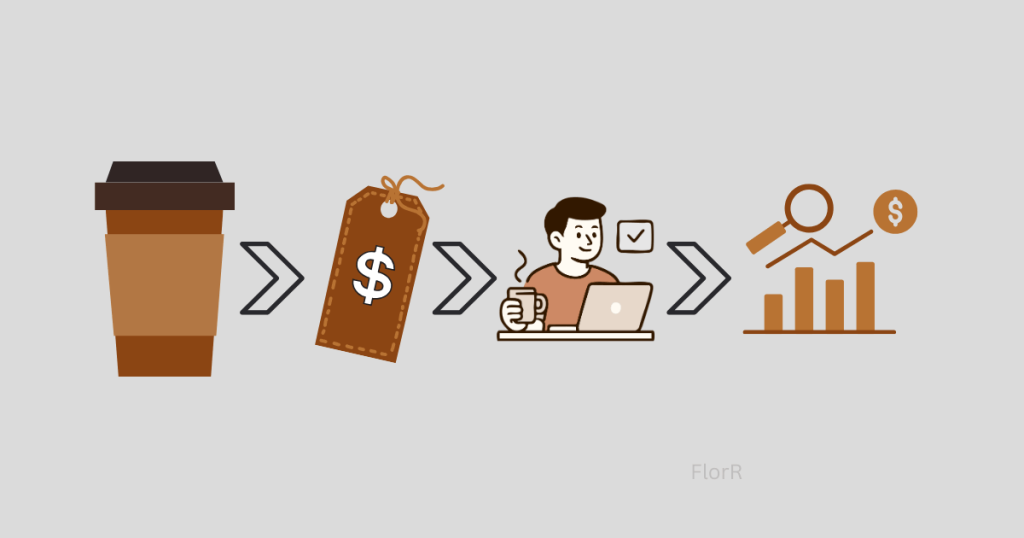
How to price coffee depends on which strategy matches your brand and market position.
We’ll focus on the three leading pricing methods that deliver measurable success
Cost-Plus and Keystone Pricing: Your Foundation Strategy
What pricing strategies work best for coffee shops starting? Begin with the basics:
- Keystone pricing: Double your wholesale cost (simple but limited)
- Cost-plus markup: Add 40-60% to total costs for standard drinks
- Fixed percentage: Consistent markup creates predictable margins
This works for core menu items where customers know exactly how much they expect to pay – your regular coffee, basic espresso drinks.

cOFFEE BAGS
Eco Friendly
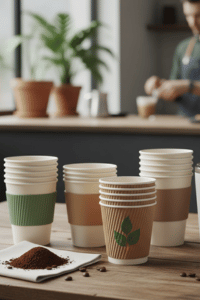
COFFEE CUPS
Eco Friendly

COLD BREW
No Mess Filters
Value-Based Pricing for Premium Offerings
Your lavender oat milk latte with house-made syrup. Customers aren’t buying coffee; they’re buying an experience. The value of your products determines price, not just costs.
How to price coffee using a value-based strategy:
- Research what customers will pay for specialty drinks
- Price 20-30% above cost-plus for premium items
- Test higher price points on limited-time offerings
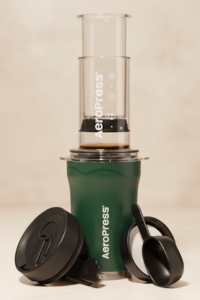
Best AeroPress Coffee Maker for Home & Travel
Brew barista-quality coffee anywhere with the AeroPress, the compact, all-in-one coffee maker loved by travelers and home baristas alike. In just 2 minutes, enjoy smooth, rich, low-acid coffee with zero bitterness. Easy to clean, durable, and perfect for espresso-style or cold brew.
Competitive and Dynamic Pricing Strategies
Time to serve up prices that make business sense and reflect your coffee shop’s unique value:
- Below competitors: Position as the affordable price option (risky for margins)
- At market rate: Match local pricing for easy customer decisions
- Premium positioning: Price 15-20% above competitors with clear differentiation
- Dynamic pricing: Adjust for peak hours, seasons, or demand
Most successful coffee shops combine strategies. Use cost-plus for basics, value-based for specialties, and dynamic pricing for seasonal menus.
This hybrid approach maximizes both customer satisfaction and your bottom line.
How Do You Price Coffee Drinks Like Lattes, Espressos, and Specialty Beverages?
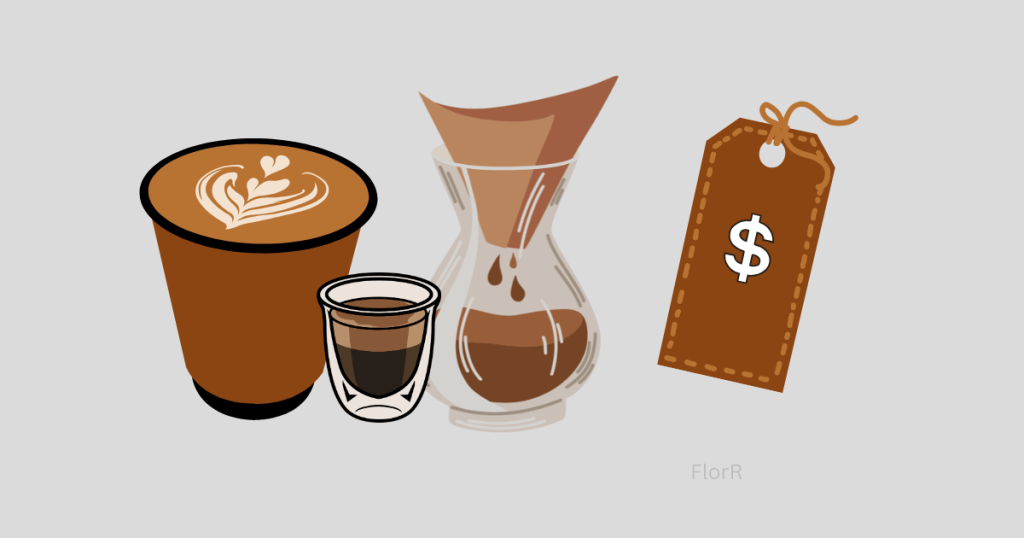
Pricing coffee drinks follows a logical system once you understand the formula. Your pricing begins with espresso as the foundation, then builds from there.
How Much Should You Charge for a Latte and an Espresso Drink?
Create consistent pricing tiers that make sense to customers:
- Single espresso: Your base price (typically $2.50-$3.50)
- Cappuccino: Add $1.50 for steamed milk and labor
- Latte: Add $2.00-$2.50 for extra milk volume
- Flat white: Price between cappuccino and latte (premium positioning)
Each drink’s costs associated with milk and time, determine the markup. A double shot of espresso? Add 75% of the single-shot price, not double.
Size Pricing Psychology That Drives Profits
Picture this pricing structure that works:
- Small (8oz): Base price
- Medium (12oz): Base + $0.60-$0.80
- Large (16oz): Base + $1.20-$1.50
The secret? Make medium your best value; customers pick it 60% of the time.
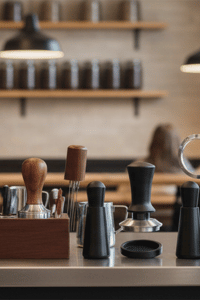
Espresso Wooden Accessories for Coffee Shops
Elevate your café’s identity with handcrafted wooden espresso accessories. From tampers to knock boxes, these barista tools blend function and design, giving your coffee shop a polished, professional look that customers remember.
Pricing Specialty and Seasonal Beverages
Your profits with premium pricing. How to price coffee specialties depends on exclusivity:
- Seasonal drinks: Command 15-30% premium over regular menu
- Limited-time offers: Test penetration pricing at launch, then increase
- House specialties: Price 20-25% above comparable standard drinks
- Customizations: Extra shot ($0.75), alternative milk ($0.60-$0.80), flavor syrups ($0.50)
Your vanilla latte shouldn’t cost the same as your house-made lavender honey oat milk cortado. Build pricing tiers that reflect complexity, ingredients, and perceived value.
This strategic approach transforms every transaction into a profit-optimization opportunity.
What Profit Margin Should Coffee Shops Target When Pricing Coffee?

Approaches to coffee drink pricing start with understanding what profit margins actually keep your doors open. After analyzing dozens of successful cafés, I’ve mapped out the numbers that matter.
What Profit Margin Should Coffee Shops Have?
Let’s narrow it down to reality:
- Coffee drinks: Target 70-80% gross margin
- Food items: Aim for 60-70% gross margin
- Overall business: Healthy shops hit 10-25% net margin
Various coffee products deliver different margins; your drip coffee might hit 90%, while that avocado toast barely breaks 50%.
Understanding Gross vs. Net Profit Margins
You’re deciding how much to charge, but confusing these two margins kills businesses:
- Gross margin: Revenue minus direct costs (your per-drink profit)
- Net margin: What’s left after ALL expenses (your actual take-home)
The game-changer? Focus on gross margins per item while tracking net margins monthly.
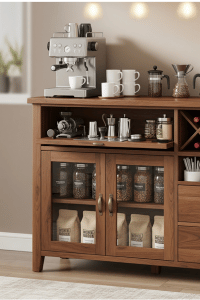
Modern Coffee Shop Furniture
Contemporary coffee shop furniture is designed for style and comfort. Create an inviting, elegant space where customers can relax, connect, and enjoy every cup in a modern atmosphere.
How Margins Vary by Your Target Market
How to price coffee depends on what customers are willing to pay in your market:
- Quick-service cafés: Lower margins (8-12% net), high volume
- Specialty coffee shops: Medium margins (12-18% net), loyal customers
- Premium establishments: Higher margins (15-25% net), experience-focused
Your target market determines your ideal price point. Downtown business district? Price premium. College campus? Volume over margin.
Track your margins weekly using this formula: (Revenue – Costs) ÷ Revenue × 100. If coffee margins drop below 70%, something’s wrong. If net margins fall under 10%, adjust immediately.
This monitoring system catches problems before they destroy profitability.
How Do Competitive Coffee Prices Impact Your Pricing Strategy?

Every coffee shop faces the competitor pricing dilemma. Should coffee shops match competitor prices? Not necessarily.
Here’s what I’ve learned helping cafés navigate competitive markets.
Researching Competitors Without Racing to the Bottom
Suppose you check out several competitor coffee shops and notice a race to the bottom. Resist the urge to play along; your pricing can lead, not follow.
Smart research tactics:
- Menu analysis: Track competitors’ prices monthly
- Value comparison: Note what’s included (wifi, ambiance, quality)
- Customer surveys: Ask what they actually pay elsewhere
- Wholesale clients: Compare B2B pricing if you serve both markets
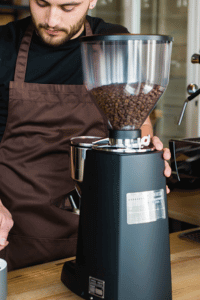
Grind Like a Pro: Elevate Your Coffee Business the Best-Selling Grinders
Grind like a pro with the top-rated coffee grinders, designed to boost flavor, consistency, and customer satisfaction at your café.
When to Price Above, At, or Below Competition
How to price coffee competitively depends on your positioning:
- Price above (10-20% premium): Superior quality, unique experience, prime location
- Match market rates: When convenience and familiarity drive sales
- Price below: Only for strategic price per cup promotions, never long-term
Your cost to produce might differ from competitors. Don’t assume their pricing works for your margins.
Communicating Value That Justifies Premium Pricing
Setting the right price for a cup of coffee above competitors requires:
- Quality storytelling: “Single-origin beans from our partner farm”
- Experience emphasis: “Hand-crafted by certified baristas”
- Transparency: Show why quality costs more
- Social proof: Display awards, reviews, certifications
Premium pricing works when customers understand the difference. Your menu design, staff training, and marketing must consistently reinforce why you’re worth the extra dollar.
Track what percentage of customers choose you despite higher prices; that’s your true competitive advantage.
How Can Coffee Shops Use Menu Psychology to Increase Profitability?
How to price coffee isn’t just about numbers; it’s about presentation psychology.
Your pricing and profit skyrocket when you understand how customers’ brains process menu information.
Price Anchoring and Strategic Menu Placement
Elevate your pricing approach using time-tested psychological strategies that drive sales:
- Lead with premium: Place your $8 signature drink first; it makes everything else look reasonable
- Golden triangle: Position profitable items in the upper-right corner where eyes naturally land
- Decoy effect: Offer small coffee at $3, medium at $3.75 (your winner)
When customers see expensive items first, your $5 latte suddenly feels like a bargain.
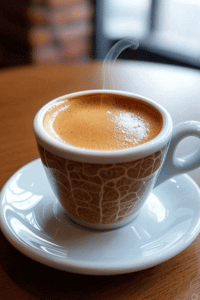
Adorable Espresso Shot Cups That Elevate Every Sip
Cute ceramic espresso shot cups with elegant designs, perfect for cozy cafés or home brews. Shop stylish espresso cups now!
How Do You Design Coffee Shop Menus for Profit?
Competitive pricing involves more than matching others; it’s about perception:
- Remove dollar signs: “Latte 4.95” feels cheaper than “Latte $4.95”
- Strategic rounding: $4.95 vs. $5.00 impacts psychology, not just pennies
- Descriptive language: “Smooth Colombian Single-Origin” justifies higher prices
- Size naming: “Regular” instead of “Small” reduces cheapness perception
Elevate your menu design by applying brain science techniques that enhance dining experience and drive revenue.
Bundle Strategies That Boost Average Tickets
Deciding what to charge for coffee bundles requires smart math. First, calculate the cost of combined items, then price 10-15% below individual purchases:
- Morning combo: Coffee + pastry saves $1 (increases ticket 40%)
- Loyalty programs: Buy 9, get 10th free (ensures repeat visits)
- Afternoon deals: Great coffee + snack for $8 after 2 pm (fills slow periods)
Menu psychology transforms browsers into buyers. Test these tactics one at a time, track results weekly. Your menu isn’t just a price list; it’s your silent salesperson working 24/7.
When and How Should Coffee Shops Adjust Prices Without Losing Customers?

Raising prices feels scary, but it’s essential for survival. After guiding dozens of cafés through price increases, I’ve cracked the code on keeping customers happy while protecting profits.
When Should Coffee Shops Raise Prices?
Time to determine the price adjustments when you see:
- Margin compression: Profits dropping below 10% net
- Labor cost increases: Minimum wage hikes are eating margins
- Supply inflation: Coffee beans up 20%+, milk up 15%+
- Market shifts: Competitors raised prices 3+ months ago
Waiting too long forces dramatic increases that shock customers. Small, regular adjustments work better.

cOFFEE HOODIES
COFFEE T-SHIRTS
EMBROIDERY
Strategic Timing and Communication for Increases
How to price coffee adjustments depends on timing:
- Best times: January (new year expectations), September (post-summer reset)
- Menu redesigns: Hide increases in fresh layout
- Gradual approach: 3-5% quarterly vs. 15% annually
- Clear communication: “Due to increased supply costs, we’re adjusting prices to maintain quality.”
You announce the change two weeks early, emphasizing quality commitment. Transparency builds trust.
Maintaining Customer Loyalty Through Price Changes
Loyalty retention tactics that actually work when you price your coffee products higher:
- Grandfather loyalty members: Hold their prices for 30 days
- Add value simultaneously: Introduce new size, better cups, faster wifi
- Create bundles: Offset individual price increases with combo deals
- Quality emphasis: Showcase bean upgrades, training investments
How to price coffee successfully means coupling increases with improvements.
Raise prices confidently when costs demand it, communicate honestly, and deliver value that justifies the change. Your customers prefer paying more than losing their favorite café.
How Do You Price Wholesale Coffee and Catering Services Differently?

Pricing coffee for wholesale and catering requires completely different math than your menu prices. Let’s talk about the formulas that actually protect your profits.
How Do You Price Wholesale Coffee for Businesses?
Let’s say your bag of coffee costs $8 wholesale. Your coffee shop pricing strategy for B2B should look like:
- Office clients: 40-50% off retail (minimum 5lb monthly)
- Restaurant partners: 50-60% off retail (minimum 10lb weekly)
- Retail resellers: Keystone pricing – they double your wholesale price
The final price depends on volume commitments and payment terms. Net 30? Add 5%. Weekly delivery? Add $15 per trip.

Espresso Express Crop Tee, The Must-Have Shirt for Every Coffee Mood
Level up your brew style with this custom Champion Espresso Tee, bold, comfy, and made for true coffee lovers. Just say “coffee shirt.”
Catering and Event Pricing That Protects Margins
Let’s prepare a catering pricing model that’s both competitive and lucrative:
- Coffee by the gallon: Your cost × 3 (includes cups, sugar, cream)
- Full service events: $12-18 per person (includes setup, staffing, cleanup)
- Equipment rental: $25-50 per airport, $75-150 for espresso bar setup
- Delivery and labor: Minimum 2-hour charge at $30-40/hour
Pricing coffee products for catering means calculating everything, including transport time, setup, breakdown, and even parking costs.
When Wholesale Makes Sense for Your Business
Let’s be real about resource allocation:
- Green light wholesale: Excess roasting capacity, dedicated delivery van, B2B sales person
- Proceed cautiously: Using retail staff, disrupting store operations
- Hard pass: Orders under $200, clients demanding retail-level service at wholesale prices
Wholesale only works when it doesn’t cannibalize your retail focus. Track wholesale profits separately. If margins drop below 25%, it’s time to refill your strategy.
What Coffee Shop Pricing Mistakes Kill Profitability?
I’ve watched talented café owners destroy their businesses with preventable pricing mistakes. Here’s the brutal truth about what’s killing your profits.
What Coffee Pricing Mistakes Should You Avoid?
Let’s say you’re bleeding money daily but don’t know why. These profit-killers are probably the culprit:
- Fear-based underpricing: Scared to charge what you’re worth
- Competition copycat syndrome: Matching low-ballers instead of differentiating
- “Good enough” mentality: Never testing if customers would pay more
Underpricing by just 10% means leaving thousands on the table monthly.
Inconsistent Markup Chaos Across Your Menu
Pricing your coffee consistently matters more than perfect prices. Watch for these red flags:
- Random food cost percentages: Muffin at 30%, sandwich at 65%? That’s broken
- Specialty drink neglect: Complex drinks priced like simple ones
- Green coffee calculations ignored: Using old costs while green coffee prices jumped 40%
It’s time to recalibrate menu prices with a rational markup system applied to all your offerings.

The Denim Jacket Every Coffee Lover Needs
The perfect denim jacket for coffee lovers, with bold coffee print, comfy fit, and street-ready style. Just say “coffee jacket.”
The Set-and-Forget Pricing Trap
Smart pricing means monitoring costs and competition monthly to stay profitable and ready to adapt.
- Cost creep blindness: Milk up 15%, but the price of your coffee remains unchanged
- Margin compression denial: Profits are shrinking while you pretend everything’s fine
- Review procrastination: “I’ll adjust prices next quarter” becomes never
I worked with a shop losing $3,000 monthly because they hadn’t reviewed pricing in 18 months; one afternoon of adjustments fixed everything.
Schedule monthly margin reviews. Track food cost percentages weekly. Adjust prices quarterly, at a minimum. Your business survival depends on treating pricing as an ongoing strategy, not a one-time decision.
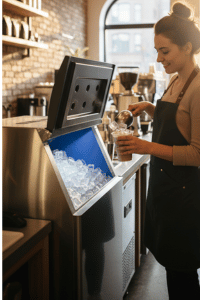
Best Ice Machine for Coffee Shops – Commercial Ice Maker
Keep your café stocked with crystal-clear ice all day. This high-output, energy-efficient ice maker is built for busy coffee shops serving iced lattes, cold brews, and frappés. Compact, durable, and easy to clean — perfect for cafés in New York, Los Angeles, or anywhere in the USA.
Key Takeaways
- Calculate true costs including hidden expenses (spillage, labor, fees)
- Target 70-80% gross margins on all coffee drinks
- How to price coffee by type – Cost-plus for basics, value-based for specialties
- Review prices monthly, not yearly
- Most cafés undercharge by 15-25% – price with confidence
- Track weekly – COGS, margins per item, net profit
- Research competitors but don’t race to the bottom
- Use menu psychology – remove dollar signs, lead with premium items
- Raise prices quarterly in small increments vs. annual shocks
- Fix underpricing now – $1.50 cost should = $5.50 sale, not $3.50
Final Thoughts
Strategic coffee pricing transforms struggling shops into profitable businesses. How to price coffee isn’t guesswork; it’s math, psychology, and courage combined. Calculate true costs, target healthy margins, review monthly, and adjust confidently.
Pricing Reality Check: Time to stop leaving money on the table. Proper pricing isn’t about charging more; it’s about charging right for the value you deliver.
Your expertise, quality, and experience deserve profitable pricing. Start calculating, stop guessing, and watch your business thrive.
FAQs
How much should you charge for a cup of coffee?
Profitable coffee pricing means charging 4-5x total costs. Price drip coffee at $3.50-5.50, lattes $4.50-6.50. Factor in paper cups, labor, and overhead. Coffee prices vary by market positioning and location; charge what reflects the value of your coffee.
What is a good profit margin for coffee shops?
Target 70-80% gross margin on coffee drinks after calculating cost of goods sold. Food items should hit 60-70%. Your coffee shop business needs 15-25% net profit overall. Higher margins on beverages compensate for equipment and rent costs.
What is a good profit margin for a small coffee shop?
Small shops need 15-20% net profit to survive. Track the cost of goods sold weekly. Coffee roasters suggest 70% gross margins on drinks. Successful small coffee shop business owners maintain tight cost control while maximizing beverage margins.
Should coffee shops use cost-plus or value-based pricing?
Start with cost-plus (3-5x cost of goods sold) as your floor, then apply value-based pricing for specialties. Profitable coffee shops combine both strategies. Premium drinks deserve premium prices when you communicate the value of your coffee.
How often should coffee shops raise prices?
Review quarterly, adjust annually, minimum. Small 3-5% increases work better than shocking jumps. Coffee roasters increase wholesale prices regularly; your prices for coffee must follow. Track paper cups and supply costs monthly to stay ahead.
Do customers care more about coffee quality or price?
68% of specialty coffee customers pay $1-2 premium for quality. They value expertise from trained baristas and quality from respected roasters. Communicate your story clearly; customers invest in the value of your coffee, not just caffeine.
What is the best pricing strategy for a coffee shop?
The best profitable coffee strategy combines cost-plus basics with value-based specialties. Know your cost of goods sold, target 70% margins, and price confidently. Your coffee shop business thrives when pricing reflects quality and experience.
What makes the most money in a cafe?
Coffee drinks generate the highest margins (70-80%) in any coffee shop business. Specialty beverages with unique recipes command premium prices for coffee. Pastries from wholesale suppliers offer 50-60% margins. Skip labor-intensive food items.
How much do cafe owners make a year?
Successful cafe owners earn $60,000-175,000 annually from a profitable coffee shop. Net margins of 15-25% on $500K-1M revenue are typical. Work with quality roasters, control costs, and price strategically to maximize owner earnings.