This site contains affiliate links. I may earn a commission if you purchase through these links. Thank you for being so supportive!
If you want a menu that boosts revenue without raising prices, pricing psychology for coffee shops is your strongest tool.
The most profitable cafés don’t just list numbers on a board; they use behavioral science to guide customers naturally toward high-margin drinks.
I’ve worked with dozens of coffee shop owners who thought their only option for increasing revenue was raising prices across the board.
But here’s what most don’t realize: how you price matters more than what you charge.
Why Pricing Psychology Works in Coffee Shops

Customers rarely make purchasing decisions based solely on price. Instead, their brains rely on:
- Mental shortcuts that simplify complex choices
- Perceived value rather than actual cost
- Comparisons between available options
- Emotional triggers tied to experience and quality
- Visual cues from menu design and layout
Your goal isn’t to be the cheapest café on the block. It’s to make prices feel logical, fair, and appealing. When your pricing feels natural, customers decide faster, spend more, and leave happier.
The beauty of pricing psychology for coffee shops? It works immediately. No renovations required, no new equipment needed, just strategic numbers that work with human psychology instead of against it.
Core Principles of Pricing Psychology for Coffee Shops
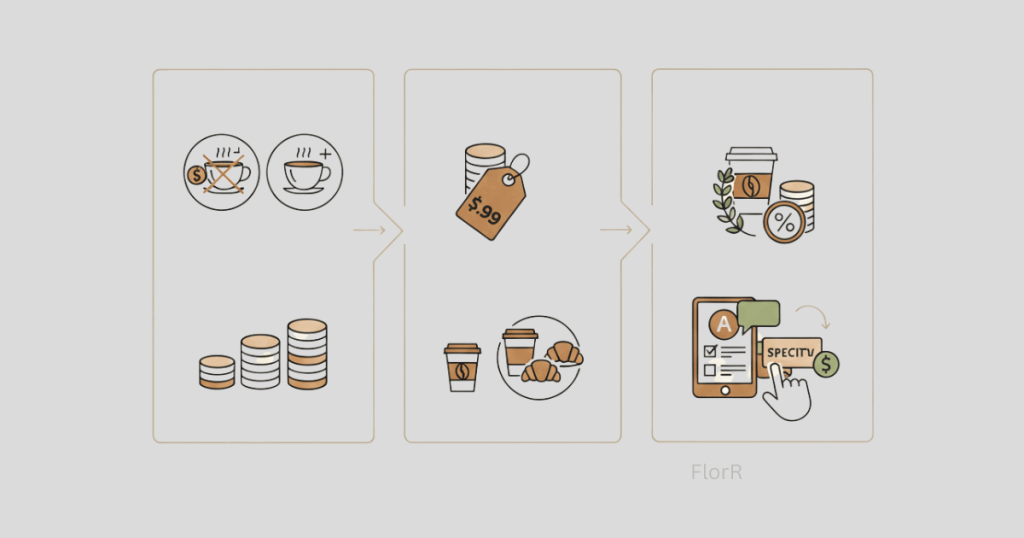
1. Charm Pricing: The .95 Effect
Why it works: A drink priced at $4.95 feels significantly cheaper than $5.00, even though the difference is just five cents. Customers read prices from left to right; the first digit sets the tone. Their brain registers “four-something” instead of “five.”
Use charm pricing for:
- Your best-selling drinks (lattes, cappuccinos)
- High-margin beverages (specialty drinks, cold brew)
- Seasonal menu items that need a strong launch
Real-world impact: One café I worked with changed its vanilla latte from $4.75 to $4.95. Customer complaints? Zero. Revenue increase? 8% on that single item.

cOFFEE HOODIES
COFFEE T-SHIRTS
EMBROIDERY
2. Anchoring: The First Price Controls Everything
How anchoring works: The first price customers see becomes their reference point for everything else. If they first see a premium drink priced at $7.00, your $5.50 latte suddenly feels like a great deal, even if competitors charge $5.00.
Strategic anchoring:
- Place your most expensive drink first on each menu section
- Introduce limited-edition premium drinks regularly ($7-$9 range)
- Position signature beverages as “elevated but accessible”
Example in action:
A Brooklyn café added a $7.50 Honey Lavender Latte to its menu. They didn’t sell many, but their $6.00 mocha sales increased by 23%. That’s anchoring working exactly as intended.
V60 Coffee Maker
COFFEE SCALE
CHEMEX
3. Decoy Pricing: Nudging Customers to Your Target
How decoy pricing works: Add a third option that makes your preferred choice look like the obvious winner.
Example:
- Small Latte – $4.25
- Medium Latte – $4.95 (your target)
- Large Latte – $6.50
Most customers will choose Medium, which should be your most profitable size in terms of cost-to-price ratio. The Large exists primarily to make Medium feel like a smart decision.
Pro tip: Your decoy doesn’t need to sell well. It just needs to exist on your menu to influence behavior.
4. Price Bracketing: The Three-Tier Strategy
Why three options outperform two: Customers naturally avoid extremes. When you structure options as Basic, Elevated, and Premium, most people gravitate toward the middle tier.
This is called the Goldilocks Effect—not too cheap, not too expensive, just right.
Design your middle tier to deliver the best margins. That’s where most of your volume will land.

Commercial Coffee Brewers

commercial Blenders
CHEMEX for your Café
5. Remove the Dollar Sign
Dollar signs trigger what behavioral economists call “spending pain”—a psychological discomfort associated with parting with money. Menus without currency symbols feel friendlier and more experience-focused.
Use:
- 4.95
- 5.50
- 7
Avoid:
- $4.95
- $5.50
- $7
This subtle change can increase sales by reducing the psychological friction between wanting something and buying it.
How Pricing Psychology Boosts Profit Without Raising Prices
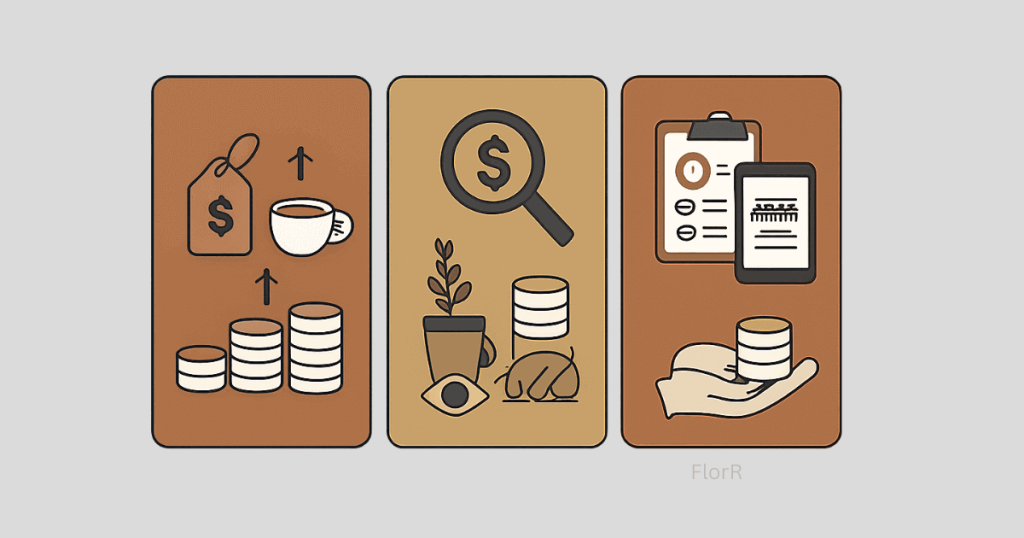
The purpose of pricing psychology for coffee shops isn’t to trick customers—it’s to guide them toward:
- High-margin drinks (specialty beverages with premium ingredients)
- Signature beverages (your unique creations)
- Add-ons (extra shot, alternative milks, flavor additions)
- Items with high perceived value (drinks that feel special)
Smart pricing elevates your café’s profitability without compromising customer trust or satisfaction. You’re not charging more; you’re helping customers choose options they already want.
Implementing Pricing Psychology: Step-by-Step
Step 1: Audit your current menu Identify which drinks have the highest profit margins. These should become your “hero items.”
Step 2: Apply charm pricing strategically Convert key prices to .95 endings. Not everything needs this—just your volume drivers.
Step 3: Create anchor products Add 1-2 premium drinks at the top of your price range. Price them confidently.
Step 4: Structure three-tier options For sizes, add-ons, and drink categories, give customers exactly three choices.
Step 5: Redesign your menu layout Remove dollar signs, adjust price positioning, and ensure drinks are described before prices appear.
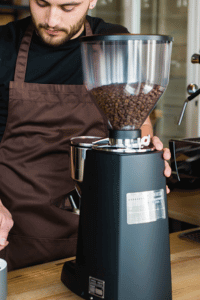
High-Output Commercial Coffee Grinder – Barista-Grade Consistency
Equip your café with a commercial grinder engineered for speed, consistency, and nonstop service. Designed for high-volume coffee shops that need precise grind size, powerful motors, and reliable performance every day. Explore top grinders trusted by professionals.
Where to Position Prices on Your Menu
Why price alignment matters: A vertical column of prices down the right side encourages customers to scan for the cheapest option. You’re essentially creating a “price comparison” experience—exactly what you don’t want.
Instead:
- Keep prices at the end of each drink description
- Use a smaller, softer font than your drink names
- Avoid perfect vertical alignment
- Separate sections visually
This encourages customers to choose based on what they actually want, not what costs the least.
Best Practices for Pricing Psychology in Coffee Shops

- Keep pricing consistent across categories – Customers notice when your pricing logic changes
- Highlight drinks with the highest profit margin – Through positioning, descriptions, or visual emphasis
- Use premium ingredients to justify premium pricing – Quality should be visible and communicated
- Leverage add-ons to increase average ticket size – Make customization feel exciting, not expensive
- Adjust prices twice annually – Protect margins against rising costs while customers expect changes
Common Pricing Mistakes to Avoid
Using too many round numbers: $5.00, $6.00, $7.00 looks arbitrary and triggers price comparison behavior.
Copying competitor prices: Your costs, quality, and positioning are unique. Price accordingly.
Not using anchors or decoys: Without strategic high-end options, your entire menu feels mid-range.
Offering too many drink sizes: Four or five sizes create decision fatigue. Three is optimal.
Pricing your top-seller too low: Your most popular drink should be priced for profitability, not volume.
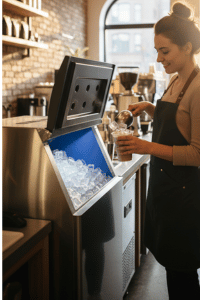
Commercial Ice Machine for Coffee Shops – High-Capacity Ice Production
Keep your café running smoothly with a commercial ice machine designed for high-demand beverage service. Fast production, dependable performance, and built for daily café operations. Explore top-rated models perfect for iced coffees, cold brews, and blended drinks.
Key Takeaways
- Customers choose based on perception, not just price
- Charm pricing (.95) increases conversions
- Anchoring helps frame mid-priced items as smart choices
- Decoy pricing directs customers to high-margin options
- Removing dollar signs reduces spending resistance
- Three-tier pricing boosts revenue
- Updating prices regularly protects profitability
- Price positioning on your menu influences buying behavior
- Round numbers trigger price comparison (avoid them)
- Your best-seller should be priced strategically, not just low
- Pricing consistency builds customer trust
- Well-designed add-ons increase average ticket without resistance
Final Thoughts
Pricing psychology for coffee shops isn’t about manipulation; it’s about making your menu easier to understand and more satisfying to order from.
When charm pricing, anchoring, and strategic layout all work together, your customers feel confident in their choices while your café quietly earns more. It’s a system that respects both your business needs and your customers’ experience.
A strategic menu blends behavioral science, profitability, and hospitality—and it starts with pricing.
Want the complete menu design system? Check out the full guide on menu engineering, layout optimization, and profitability strategies:
👉 How to Design a Coffee Shop Menu That Maximizes Profit
FAQs
What is pricing psychology?
It’s the practice of setting prices based on how customers think and behave, guiding them toward profitable choices.
Why does 4.95 sell better than 5.00?
Because customers perceive the first digit more strongly, making 4.95 feel significantly cheaper.
Should I remove the dollar sign?
Yes—it reduces spending anxiety and makes the menu feel more welcoming.
What is anchoring in pricing?
Showing a higher-priced item first so other items feel more affordable in comparison.
How do I know if my prices are correct?
Evaluate:
- Ingredient cost
- Target margin
- Competition
- Perceived value
- Role of each drink in your menu strategy
How often should I update prices?
Ideally every 6 months to protect your margins against inflation and rising costs.
Do more drink sizes increase sales?
Not always—too many options create decision fatigue. Three tiers work best.
Does pricing psychology work for all types of coffee shops?
Yes, these principles work in specialty cafés, neighborhood coffee shops, and chains alike. The key is adapting the strategy to your brand and clientele.