This site contains affiliate links. I may earn a commission if you purchase through these links. Thank you for being so supportive!
Used vs new espresso machine, which is the smarter buy for your coffee shop?
Buy new if you have $9,000-$25,000 budget, want warranty protection, and plan to operate 5+ years.
Buy used if you’re cash-constrained, okay with a 5-8 year remaining lifespan, and have a technician who can inspect before purchase. Used machines save 40-60% upfront but carry hidden maintenance costs.
I’ve seen café owners succeed with both choices. One bought a 7-year-old La Marzocco for $4,500, ran it for another 6 years. Another bought used, discovered a cracked boiler 3 months in, paid $3,200 to fix it, ended up costing more than new.
The right choice isn’t about the price tag. It’s about total cost of ownership and your risk tolerance.
Here’s how to decide between used vs new espresso machines based on real numbers and failure rates, not sales pitches.
“Feeling overwhelmed by the paperwork? Let’s work together on your NYC coffee shop marketing so you can focus on opening your doors.”
Explore the coffee directory
Want to see how real coffee shops turn these strategies into sales?
Real Cost: Used vs New Espresso Machines
Let’s compare using the Nuova Simonelli Appia II as our baseline, a workhorse 2-group machine.
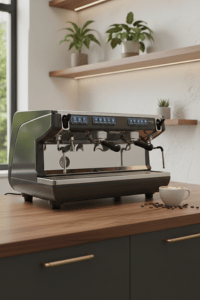
Nuova Simonelli Appia II Espresso Machine for Professional Coffee Bars
This is the Honda Civic of commercial espresso machines. Not sexy, but it starts every morning.
26 inches wide fits almost anywhere. Service is cheap, every tech knows Simonelli inside out.
Buying New
Purchase cost:
- Machine: $8,990
- Installation: $800
- Water filtration: $500
- Total upfront: $10,290
Warranty coverage:
- Parts: 1-2 years
- Labor: 1 year typical
- Peace of mind included
Expected lifespan: 12-15 years with proper maintenance
5-year total cost of ownership: $15,290 (including $1,000/year maintenance)
Buying Used (5 Years Old)
Purchase cost:
- Used machine: $4,000-$5,500 (40-60% off new)
- Professional inspection: $200-350
- Installation: $800
- Water filtration: $500
- Immediate repairs/service: $500-$1,500 (common)
- Total upfront: $6,000-$8,650
Warranty coverage:
- None (maybe 30-90 days from seller)
- You own all repairs immediately
Expected remaining lifespan: 5-8 years depending on condition
5-year total cost of ownership: $11,000-$15,000 (including higher maintenance $1,500-$2,000/year)
The Real Savings
Used saves you $4,000-$5,000 upfront but often costs $2,000-$4,000 more in maintenance over 5 years.
Total savings over 5 years: $1,000-$3,000 compared to buying new.
That’s it. You save 10-20% total, not 50%.

Nuova Simonelli Appia II 3-Group Espresso Machine
Same bulletproof Appia II reliability, but with a third group head for high-volume operations.
When You Should Buy a New Espresso Machine
Buy new if these apply to you:
You have the budget. If you can afford $9,000-$12,000 upfront, new is the safer investment. The warranty alone is worth $2,000-$3,000 in potential repair coverage.
You’re opening your first café. First-time owners need reliability, not repair headaches. You’re learning the business, and equipment failures distract from that.
You want predictable costs. New machines have manufacturer warranties. Repairs are covered. Maintenance is scheduled. No surprise $2,500 boiler replacements.
You’re building a quality brand. New equipment signals professionalism to customers and health inspectors. Used equipment can look tired even when functional.
You plan to operate 10+ years. Buy new, get 12-15 years lifespan. Buy 5-year-old used, get 5-8 more years. New gives you double the operational life.
Your water quality is questionable. Hard water kills machines. If your TDS is over 200ppm, you need a machine that can handle the abuse. Used machines have already taken years of wear.
Real Example: New Worked
A café owner in Seattle bought a new Nuova Simonelli Appia II for $8,990. Zero breakdowns in year one. Minor service call in year two ($350). After five years, the machine is still running strong, with total maintenance costs of $3,200.
Total 5-year cost: $12,190. Peace of mind: priceless.
When You Should Buy a Used Espresso Machine
Buy used if these apply to you:
Cash is extremely tight. You have $5,000 for equipment, not $10,000. Used lets you open now instead of saving another 6 months.
You have a reliable technician. Someone who can inspect before purchase, service regularly, and source parts. Without this, don’t buy used.
You’re opening a temporary or test concept. Pop-up for 2 years? Used makes sense. You only need 2-3 years of life, not 10-15.
You’re buying a premium brand used. A 5-year-old La Marzocco for $6,000 vs a new budget brand for $6,000? The used La Marzocco might outlast the new budget machine.
You’re okay with higher maintenance risk. Used means more frequent repairs. Budget $1,500-$2,500/year for maintenance vs $800-$1,200 for new.
You can inspect thoroughly before buying. If you can’t have a technician inspect it, don’t buy it. Period.
Real Example: Used Worked
A café owner in Portland bought a 6-year-old La Marzocco Linea Classic for $5,200. Had a tech inspect it first ($300). Needed new gaskets and group head rebuild immediately ($800). Ran it for 4 years with normal maintenance ($1,200/year).
Total 4-year cost: $11,100. Saved $4,000+ vs buying new.
Real Example: Used Failed
A café owner in Austin bought a 7-year-old Victoria Arduino for $4,800 “good deal” on Craigslist. No inspection. Boiler cracked 4 months in. Repair quote: $3,400. Ended up buying new anyway.
Total waste: $5,000+ (used machine + attempted repairs + downtime).

Commercial Coffee Brewers

commercial Blenders
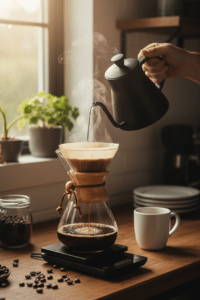
CHEMEX for your Café
Hidden Costs of Used vs New Espresso Machines
Hidden Costs of Buying New
Depreciation hits hard. Your $9,000 machine is worth $6,000 after one year, $4,000-$5,000 after three years. You lose $4,000-$5,000 in value immediately.
Over-buying is tempting. Salespeople push features you don’t need. You wanted a $9,000 machine, bought a $14,000 machine, regretted it.
You’re locked in. Bought new, realize 6 months later you need a 3-group instead of 2-group? You’re stuck or taking a huge loss selling.
Hidden Costs of Buying Used
Repairs come in waves. One gasket fails, others fail soon after. One issue reveals three more. Budget $2,000-$4,000 in year-one repairs for used machines.
Parts availability is questionable. That 2014 model? Parts are discontinued. Now you’re searching eBay or waiting weeks for international shipping.
Downtime costs more than repairs. Your used machine breaks Friday night. Tech can’t come until Tuesday. You lose 3 days of revenue ($1,500-$3,000) waiting for a $400 repair.
No warranty means you own everything. Boiler fails? $2,500. Pump dies? $800. Electronics short? $1,200. Every failure is on you immediately.
The previous owner’s neglect becomes your problem. They never descaled. Never backflushed properly. Never changed gaskets. You inherit 5+ years of deferred maintenance.
How to Evaluate a Used Espresso Machine Before Buying
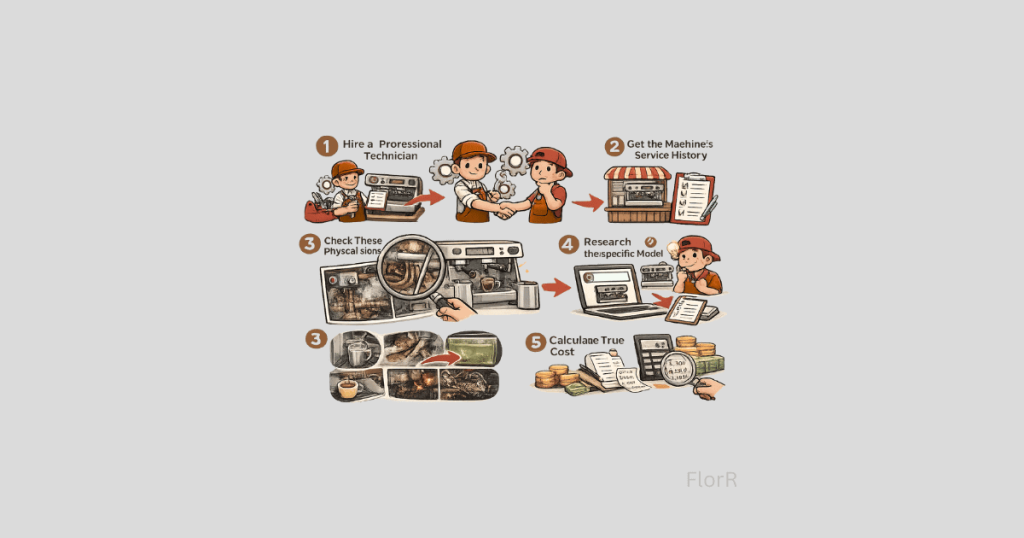
Never buy a used espresso machine without this checklist:
1. Hire a Professional Technician
Pay $200-$350 for a pre-purchase inspection. Non-negotiable.
What they check:
- Boiler pressure and temperature stability
- Pump pressure (should be 9 bars)
- Group head flow rate
- Steam wand function
- Internal corrosion and scale buildup
- Gaskets, seals, and valves condition
- Electrical system and wiring
One inspection can save you $3,000+ in hidden repairs.
2. Get the Machine’s Service History
Ask for:
- Maintenance records for past 2 years
- Repair invoices
- Part replacement documentation
- Original purchase date and receipt
Red flags:
- No records at all (means no maintenance)
- Multiple major repairs (boiler, pump, electronics)
- Less than 2 years old being sold (why?)

cOFFEE HOODIES
COFFEE T-SHIRTS
EMBROIDERY
3. Check These Physical Signs
Exterior inspection:
- Heavy corrosion or rust (moisture damage)
- Cracked or damaged body panels
- Loose or missing parts
- Burn marks (electrical issues)
Operational test:
- Pull 5-10 shots (does pressure stay consistent?)
- Steam 3 pitchers back-to-back (does it recover?)
- Check for leaks underneath during operation
- Listen for unusual grinding, squealing, or rattling
Water quality evidence:
- Excessive scale buildup (hard water damage)
- Discolored group heads (corrosion)
- Clogged shower screens (poor maintenance)
4. Research the Specific Model
Ask yourself:
- Is this model known for reliability?
- Are parts still available?
- What’s the typical lifespan?
- What commonly fails on this machine?
Some machines are bulletproof at 10 years old. Others are trash at 5 years. Know what you’re buying.
5. Calculate True Cost
Don’t just look at purchase price.
Formula:
- Purchase price: $X
- Inspection fee: $300
- Immediate repairs (estimate): $500-$1,500
- Annual maintenance (higher for used): $1,500-$2,000/year
- Total 5-year cost of ownership: $__________
Compare this to buying new. Is the savings worth the risk?
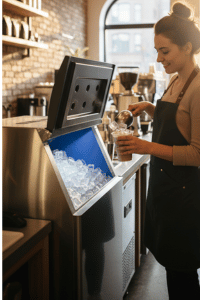
Commercial Ice Machine for Coffee Shops – High-Capacity Ice Production
Keep your café running smoothly with a commercial ice machine designed for high-demand beverage service. Fast production, dependable performance, and built for daily café operations. Explore top-rated models perfect for iced coffees, cold brews, and blended drinks.
Common Mistakes When Choosing Used vs New Espresso Machines
Mistake 1: Buying used without inspection. “It looked fine” means nothing. Internal damage costs thousands. Always pay for professional inspection.
Mistake 2: Buying new when cash-strapped. You spend $9,000 on a new machine, then can’t afford opening marketing or first month’s rent. Used would have preserved $4,000 for operations.
Mistake 3: Buying the wrong machine used. That $3,500 home machine on Craigslist? Not commercial-rated. Health department won’t approve it. Money wasted.
Mistake 4: Ignoring total cost of ownership. Used saves $4,000 upfront but costs $6,000 more in repairs over 3 years. You actually lost $2,000 vs buying new.
Mistake 5: No relationship with a technician. Buy used without a reliable tech? When it breaks, you’re scrambling to find someone who works on that brand. Costs 2x more as emergency service.
Mistake 6: Buying too old. A 10-year-old machine for $2,500 sounds great. It has 2-3 years left, maybe. Then you’re buying another machine. Should have just bought new from the start.
Mistake 7: Trusting seller condition claims. “Runs perfect, just upgraded” often means “has issues I don’t want to fix.” Verify everything independently.
Decision Framework: Used vs New Espresso Machine

Answer these questions:
Question 1: What’s Your Total Budget?
$15,000+ available: Buy new. The warranty and reliability justify the cost.
$8,000-$15,000 available: Could go either way. Get quotes for both used (with inspection) and new.
Under $8,000 available: Used is your only option, but make sure you have $2,000 reserve for repairs.
Question 2: How Much Risk Can You Handle?
Low risk tolerance: Buy new. Warranty protects you. Failures are rare in years 1-3.
Moderate risk tolerance: Buy used from reputable seller with inspection and service records.
High risk tolerance: Buy used from Craigslist with no records and hope for the best. (Don’t actually do this.)
Question 3: Do You Have a Reliable Technician?
Yes, established relationship: Used is viable. They can inspect, maintain, and repair.
No, would need to find one: Buy new. Warranty work is easier, and you’ll build a tech relationship over time.
Question 4: How Long Do You Plan to Operate?
10+ years: Buy new. You’ll get the full lifespan and better total cost of ownership.
5-7 years: Either works. Calculate total cost of ownership for both.
2-4 years (pop-up, test concept): Used makes sense. You only need a few years of life.
Question 5: What’s the Specific Machine?
Premium brands (La Marzocco, Synesso) 3-5 years old: Used can be smart. These machines last 15+ years.
Budget brands 5+ years old: Buy new budget instead. Better to have new budget than old budget—same price, longer life.
Unknown/uncommon brands: Buy new. Parts availability and tech knowledge matter.
Where to Buy Used Espresso Machines Safely
Best Sources
Authorized dealers selling trade-ins:
- Often refurbished and tested
- Short warranty (30-90 days)
- Higher price but lower risk
Restaurant equipment auctions:
- Inspect in person before bidding
- Good deals possible
- Bring a technician
Direct from closing cafés:
- Can verify operational condition
- Sometimes includes grinder, accessories
- Negotiate based on condition
Sources to Avoid
Craigslist/Facebook Marketplace (mostly):
- No accountability
- Often no service history
- Difficult to inspect properly
- Scams exist
Online marketplaces shipping sight-unseen:
- Can’t inspect before buying
- Shipping damage risk
- No recourse if it arrives broken
“Too good to be true” prices:
- $2,000 for a machine that costs $12,000 new?
- Stolen, broken, or fake
V60 Coffee Maker
COFFEE SCALE
CHEMEX
Make Your Decision
Most café owners with adequate capital should buy new espresso machines. The warranty, reliability, and full lifespan justify the cost.
Buy used if you’re genuinely cash-constrained, have a reliable technician relationship, and can absorb higher maintenance costs over time.
The wrong choice is buying used without inspection or buying new when it drains all your reserves. Both leave you vulnerable.
If you’re comparing used vs new espresso machines, run the total 5-year cost of ownership calculation. Include purchase price, inspection fees, repairs, and maintenance. The “cheap” used machine often costs nearly as much as new when you factor in reality.
Your espresso machine choice matters, but not as much as having enough working capital to survive your first year. Don’t sacrifice business survival for equipment savings.
Ready to buy new? Check current pricing on the Nuova Simonelli Appia II or 3-Group version for higher volume operations.
Need help evaluating equipment options? Read our guide on 7 best commercial espresso machines and essential coffee shop equipment.
Related Guides:
- 7 Best Commercial Espresso Machines for Small Coffee Shops
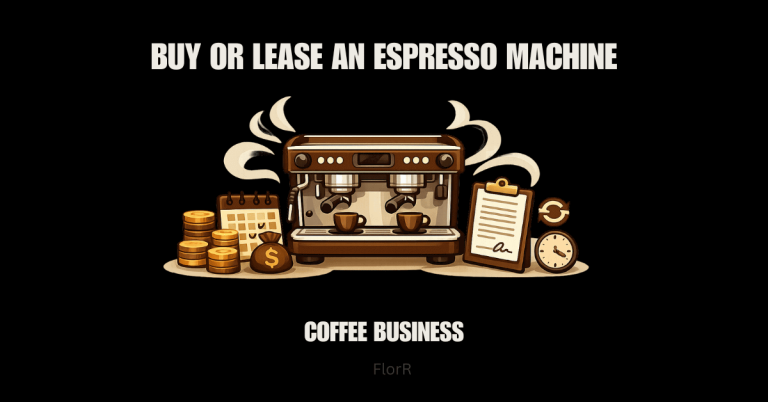
- Should You Buy or Lease an Espresso Machine?
- Essential Equipment List for Coffee Shop Startups
- Coffee Shop Business Plan Guide
Opening soon? I help coffee shops with Google My Business optimization and Local SEO for successful soft openings. Contact me →
Own a coffee shop? See how you compare.
Explore real coffee shops applying the strategies you just learned—then add your café to the directory to get discovered by customers searching by location.
Frequently Asked Questions About Used vs New Espresso Machines
Is it worth buying a used espresso machine?
Buying a used espresso machine is worth it if you’re cash-constrained, have a technician inspect it before purchase, and accept higher maintenance costs.
Used machines save 40-60% upfront but often cost 50-100% more in annual maintenance compared to new machines. Total savings over 5 years are only 10-20%.
How long do commercial espresso machines last?
New commercial espresso machines last 12-15 years with proper maintenance. Used machines have 5-8 years remaining lifespan depending on age and condition.
Premium brands like La Marzocco can last 15-20 years total. Budget brands typically last 8-12 years maximum.
What should I check when buying a used espresso machine?
Check boiler pressure and temperature stability, pump pressure (should be 9 bars), group head flow rate, steam wand function, internal scale buildup, gasket condition, and service history.
Always hire a professional technician for a pre-purchase inspection ($200-350). Check for leaks during operation and unusual sounds.
Can you finance a used espresso machine?
Some equipment financing companies will finance used commercial espresso machines, but interest rates are typically 2-4% higher than financing new equipment.
Many lenders require the machine to be less than 5 years old. Banks rarely finance used equipment under $10,000.
Should I buy a used La Marzocco?
A 3-5 year old used La Marzocco can be a smart buy if inspected by a technician before purchase. La Marzocco machines last 15-20 years total, so you’re getting 10-15 years remaining life.
Ensure parts are readily available and service techs in your area work on La Marzocco equipment.
What’s the biggest risk of buying a used espresso machine?
The biggest risk is inheriting deferred maintenance and hidden damage that costs $2,000-$5,000 to repair shortly after purchase.
Boiler failures, pump replacements, and electronics issues can make a “cheap” used machine more expensive than buying new. Always get a professional inspection before buying.
How much should I pay for a used commercial espresso machine?
Used commercial espresso machines typically sell for 40-60% of new price. A $9,000 new machine should cost $3,600-$5,400 used depending on age and condition.
Subtract $500-$1,500 for each major issue found during inspection. If repairs exceed 30% of the used price, buy new instead.