This site contains affiliate links. I may earn a commission if you purchase through these links. Thank you for being so supportive!
Starting a coffee shop with the best beans, a perfect location, and talented baristas means nothing if you pick the wrong coffee shop business model.
The good news? There’s a coffee shop business model matching your budget, skills, and lifestyle; you just need to know which one.
Many aspiring coffee shop owners jump into the wrong coffee shop business model for their situation, leading to burnout.
Yet while 60% of new shops fail within the first year from model mismatches, choosing the right mode, from $5K mobile setups to $500K+ brick-and-mortar, dramatically increases success.
Here’s what successful owners understand: Your coffee shop business model matters more than your concept.
When you match your resources, strengths, and goals to the right model, you set the foundation for sustainable growth in the $47.5B coffee industry.
Ready to find your perfect business model?
Discover which coffee shop business model fits your budget, skills, and goals, helping you avoid costly mismatches and build a sustainable coffee business.
What Are the Main Types of Coffee Shop Business Models Available?

If you’re looking to open a coffee shop, your business model choice matters more than your menu. Here’s the thing: startup costs range from $5K to $500K+, depending on which path you choose.
The Primary Coffee Shop Business Model Options
Physical Location Models
- Traditional brick-and-mortar coffee shops ($150K-$500K startup)
- Drive-through coffee shop model ($200K-$400K)
- Kiosk or coffee shop stand ($20K-$75K)
- Specialty coffee shop focusing on single-origin and craft ($200K-$600K)
Mobile and Alternative Models
- Mobile coffee shop business model—trucks, carts, trailers ($5K-$100K)
- Community coffee shop business model with cooperative or third-space focus
- Franchise vs. independent coffee shop models

Commercial Coffee Shop Espresso Machines – Precision, Power & Consistency
Power your café with a commercial espresso machine built for speed, consistency, and high-volume service. Designed for busy coffee shops that demand perfect shots, reliable steam power, and all-day durability. Explore top models trusted by professional baristas.
How Each Model Impacts Your Journey
Mobile coffee businesses can reach profitability in 6-12 months, compared to 2-3 years for traditional coffee shops.
As a coffee business marketing consultant, I’ve seen cart owners generating profit within six months while brick-and-mortar shops still chase break-even at year two.
Operational complexity varies dramatically. A mobile cart needs minimal permits and one operator. A full café requires staff, complex leases, and extensive health permits.
Modern Coffee Market Evolution
Demand for specialty coffee has created new opportunities. What coffee connoisseurs who are willing to pay premium prices want today differs from what traditional coffee shops.
They chase unique experiences, whether that’s a beautifully designed café or a perfectly crafted pour-over from a cart.
Not sure which model fits? Your budget, skills, and local market determine the right coffee shop business model to bring your coffee shop vision to life.
Each coffee shop business model serves different goals. Mobile models offer low-risk entry. Traditional cafés build community hubs. Choose based on your resources and vision, not trends.
What Is the Traditional Coffee Shop Business Model and Is It Right for You?

The traditional coffee shop business model is what most people picture: a permanent location with seating, a full menu, and a community atmosphere.
Let’s break down if it fits your goals.
How Does the Traditional Coffee Shop Business Work?
Core Revenue Streams
- Beverage sales: 60-70% of revenue (including coffee drinks and espresso)
- Food items: 20-30%
- Retail products: 5-10%
Average traditional shops generate $250K-$500K annually. A successful coffee shop business model typically hits 10-15% profit margins, with 70% of customers being regulars.
Investment Reality
- Startup costs: $200K-$500K
- Time to open: 6-12 months
- Break-even: 18-36 months
The success of your coffee shop depends on location and execution. Once your coffee shop is set up properly, those revenue streams diversify risk.
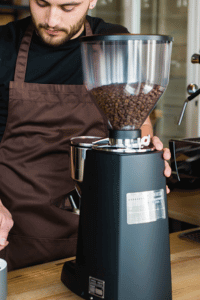
High-Output Commercial Coffee Grinder – Barista-Grade Consistency
Equip your café with a commercial grinder engineered for speed, consistency, and nonstop service. Designed for high-volume coffee shops that need precise grind size, powerful motors, and reliable performance every day. Explore top grinders trusted by professionals.
What Are the Advantages of Starting a Coffee Shop with a Traditional Model?
Brand Building Power
Physical locations build loyalty. You can design a coffee shop atmosphere that differentiates your business. Community coffee shops become gathering places where customers spend hours, not minutes.
Revenue and Control
- Multiple income streams under one roof
- Higher per-location revenue potential
- Complete control over customer experience
- Perfect for specialty coffee targeting connoisseurs
This model works best with $150K+ capital, commitment to building community, and readiness for 2-3 years to profitability.

V60 Coffee Maker
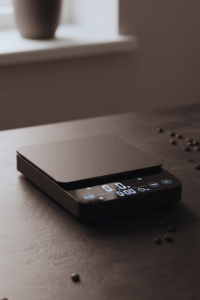
COFFEE SCALE

CHEMEX
What Are the Challenges of the Traditional Coffee Shop Model?
High Stakes Investment
- Requires loans, investors, or substantial savings
- Fixed overhead: $10K-$30K+ monthly (rent, utilities, staff)
- Cash flow challenges make or break your business in the first 18-24 months
Operational Demands
- 60-80 hours weekly initially
- Complex staff management
- Harder to pivot if the location proves wrong
45% of traditional coffee shops close within three years due to underestimating capital needs. This successful coffee shop business model rewards preparation, not optimism.
What Is the Mobile Coffee Shop Business Model and Should You Consider It?

Mobile coffee shop business models let you bring coffee to customers instead of waiting for them to find you.
Here’s how this approach works.
How Do Mobile Coffee Businesses Operate?
Mobile Coffee Options
- Coffee trucks: full build-outs ($50K-$150K)
- Coffee trailers: towable setups ($20K-$80K)
- Coffee carts: push carts ($5K-$20K)
- Pop-up locations at events and markets
Revenue Model
Average mobile operations generate $75K-$200K annually. Profitable mobile coffee shops reach break-even in 6-12 months, that’s 50% faster than traditional locations.
You go where customers gather: farmers’ markets, festivals, office parks, events.
Mobile coffee businesses have 30-40% lower startup costs than brick-and-mortar shops. Lower overhead means you can start a coffee business without massive debt.
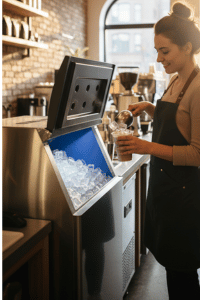
Commercial Ice Machine for Coffee Shops – High-Capacity Ice Production
Keep your café running smoothly with a commercial ice machine designed for high-demand beverage service. Fast production, dependable performance, and built for daily café operations. Explore top-rated models perfect for iced coffees, cold brews, and blended drinks.
What Makes the Mobile Coffee Shop Business Model Attractive?
Lower Entry Barriers
- Start with $10K-$50K versus $200K+ for traditional
- Test the coffee shop market at multiple locations
- No long-term lease commitments
- Literally start your coffee shop business within weeks
Operational Flexibility
Adjust your menu based on events. Scale up or down seasonally. One client started a weekend farmers market cart while keeping their day job, then grew to a full-time mobile cart within 18 months.

Commercial Under-Counter Fridge – Built for Daily Coffee Shop Operations
Optimize your coffee shop with a commercial under-counter refrigerator designed for speed, efficiency, and tight spaces. Perfect for milk, syrups, and quick-access ingredients. Built for busy cafés that need reliable cooling all day. Explore top-rated models made for professional service.
What Are the Limitations of Mobile Coffee Businesses?
Revenue Constraints
- Lower daily revenue than fixed locations
- Weather significantly impacts your business
- Limited atmosphere means customers grab a cup of coffee and leave
- Harder to build loyal repeat customers
Operational Challenges
- Vehicle maintenance becomes critical
- Daily setup and breakdown time
- Complex permitting across locations
- Commissary kitchen requirements in many cities
Mobile works brilliantly for testing concepts and lifestyle flexibility. But it won’t satisfy dreams of a cozy community hub where regulars linger.
To ensure that your coffee shop matches your vision, choose the model that fits your goals and customers and your business style.
What Is the Community Coffee Shop Business Model and How Does It Work?

If someone wants to start a coffee shop for community impact over maximum profit, the community coffee shop business model might be their answer.
Let’s break down how it works.
What Are the Attributes of a Community Coffee Shop Business Model?
Core Philosophy
- Customer or employee-owned cooperative structures
- Mission-driven beyond profit maximization
- Community space emphasis (strong attributes of a community coffee shop)
- Local partnerships and ethical sourcing prioritized
Operational Differences
Decision-making involves stakeholders, not just owners. Profits get reinvested in community programs. Programming matters, open mics, meetings, and classes become part of your coffeehouse identity.
Designing your coffee shop and the layout of your coffee shop prioritize gathering space over transaction efficiency.
Financial Reality
Community-owned shops have 20% higher customer loyalty but 15-20% lower profit margins than traditional models. Multiple revenue streams help: membership fees, community investment, grant funding, and coffee sales combined.

Commercial POS System for Cafés – Speed, Accuracy & Easy Management
Upgrade your café with a POS system designed for speed, accuracy, and daily coffee shop workflows. Take orders faster, track sales in real time, and manage your entire menu with ease. Perfect for high-volume cafés that want smoother service and higher revenue. Explore top-rated POS systems built for modern coffee shops.
Who Should Consider the Community Coffee Shop Business Model?
Ideal Founder Traits
- Mission-driven over profit-focused
- Comfortable with collaborative decisions
- Strong community organizing skills
- Patient with slower profitability paths
When This Model Works
This coffee shop is essential in underserved neighborhoods that need gathering spaces. Communities with cooperative culture embrace this approach. Areas where traditional models struggle financially can thrive with community ownership.
Success Metrics Differ
Measure impact alongside revenue. Running a successful coffee shop business this way requires different skills than pure profit models. It often creates deep loyalty that helps your business long-term, even if margins stay modest.
This model fits if your “why” centers on community building over wealth building. You’re comfortable with slower growth for mission alignment.
The coffee industry has room for both profit-driven and mission-driven successful business models. Choose based on your values, not what others say a coffee house should be.
What Other Coffee Shop Business Models Should You Know About?

Beyond traditional and mobile models, three other coffee shop business models deserve your attention. Each solves different market needs.
How Does the Drive-Through Coffee Shop Model Work?
Speed Over Atmosphere
Drive-throughs prioritize convenience. Smaller footprint than traditional shops, limited coffee shop menu, but higher volume. You can serve 150-300 customers daily versus 100-200 for sit-down cafes.
Financial Reality
- Startup costs: $100K-$300K
- Lower per-sale revenue, higher transaction volume
- Location needs car traffic, not foot traffic
- The right coffee machine for rapid production is essential
Success depends on speed; slow service kills this model fast.
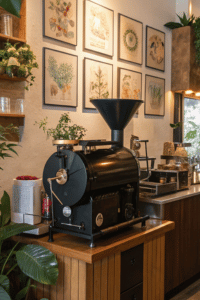
Artisanal Coffee Roaster Machines – Precision Craft for Perfect Beans
Discover Artisanal Coffee Roaster Machines designed for small-batch perfection. Roast beans with precision, enhance flavor, and enjoy café-quality coffee at home or in your shop. Built for freshness, crafted for coffee lovers.
What Is the Kiosk or Coffee Shop Stand Model?
Small Footprint, Big Potential
Shop stands under 200 square feet operate in high-traffic locations like malls, airports, hospitals, and office buildings. Start a coffee shop with $50K-$150K, serve captive audiences, run with 1-2 staff maximum.
One client built a 3-kiosk model in office buildings, hitting $400K revenue with lower stress than a single full cafe.
Challenges
- High rent (often a percentage of sales)
- Limited control over hours and rules
- Harder to differentiate your coffee shop in generic spaces
- Customer loyalty is difficult in transient locations

Commercial Coffee Brewers

commercial Blenders
CHEMEX for your Café
Should You Consider Franchise vs. Independent Coffee Shop Models?
Franchise Model
- Proven systems and brand recognition
- Higher startup: $200K-$500K+
- Ongoing royalty fees: 5-8% of sales
- Less creative freedom, more support
Independent Model
- Complete control over your coffee shop’s concept
- Keep all profits after expenses
- Build an authentic local identity that sets your coffee shop apart
- Higher risk, higher potential reward
Choose a franchise if you want proven systems and have significant capital. Go independent if you want creative control and have a unique vision.
Franchise coffee shops have 25% higher survival rates, but top-performing independent shops earn 40% more profit.
Each model serves different goals. Match your choice to your resources, risk tolerance, and vision.
How Do You Create a Successful Coffee Shop Business Plan for Your Chosen Model?

Coffee shops with detailed business plans are 2.5x more likely to secure funding and reach profitability.
Let’s break down how to build yours.
What Should Your Coffee Shop Business Plan Include?
Core Components
- Executive summary with your business concept and chosen model
- Market analysis specific to your type of coffee shop
- Financial projections tailored to your model
- Marketing plan that promotes your coffee shop effectively
Your coffee shop business plan is a living document. Mobile coffee requires different market analysis than traditional brick-and-mortar.
Community coffee shop business models need different success metrics; you measure social impact alongside profit.
Making It Investor-Ready
Funding for your coffee shop depends on credible projections. Show you understand your chosen model’s risks and opportunities.
Include contingency plans. Use a coffee shop business plan template, but customize heavily for your specific approach.

cOFFEE HOODIES
COFFEE T-SHIRTS
EMBROIDERY
How Do Different Models Impact Your Coffee Shop Business Plan Financials?
Startup Capital by Model
- Mobile coffee: $10K-$150K
- Traditional: $200K-$500K
- Community: $150K-$400K (often includes grants)
- Kiosk/stand: $50K-$150K
Operating Reality
Fixed costs vary 10x between mobile and traditional models. When you start your own coffee shop, labor needs differ dramatically. Mobile operates solo initially, traditional needs 3-5 staff from day one.
Revenue Trajectories
- Year 1: Mobile $75K-$150K, Traditional $150K-$350K
- Year 3: Mobile $150K-$250K, Traditional $300K-$600K
- Owner salary timeline: Mobile 6-12 months, Traditional 18-36 months
Your business concept determines everything in your plan. Don’t force traditional coffee shop financials into a mobile business plan.
Match your projections to model realities, not wishful thinking. That’s how you build credibility with investors and yourself.
How Do You Match Your Personal Situation to the Best Coffee Shop Business Model?

The right model for a coffee shop matches your capital, experience, and lifestyle. Compromise on all three and you’re setting yourself up to fail.
What Role Does Available Capital Play in Choosing Your Coffee Shop Model?
Capital Requirements Decision Tree
- Under $25K: Mobile cart or popup only
- $25K-$75K: Mobile truck or trailer possible
- $75K-$150K: Kiosk or very small traditional possible
- $150K+: Traditional coffee shop or multiple mobile units
- Over $300K: Premium location or franchise options
Risk and Timeline
How long can you operate before needing income? Mobile models allow part-time starts. Traditional shops require full commitment immediately.
Understanding funding for your coffee shop options prevents cash flow disasters.
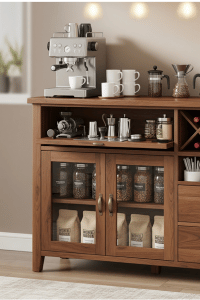
Modern Coffee Shop Furniture
Contemporary coffee shop furniture is designed for style and comfort. Create an inviting, elegant space where customers can relax, connect, and enjoy every cup in a modern atmosphere.
How Does Your Experience Level Affect Which Coffee Shop Model You Should Choose?
Experience Requirements
- Mobile cart: learn as you go, minimal staff management
- Traditional: high complexity, requires business management skills
- Franchise: systems reduce experience needs but don’t eliminate them
Skills Assessment
Coffee knowledge gets learned quickly. Business management? Harder to learn while you run a coffee shop. Marketing, financial management, and staff hiring- these skills matter more than latte art.
If you’ve never managed a business or worked in coffee, mobile gives lower-risk education. Experienced business owner, new to coffee? A traditional shop with an experienced manager works. Match model to actual skills, not dreams.
What Lifestyle Factors Should Influence Your Coffee Shop Business Model Choice?
Time Commitment Reality
- Mobile cart: 30-50 hours weekly possible
- Traditional startup: 60-80 hours weekly, first year minimum
- Part-time possibilities: only the mobile cart is realistic
Long-Term Vision
- Want to build empire → traditional with growth potential
- Want lifestyle business → mobile or small cafe
- Want community impact → community model
- Want an exit strategy → traditional or franchise more sellable
Your ideal model must align capital + experience, + lifestyle goals. Your coffee roaster connections won’t save a model that doesn’t fit your reality.
What Are the Most Common Mistakes When Choosing a Coffee Shop Business Model?

40% of coffee shop failures stem from choosing the wrong model for the founder’s situation.
Let’s break down how to avoid becoming that statistic.
Choosing Model Based on Dreams, Not Resources
Reality vs. Romance
- Wanting a traditional coffee shop with mobile money
- Underestimating capital needs by 50-100% (extremely common)
- Ignoring personal skill gaps that make or break your coffee shop
- Creating a coffee shop vision that doesn’t match operational reality
Business owners who match model to resources have 3x better survival rates. Your business plan for your coffee should start with what you actually have, not what you wish you had.

HIGH TABLE
With Stools

LONG TABLE
With Stools
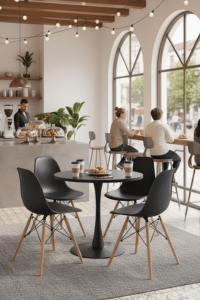
BLACK TABLE
With Chairs
Not Researching Model-Specific Challenges
Hidden Complications
Every model has unique frustrations. Mobile businesses seem “easy” until you’re dealing with vehicle breakdowns during events.
Traditional shops surprise new owners with operational complexity—staff management, inventory control, and daily cash flow pressure.
Understanding the coffee shop industry requires knowing your specific model’s challenges. Don’t assume you can sell coffee profitably without researching your chosen model deeply.
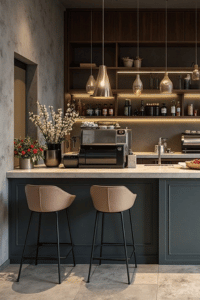
Modern Café Stools – Stylish Comfort for Coffee Shops & Homes
Upgrade your space with Modern Café Stools – sleek, durable, and designed for comfort. Perfect for coffee shops, kitchens, and bars. Blend style and function for the ultimate seating experience
Picking Model Wrong for Your Market
Market Mismatch
- Traditional coffee shop in a saturated market with 15 competitors
- Mobile coffee without enough events or high-traffic locations
- Community model in areas without a community-buying culture
- Demand for coffee shops varies dramatically by area and model type
Match your coffee shop business model to your actual resources, skills, and market realities. Your passion for coffee matters, but it won’t overcome fundamental model mismatches. Choose strategically, not emotionally.
How Can You Test Your Coffee Shop Business Model Before Fully Committing?

Smart entrepreneurs validate before they invest.
Here’s how to test your coffee shop business model without risking everything.
What Are Smart Ways to Validate Your Coffee Shop Concept?
Low-Risk Testing Strategies
- Pop-ups and farmers markets (test before buying equipment)
- Ghost kitchen coffee service (validate menu and operations)
- Weekend mobile service while keeping your day job
- Corporate office catering to prove demand
Track These Metrics
- Customer acquisition cost and repeat business rate
- Average ticket versus projections
- Actual sales volume and operational time requirements
- Real challenges versus anticipated ones
Set clear success criteria before testing: “If I average $X daily and Y% customers return within a week, I’ll commit to full launch.” Remove emotion from decisions.

Adorable Espresso Shot Cups That Elevate Every Sip
Cute ceramic espresso shot cups with elegant designs, perfect for cozy cafés or home brews. Shop stylish espresso cups now!
How Do You Start Small and Scale Your Coffee Shop Business?
Progressive Evolution Path
Cart → Truck → Brick-and-mortar is proven. Single kiosk → Multiple locations work. Part-time mobile → Full-time mobile → Traditional shop validates each stage before investing more.
Use Early Profits to Fund Growth
- Mobile profits fund traditional buildout
- Kiosk cash flow finances second location
- Build customer base before opening permanent space
- How your business grows sustainably matters more than speed
Expansion Triggers
Know your financial readiness. One owner took five years going from weekend cart to three traditional locations, a patient, profitable path. She validated the coffee shop business model at each stage, never overextending.
When to Expand
- Consistent profitability for 6+ months
- Operational systems running smoothly
- Market research shows demand in a new location
- Build a thriving business before scaling
Testing your coffee shop business model reduces risk dramatically. Start small, prove the concept, then scale with confidence.
Most successful owners validate thoroughly before committing capital. That’s how you build sustainable growth, not just exciting launches that fizzle within months.
What Does Success Look Like for Each Coffee Shop Business Model?

Success means different things for different models.
Here’s how to set realistic expectations for your coffee shop business model.
How Do You Define Business Success for Your Coffee Shop Model?
Financial Benchmarks by Model
- Mobile: $75K-$200K annual revenue, $20K-$60K owner income
- Traditional: $250K-$500K revenue, $40K-$100K owner income (after 2-3 years)
- Profit margins: 10-15% traditional, 20-30% mobile
Successful coffee shop owners typically take 18-36 months before drawing a market-rate salary, regardless of model. Your successful coffee shop business plan should budget for this reality.
Beyond the Numbers
- Customer satisfaction and repeat business rates
- Employee retention and team satisfaction
- Community impact (especially for community coffee shop business models)
- Personal lifestyle quality and fulfillment
Timeline Milestones
- Breaking even: 6-12 months mobile, 18-24 months traditional
- Drawing full-time salary: 12-18 months mobile, 24-36 months traditional
- Paying back initial investment: 2-4 years typical
- Opening second location: 3-5 years for most models
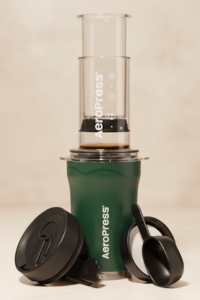
Best AeroPress Coffee Maker for Home & Travel
Brew barista-quality coffee anywhere with the AeroPress, the compact, all-in-one coffee maker loved by travelers and home baristas alike. In just 2 minutes, enjoy smooth, rich, low-acid coffee with zero bitterness. Easy to clean, durable, and perfect for espresso-style or cold brew.
What Is the Growth Potential for Each Coffee Shop Model?
Scalability Comparison
- Mobile: Add units for $10K-$50K each
- Traditional: Second location costs similar to first ($200K+)
- Kiosk: Easiest to replicate—3-5 locations possible with solid execution
- Franchise: Predetermined growth path built in
Exit Strategy Reality
Traditional shops are most sellable, 2-3x annual profit typical. Mobile businesses are harder to sell (often, equipment value only).
Building a business that works without you increases value dramatically.
Long-Term Wealth Building
- Real estate ownership with the traditional model
- Portfolio of multiple locations creates leverage
- Franchise territory ownership scales faster
- Legacy businesses require systems and multiple locations
Choose your coffee shop business model based on a 5-year vision, not just startup feasibility. That cart can be training wheels for the empire or the destination itself, both valid; decide early.
How Is the Coffee Shop Business Model Evolving?

The coffee shop industry is transforming fast. Understanding emerging models helps you future-proof your small business from day one.
Emerging Hybrid Models
New Coffee Business Combinations
- Coffee + coworking space (customers pay for time and coffee)
- Subscription-based coffee services (recurring revenue models)
- Tech-enabled automated cafes (minimal staff, maximum efficiency)
- Home delivery and modern coffee service models
35% of coffee shop sales now include digital ordering components. Your plan for your coffee shop should account for this shift, regardless of which business model for a coffee shop you choose.
Technology’s Impact on Operations
Digital Transformation
- Mobile ordering and fulfillment systems
- Ghost kitchens for coffee (minimal or no seating)
- Automated espresso kiosks in high-traffic areas
- How technology can help your business operate leaner and more profitably
Coffee subscription models are growing 25% annually. Smart operators integrate these recurring revenue streams into traditional models, creating hybrid approaches that stabilize cash flow.
cOFFEE HOODIES
COFFEE T-SHIRTS
EMBROIDERY
Sustainability as Differentiator
Values-Driven Models
Modern coffee shop customers prioritize ethical sourcing and environmental practices. Demand for specialty coffee from ethical sources is up 40% in three years.
This creates premium pricing power when you align mission with execution.
Key Considerations
- Direct trade relationships as a model differentiator
- Sustainability metrics customers actually care about
- Environmental practices becoming table stakes, not optional extras
- Location for your coffee shop matters less when values drive loyalty
The future favors flexible, tech-enabled, values-driven coffee businesses. Traditional models still work, but integrating digital ordering, subscription options, and transparent sourcing into your plan for your coffee shop positions you for growth.
Evolution doesn’t mean abandoning proven models; it means adapting them intelligently for modern consumer expectations.
Key Takeaways
- Choosing the right Coffee Shop Business Model determines your startup costs, workflow, and daily operations.
- Options range from kiosks and carts to full-service cafés, each offering different levels of investment and profit potential.
- Match the model to your budget, target customers, location, and long-term vision.
- Simpler models grow faster; larger cafés offer more revenue but require stronger systems.
Final Thoughts
Your coffee shop business model must match your capital, skills, and lifestyle. There’s no single “best” model, only what’s best for YOUR situation.
Testing before committing reduces risk dramatically. Success is possible with any model if properly executed.
The model you choose isn’t just about serving coffee; it’s about building your life. Choose what lets you make great coffee AND live your best life. Start small and grow. Starting too big often means never starting at all.
FAQs
What is the most profitable coffee shop business model?
Traditional brick-and-mortar coffee shops generate the highest total profit ($40K-$100K+ annually) but require the largest investment.
Mobile models offer the best profit-per-dollar ratio (20-30% margins vs 10-15%) and fastest break-even (6-12 months vs 18-36 months).
How much does it cost to start a coffee shop with different business models?
Startup costs vary: mobile cart ($5K-$20K), trailer ($20K-$80K), truck ($50K-$150K), kiosk ($50K-$150K), traditional shop ($200K-$500K), franchise ($200K-$500K+).
These include equipment, permits, inventory, and 3-6 months of operating expenses for your coffee shop.
Can you start a coffee shop business part-time?
Yes, but only mobile coffee carts work part-time (weekends/farmers markets while keeping a day job. Traditional shops require 60-80 hours weekly initially.
Many successful owners started part-time mobile, proved the concept, and then transitioned to full-time traditional shops.
What is a community coffee shop business model?
Community coffee shops prioritize social impact as cooperatives owned by customers or employees. Features: democratic decisions, local partnerships, profit reinvestment.
They achieve 20% higher customer loyalty but have 15-20% lower profit margins than traditional shops.
Is mobile coffee shop business model profitable?
Yes – mobile coffee shops generate $75K-$200K revenue with $20K-$60K owner income. They offer 20-30% margins (vs 10-15% traditional) and break-even in 6-12 months.
Success requires strategic locations, event participation, and cost control through efficient operations.
Should I open an independent coffee shop or buy a franchise?
Choose a franchise for proven systems and brand recognition with $200K-$500K+ (plus 5-8% royalties). Choose independent for creative control and lower costs.
Independents have higher failure rates (60% vs 40%), but top performers earn 40% more profit by keeping all revenue.
How do I know which coffee shop model is right for me?
Match to three factors: (1) Capital – mobile under $75K, traditional $150K+, (2) Experience – simpler if new, traditional if experienced, (3) Lifestyle – mobile for flexibility, traditional for community.
The best coffee shop business model aligns all three factors for success.
What are the different types of coffee shop business models?
Main types: traditional (full cafe), mobile (trucks/carts), drive-through (speed), kiosk (high-traffic spaces), community (cooperative), specialty (single-origin), franchise vs independent.
Each has distinct startup costs, complexity levels, and growth potential for coffee businesses.